Wednesday, 9 July 2025

Lydian Hoard: More Returns to Türkiye

Source: New York, Metropolitan Museum of Art


New York's Metropolitan Museum of Art has returned two more pieces of silver from the Lydian Hoard. They consist of a silver phiale (inv. 1980.11.13; Bothmer, Treasury no. 25) and a silver oinochoe (inv. 1980.11.16; Bothmer, Treasury no. 40). Both were purchased from the Classical Purchase Fund / The Bothmer Purchase Fund.

The history ("provenance") of the pieces is as follows:
Reputedly, collection of the family of Elizabeth Ebnöther, Zurich, Switzerland; [by 1980, with Galerie Nefer, Zurich]; acquired in 1980, purchased from Galerie Nefer. Deaccessioned for return to the Republic of Türkiye in June 2025. 
The press release from the Manhattan DA notes the association with Frieda Tchacos.

The use of "reputedly" to link objects to specific collectors is similar to the "reportedly" used for pieces in the Stern Cycladicising collection (discussed in BMCR).

| |
Bookmark and Share so Your Real Friends Know that You Know

Wednesday, 2 July 2025

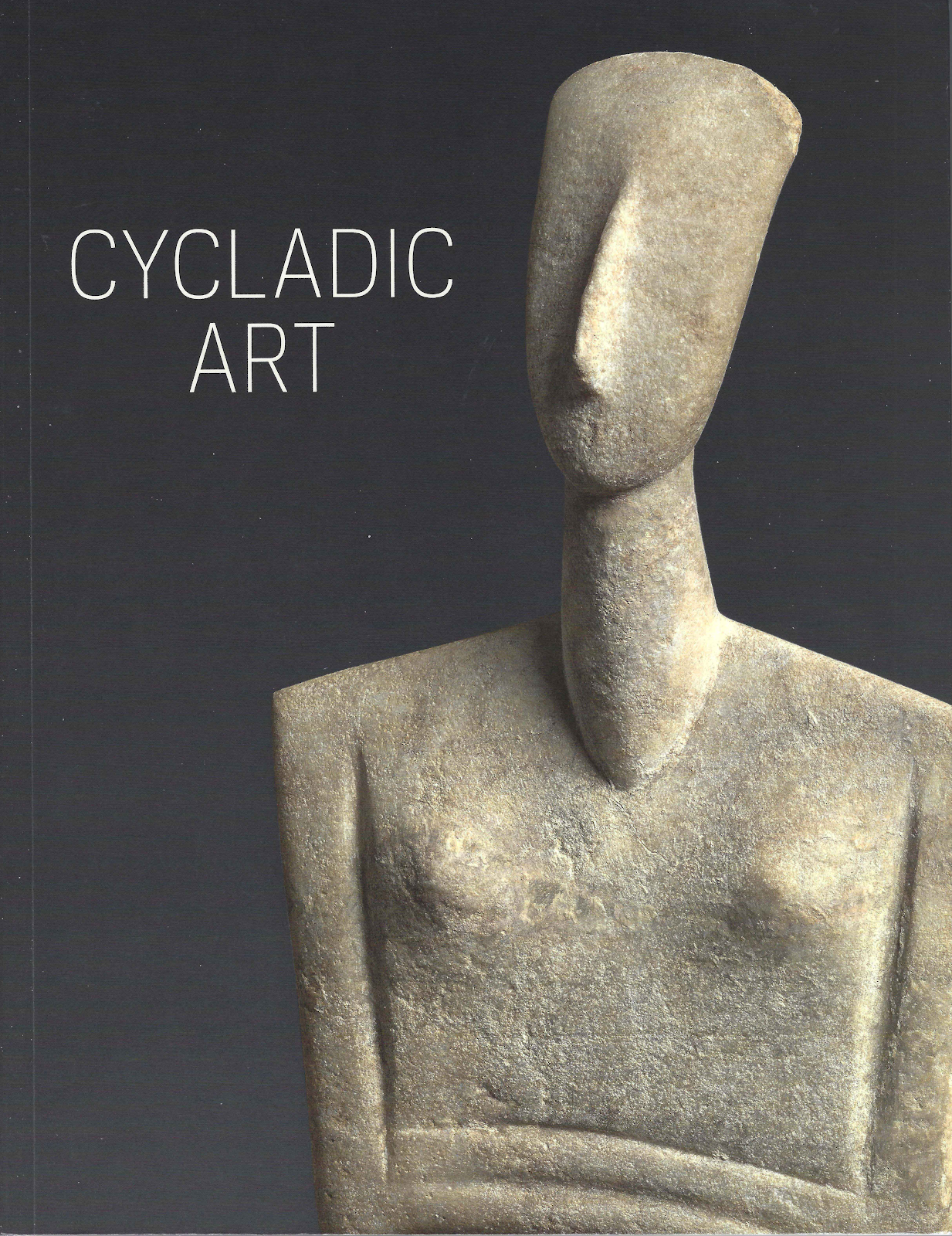
The Stern Collection of Cycladicising Figures

My review article on the Stern collection of Cycladicising figures currently on display at New York's Metropolitan Museum of Art has been published: "Artwashing the Cyclades: The Leonard N. Stern Collection at the Metropolitan Museum of Art," BMCR (July 2025).
"The Stern collection of Cycladica holds lessons for the way that we approach ancient material culture. Viewers of this display will have their perceptions of the Early Bronze Age Cyclades shaped by the objects presented to them. Viewers—and that includes visitors to the exhibition—trust that the curators who create displays of ancient material culture are presenting authentic ancient material."

| |
Bookmark and Share so Your Real Friends Know that You Know

Thursday, 22 May 2025

The Met returns three antiquities to Iraq

Source: Manhattan DA


New York's Metropolitan Museum of Art has returned three antiquities to Iraq (Manhattan DA Press Release). The three pieces are:
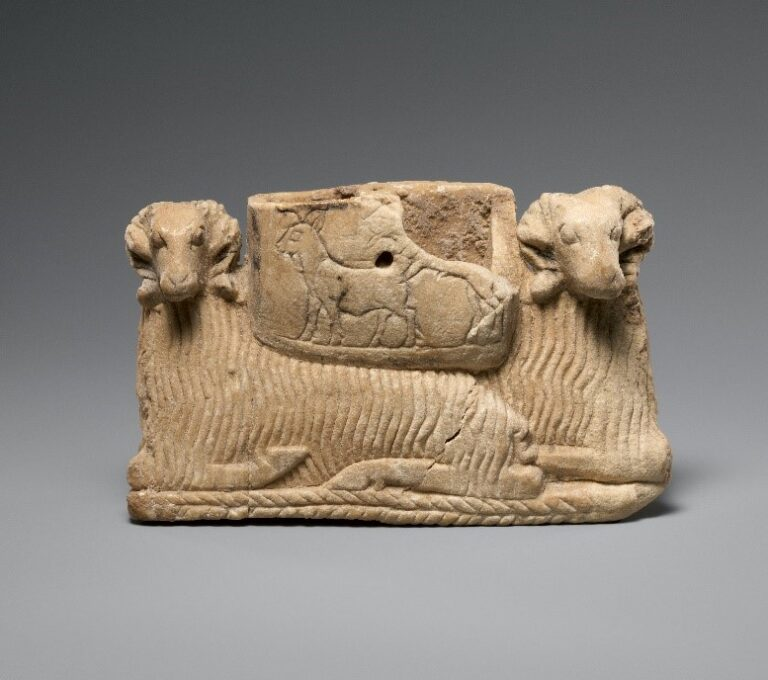
a. a Sumerian gypsum alabaster vessel supported by two rams, acquired from the Norbert Schimmel Trust in 1989. The history of the piece is provided:
By 1956, with N. Koutoulakis who bought it in Baghdad; from 1966, collection of Cecile de Rothschild; [by 1979, Robin Symes, London]; 1984, purchased by Norbert Schimmel from Robin Symes/ Xoilan Trader Inc., Geneva; from 1984, on loan to the Museum by Norbert Schimmel (L.1984.15.1); acquired by the Museum in 1989, gift of Norbert Schimmel Trust. 

b. a Mesopotamian terracotta female head, acquired from the Norbert Schimmel Trust in 1989. The  history of the piece is provided:
Before 1972, collection of Elie Borowski; by 1972, collection of Norbert Schimmel, New York; from 1983, on loan to the Museum by Norbert Schimmel (L.1983.119.12); acquired by the Museum in 1989, gift of Norbert Schimmel Trust. Deaccessioned for return to Iraq in May 2025.

c. a Mesopotamian terracotta male head, purchased from Robin Symes in 1972. It is reported to have been removed from the site of Isin. The history of the piece is provided:
By 1971, Robin Symes, London; acquired by the Museum in 1972, purchased from Robin Symes, London.

These returns renew the focus on antiquities handled by Robin Symes. The Met's "provenance" team could usefully look at the other Symes material currently on display in the museum. 

| |
Bookmark and Share so Your Real Friends Know that You Know

Wednesday, 5 March 2025

Worcester Art Museum Returns Hecht-linked Pots to Italy

Photo: Worcester Art Museum

The Worcester Art Museum has returned two Attic pots to Italy; they are now back on loan to the museum ("Worcester Art Museum Secures Landmark Cultural Cooperation Agreement with Italian Ministry of Culture Following Voluntary Return of Antiquities", January 30, 2025). What is striking about the two pieces is that they were both acquired in the mid-1950s, well before the 1970 UNESCO Convention.

The two pieces are:
a. An Attic black-figured amphora attributed to the Rycroft painter, showing Hermes, Leto, Apollo and Artemis; Dionysos and Maenads. Inv. 1956.83 (BAPD 301829). [Website]
b. An Attic black-figured cup decorated with a gigantomachy. Inv. 1956.91 [Website]

Both the amphora and the cup were acquired from Elie Borowski, though both could be traced back to Robert Hecht.

This will raise concerns for museums that had acquired pieces from both Borowski and Hecht well before the 1970 benchmark date. 


| |

 
Bookmark and Share so Your Real Friends Know that You Know

Tuesday, 25 February 2025

Metropolitan Museum of Art Returns Griffin to Greece


In 1972 the Metropolitan Museum of Art acquired a bronze griffin head that was "said to have been found in Olympia" (Bothmer), specifically in the river bed of the Kladeos near to the Gymnasium (inv. 1971.118.54). The find was recorded in Deltion for 1915. 

In 2019 Elizabeth Marlowe reminded us of the history of the head:
A bronze griffin head displayed at the museum just beyond the ticket counter was found in a riverbed at Olympia in Greece in 1914, only to disappear from the archaeological museum there years later. It resurfaced on the art market in 1948, when it was bought by a Met trustee who eventually donated it to the museum.

The museum responded:
The Bronze Head of a Griffin was a gift in 1972 from Walter Baker and has never been the subject of a dispute.

Yet now the Met has decided to return the griffin head to Greece and present the full collecting history:
Chance find by Th. Karachalios, supervisor of the Olympia Museum, in the bed of the Kladeos river at Olympia, near the gymnasium, in December 1914; in 1937/38 published as no longer to be found at the Olympia Museum; [by 1936, with Theodore Zoumpoulakis, Athens and Paris]; [Summer 1936, purchased by Joseph Brummer from Th. Zoumpoulakis]; [1936-1948, with Joseph Brummer, New York (P13197)]; January 15, 1948, purchased by Walter C. Baker from J. Brummer; 1948-1971, collection of Walter C. Baker, New York; acquired in 1972, bequest of Walter C. Baker.
Zoumpoulakis is known to have handled several objects that ended up in major European and North American collections, some perhaps of modern creation. The Met adds to the decision to return the head:
The Met and the Greek Ministry agreed to the return of the Griffin after careful review of records and letters determining that it could not have legitimately left the Archaeological Museum of Olympia.
What other suspicious pieces lurk among the collection housed in the Met? 

This return coincides with the "Cultural Property Now" event held at the Met. It is linked to the controversial display of the "Cycladicising" collection formed by Leonard N. Stern that contains material linked to the notorious Keros Haul, as well as items identified from the Becchina archive. 

| |
Bookmark and Share so Your Real Friends Know that You Know

Friday, 14 February 2025

Cleveland Museum of Art returns statue linked to Bubon

Source:
Cleveland Museum of Art

The Cleveland Museum of Art has agreed that the bronze figure acquired in 1986 will be returned to Türkiye. Scientific tests on soil samples appear to confirm that the figure was in fact found at Bubon and thus formed part of a series of imperial statues. For many years the headless statue was presented as a representation of the emperor Marcus Aurelius.

The Manhattan DA presented this account of the looting:
In the 1960s, individuals from a village near Bubon began plundering a Sebasteion, an ancient shrine with monumental bronze statues of Roman emperors and selling those looted antiquities to smugglers based in the coastal Turkish city of Izmir. Working with Switzerland-based trafficker George Zakos and New York-and-Paris-based trafficker Robert Hecht, they unlawfully removed the looted antiquities from Türkiye, transporting them to Switzerland or the United Kingdom, and then onward to the United States or other European destinations. Once the statues were in the United States, New York-based dealers such as Jerome Eisenberg’s Royal-Athena Galleries and the Merrin Gallery funneled the stolen Bubon bronzes into museum exhibitions and academic publications thereby laundering the pieces with newly crafted provenance. As the Bubon pieces graced the pages of exhibition catalogues and academic publications, the reputational value of the institutions who displayed the Bubon pieces increased and the financial value of the statues grew.
George Zakos was linked to the Lydian silver treasure that was returned to Türkiye by New York's Metropolitan Museum of Art. Zakos also handled the Sion Treasure that was acquired by Dumbarton Oaks, and three terracotta antefixes in the Metropolitan Museum of Art that appear to come from the Panionion on Mykale in Türkiye (1992.36.1; 1992.36.2; 1992.36.3).

The research of Dr Elizabeth Marlowe on the Bubon material is acknowledged by the Manhattan DA. 

Press release:

| |
Bookmark and Share so Your Real Friends Know that You Know

Another Bürki object returns to Italy

Source: MMA A psykter column-krater attributed to the Troilos painter was deaccessioned by New York's Metropolitan Museum of Art in June...