Showing posts with label Parthenon. Show all posts

Wednesday, 29 November 2023

The Parthenon Sculptures and the political arena

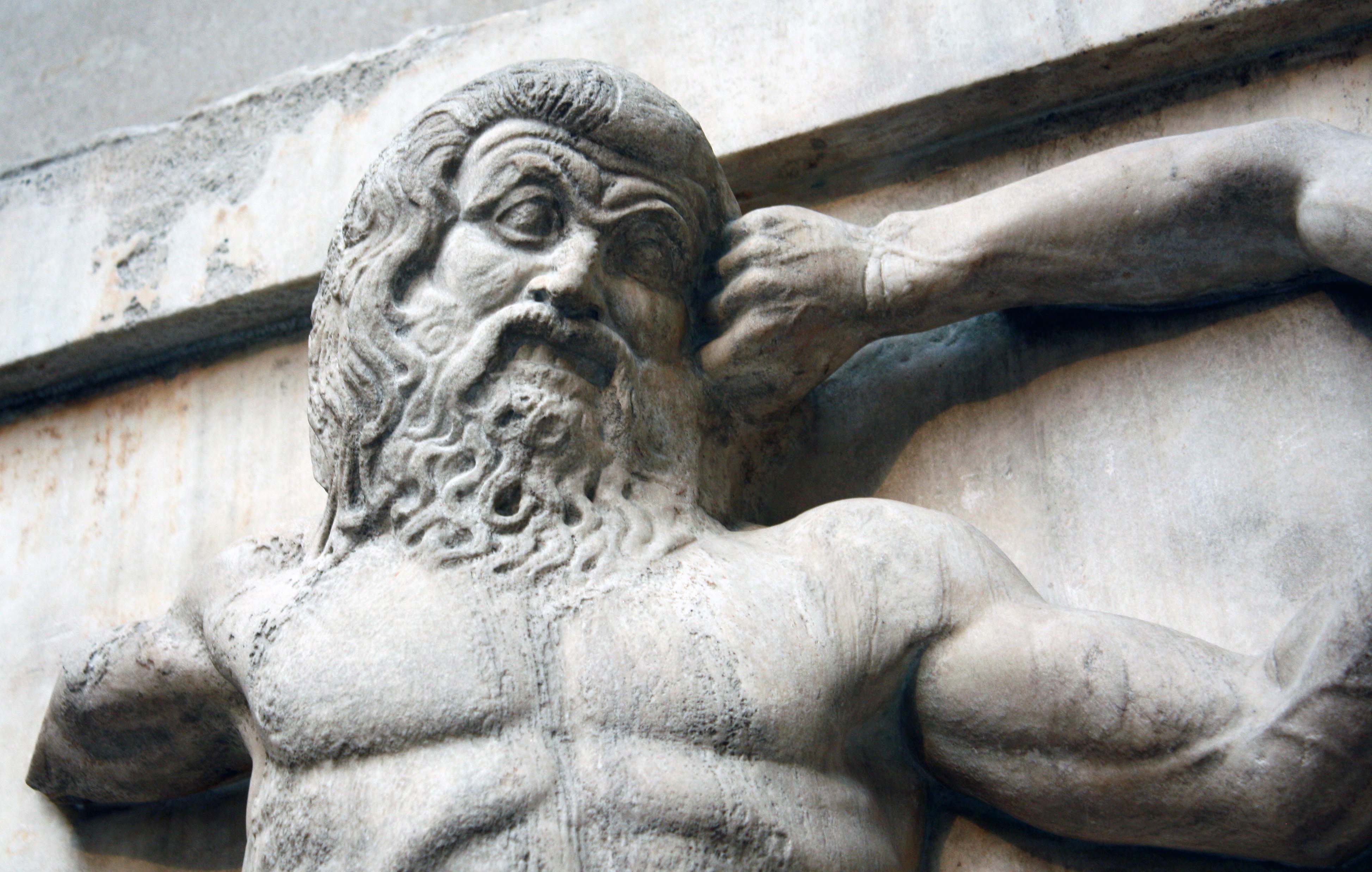
Metope from the Parthenon © David Gill

Listeners to Prime Minister's Questions in Parliament today can hardly have failed to notice that the Parthenon marbles are very much a live issue (see "PMQs: Rishi Sunak accuses Greek PM of grandstanding over Elgin Marbles", BBC News 29 November 2023). This follows the cancellation of a planned meeting between the British Prime Minister and the Greek Prime Minister that had been due to take place earlier in the week ("Sunak cancels Greek PM meeting in Parthenon Sculptures row", BBC News 28 November 2023). 

So much of the debate has been about whether or not the British Museum has the legal powers to return the sculptures. The Leader of the Opposition has hinted that he would be open to supporting a loan to Athens ("Parthenon Sculptures: Row about politics as much as history", BBC News 28 November 2023). 

But the art historical position is surely this: was the intention of the sculptors who created these architectural marbles—as well as Pheidias who oversaw the project—that they should be displayed together rather than to be dispersed? And should they be placed so that the public can see them in line of sight with the Parthenon? 

Then there is a cultural question: how can the display of the sculptures in Athens enhance the UNESCO World Heritage Site of the Athenian Akropolis

© David Gill


| |
Bookmark and Share so Your Real Friends Know that You Know

Monday, 13 March 2023

UK Government and the Parthenon: Update

Parthenon metope in the British Museum © David Gill

British Prime Minister, Rishi Sunak, has commented on the proposal that the architectural sculptures from the Parthenon that are currently displayed in the British Museum should be returned to Greece. Nick Gutteridge, writing in the Daily Telegraph ("Elgin Marbles will not stay in Greece, says Rishi Sunak", March 13, 2023), quotes Sunak on the "Elgin marbles" (commenting, "Greece calls [them] the Parthenon marbles" - perhaps overlooking the fact that archaeologists also talk about the building from which they were removed):
“The UK has cared for the Elgin Marbles for generations. Our galleries and museums are funded by taxpayers because they are a huge asset to this country,”
Is he suggesting that because the sculptures have resided in London for 200 years that they should remain here? Is Sunak placing an economic value on the heritage assets that reside in the UK's museums and galleries?

Sunak is also quoted as saying, 
“We share their treasures with the world, and the world comes to the UK to see them. The collection of the British Museum is protected by law, and we have no plans to change it." 
Tourism seems to be the justification for the UK to retain the sculptures. 

The Times (London) indicated that Sunak was in favour of a temporary loan of (some of?) the sculptures to Greece (Chris Smyth, Oliver Wright, Richard Fletcher, "Rishi Sunak latest: PM unveils defence spending boost and submarine deal", March 13, 2023). The report noted:
However, the museum is banned by law from disposing of objects in its collection and Sunak said “we have no plans to change it”. It is understood that Sunak does not believe that a long-term loan would be in the spirit of the British Museum Act.
There is little understanding that the Parthenon architectural sculptures were designed to be part of a specific building that now forms part of the UNESCO World Heritage Site on the Athenian Acropolis.

See also D. W. J. Gill and C. Chippindale, "The trade in looted antiquities and the return of cultural property: a British parliamentary inquiry", International Journal of Cultural Property 11 (2002), 50-64. [DOI].


| |
Bookmark and Share so Your Real Friends Know that You Know

Monday, 5 December 2022

UK Prime Minister's Position on Parthenon Sculptures Clarified

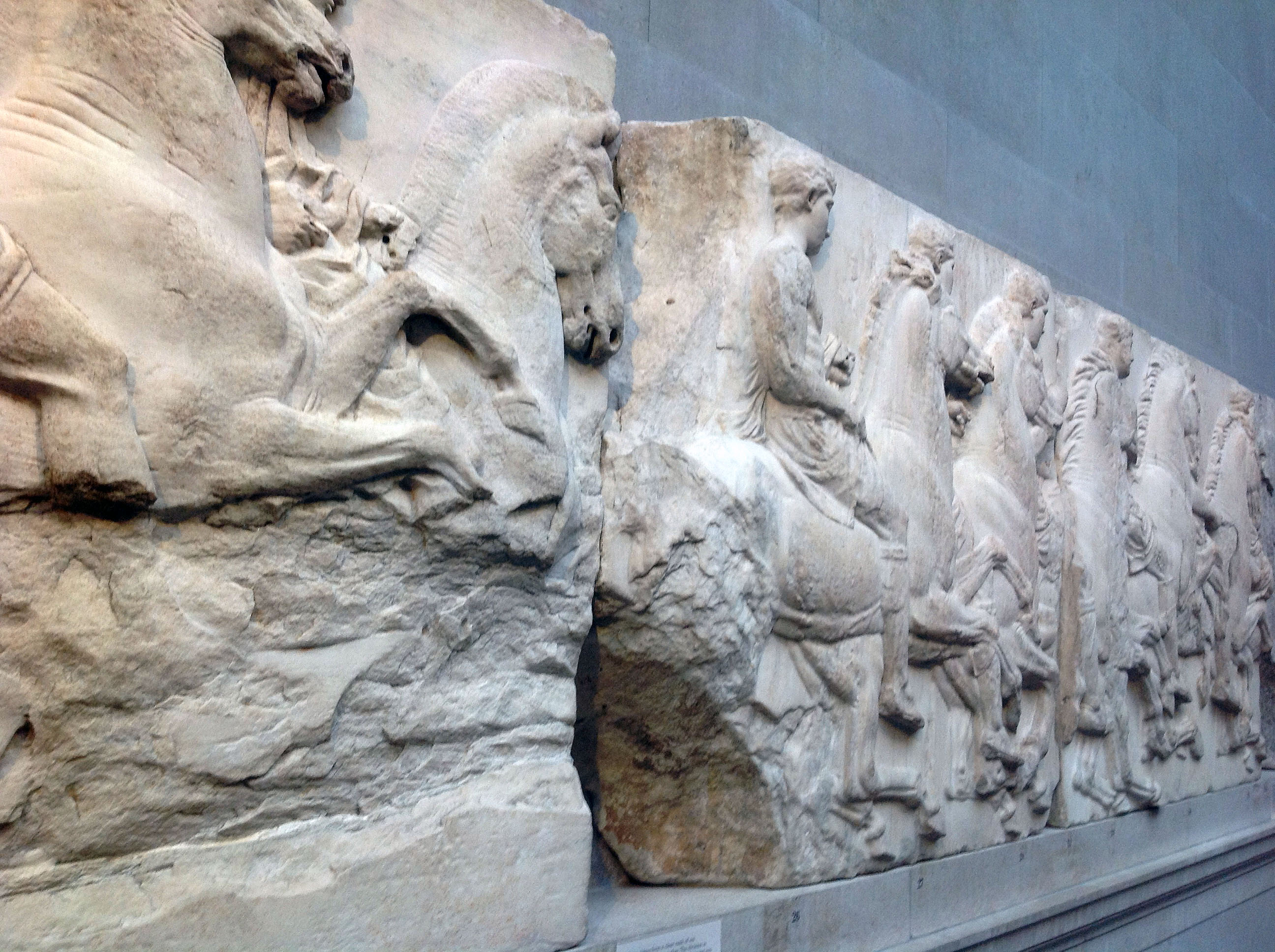
Part of the Parthenon frieze in the British Museum © David Gill


The British Museum is reported to be in an advanced state of discussion with the Greek authorities over the architectural sculptures originally created for the Parthenon on the Athenian Acropolis (Katie Razzall, "Deal to return Elgin Marbles to Greece at advanced stage - reports", BBC News December 3, 2022). Discussions have been taking place between George Osborne, the chair of the British Museum, and Kyriakos Mitsotakis, the Greek Prime Minister. More recent reports suggest that agreement is far from close ("Greece, Britain discussing Parthenon Marbles return but deal not close", ekathimerini.com December 5, 2022). It notes the UK Government position:
Asked about British Prime Minister Rishi Sunak’s position on their return, a spokesman said Britain had no plans to change laws which prevent removing objects from the collection apart from in certain circumstances. 
 “Our position on this hasn’t changed. Decisions relating to the care and management of the collections are a matter for the museum and its trustees,” the spokesman said.
It should be remembered that the UK Government compiled a substantial report on the Parthenon sculptures. This is discussed in:
Gill, D. W. J., and C. Chippindale. 2002. "The trade in looted antiquities and the return of cultural property: a British parliamentary inquiry." International Journal of Cultural Property 11: 50-64. [DOI]
The sculptures form an integral part of the main temple that is part of the UNESCO World Heritage Site

| |
Bookmark and Share so Your Real Friends Know that You Know

Monday, 1 August 2022

Parthenon Partnership Proposed

Pedimental Sculptures from the Parthenon © David Gill
Jonathan Williams, the Deputy Director of the British Museum, has called for a 'Parthenon Partnership' to encourage discussion about where the architectural sculptures from the Parthenon should be displayed ("British Museum calls for ‘Parthenon partnership’ with Greece over marbles", The Guardian 31 July 2022). Williams was interviewed by Sarah Baxter of The Sunday Times ("Will the Marbles Finally Go Home?"). 

The museum seems to be restating its ownership of the sculptures though opening up opportunities for dialogue.

The issue is simple. Should architectural sculptures created for a specific building in Athens be displayed within line of sight of that structure? Or should they be retained in London?

| |
Bookmark and Share so Your Real Friends Know that You Know

Saturday, 13 March 2021

Parthenon marbles: British Prime Minister makes his position clear

Parthenon frieze in the British Museum © David Gill
The architectural sculptures from the Parthenon, part of the World Heritage Site of the Athenian Acropolis, have been part of an exchange instigated by the British Prime Minister. 

In an interview on Friday 12 March 2021, Boris Johnson stated ("Greek culture minister challenges British PM’s claims on Parthenon sculptures", ekatherimini.com 12 March 2021):
“the UK government has a firm longstanding position on the sculptures which is that they were legally acquired by Lord Elgin under the appropriate laws of the time and have been legally owned by the British Museum’s Trustees since their acquisition.”
The central issue is about whether these stunning sculptures should be displayed in Bloomsbury, or be placed within line of site of the building on which they were once an integral part of the sculptural scheme. The intention of the original sculptors was to integrate them within the decorative programme of a single building.


Bookmark and Share so Your Real Friends Know that You Know

Friday, 14 July 2017

Tiffany Jenkins on Cultural Property: AJA review

I have noted earlier reviews of Jenkins' Keeping their marbles here. Guy D. Middleton (Newcastle University) has reviewed the book for AJA:
"If anything, Jenkins’ book convinces me that the issue of claims for the return of objects is something best approached on a case-by-case basis, that museums do have a role in soft diplomacy with communities that suffered due to past imperialism and that the efforts at building better relationships between museums and other groups are worthy."

Bookmark and Share so Your Real Friends Know that You Know

Thursday, 29 December 2016

Tiffany Jenkins on Cultural Property

(2016)
I am working my way through Tiffany Jenkins, Keeping their marbles: how the treasures of the past ended up in museums ... and why they should stay there (Oxford: OUP, 2016).

I will refrain from making my comments until I have finished but it is worth pointing out some of the reviews:
  • Mark Fisher, The Spectator March 2016: "Her level-headed and balanced book -- which not only considers the role of museums in shaping our historical understanding, but notes the way museums are being transformed by an outstanding generation of contemporary architects -- is a valuable contribution to the international debate, and will enrich audiences and scholars for a long time to come."
  • Kwame Opoku, Modern Ghana March 2016 [online]: "Jenkins, like many supporters of retention of artefacts of others, is very quick to argue that repatriating artefacts 'would be allowing modern-day sensibilities to rewrite history ' Seriously, does anybody believe that returning one Benin bronze to Benin is to rewrite history?"
  • Robert Hewison, Apollo April 2016: "Jenkins sees the collapse of grand museological narratives as the sign of a 'post-ideological age', but this book is hardly ideology-free. Concluding with the explosion of museum building in the Gulf and China, she writes that 'money has replaced might'. Yet these museums are a physical manifestation of the geopolitical forces that once brought the marbles to London. It seems inconceivable at present, but Greece may yet get them back."
  • Henrik Bering, WSJ 7 May 2016: "But for a poorly run country like Greece, what better way for the government to distract the population's attention than to engage in cultural warfare? From this perspective, says Ms. Jenkins, it is surely better that the marbles remain in Britain, so that the Greeks can continue to pose as much-wronged victims. Ms. Jenkins has produced a courageous and well-argued book; the howls you hear in the background are those of the contrition crowd."
  • Vicky Allan, The Herald [Glasgow] 16 May 2016: "Jenkins sets her arguments out unflinchingly, yet with balance".
  • Stefan Beck, The Weekly Standard June 2016: "This leads us, at last, to Jenkins's shrewdest and most devastating observation. Returning objects, and angrily demanding their return, serves today's great powers in much the same fashion that seizing those same objects served them centuries ago."
  • Lucia Marcini, Minerva 24.4 (July / August 2016): "She asserts that large visitor numbers and easy access for researchers are important reasons why leading museums should hold on to their celebrated treasures even though they may be plunder".
  • Sara Wajid, The Museums Journal 116.9 (September 2016) [online]
  • Johanna Haninck (Brown University), BMCR December 2016 [online]. "And while I find myself wholly at odds with the politics of this book, it is also the task of the reviewer to judge whether an author succeeds, on her own terms, to make a credible and persuasive intervention on behalf of her positions. Jenkins does not. Despite the sensationalistic claims made in the introduction and in the splashy marketing material, Keeping Their Marbles contributes almost nothing to (and arguably even sets back) the broader, evolving, and ever more sophisticated conversation about critical heritage studies, which should be a matter of concern to everyone who reads BMCR. The book is a diatribe—and not a very well-researched, well-documented, or well-written one—that has been dressed, advertised, and reviewed as an authoritative monograph issued by one of our field’s flagship presses."

Bookmark and Share so Your Real Friends Know that You Know

Wednesday, 8 June 2016

The Parthenon Sculptures: Moving on?

Parthenon frieze © David Gill
The 200th anniversary of the arrival of the Parthenon marbles in the British Museum is being marked. The anniversary is explored by Contantine Sandis ("Britain has kept the ‘Elgin Marbles’ for 200 years – now it's time to pass them on", The Conversation June 7, 2016). He suggests:
The time is right for all surviving sculptures to be reunited under this single roof [The New Acropolis Museum]. They should be displayed, for free, in a joint Greek and British international museum. This bicentenary provides the perfect opportunity for the two nations to collaborate instead of bicker over ownership. The British Museum would be praised worldwide for all its actions, culminating in a collaborative partnership that genuinely benefits humanity. It is high time that ownership of the past became a thing of the past and we began to think in terms of joint custody instead.
These are architectural marbles, and they need to be reunited visually in the same city as the extant monument, the Parthenon, that forms part of the UNESCO World Heritage Site.

Bookmark and Share so Your Real Friends Know that You Know

Monday, 30 March 2015

"Enabling the whole world to see, study and enjoy the sculptures of the Parthenon"

The Duveen Gallery © David Gill
Sir Richard Lambert has responded to the request by the Greek Government to mediate on the Parthenon sculptures [26 March 2015, letter]. The key message from the Trustees is this: "After full and careful consideration, we have decided respectfully to decline this request".

The position of the Encyclopedic Museum is presented: "Museums holding Greek works, whether in Greece, the UK or elsewhere in the world, are naturally united in a shared endeavour to show the importance of the legacy of ancient Greece. The British Museum is committed to playing its full part in sharing the value of that legacy for all humanity".

Visitor figures are pulled out: More than 6 million visitors a year visit the British Museum, and thereby the Parthenon Sculptures, free of charge. 

Lambert concludes his letter: "In conclusion, therefore, we would invite our colleagues in Greek museums to continue to work with us and to explore new ways of enabling the whole world to see, study and enjoy the sculptures of the Parthenon". He could have added "... in London, not Athens".

Yet the statement misses the key point. The architectural and visual context for these wonderful fifth century sculptures is in Athens, under Greek light.

I recorded my thoughts on this topic back in 2009.

Bookmark and Share so Your Real Friends Know that You Know

Thursday, 15 January 2015

Wednesday, 10 December 2014

Why loan the odd pedimental sculpture from the Parthenon?

The personification of the river Ilissos from the Parthenon
© David Gill
Lee Rosenbaum has explored why Nel MacGregor has been keen to make a loan of the 'Ilissos' statue to the Hermitage Museum ("Preparing for Lawsuit? Why Might Neil MacGregor Be Doubling Down on His Elgin Marbles Bet?", Culturegrrl December 9, 2014).

Rosenbaum suggests the following as a possible explanation of MacGregor's tactic:
More people view these cultural treasures in London than in Athens. And now, with the incipient loan program, the British Museum’s reach could be further broadened. Therefore, the world is better off if custodianship of these treasures remains in London.
This one statue is part of a pedimental group, that forms part of an architectural whole from a major fifth century BC temple known as the Parthenon. Is the time coming when these sculptures are placed in a specially designed museum and within line of site from the Athenian akropolis, a UNESCO World Heritage site?

Bookmark and Share so Your Real Friends Know that You Know

Monday, 8 December 2014

The British Museum and Cultural Imperialism

© David Gill
The loan of one of the pedimental sculptures from the Parthenon to the Hermitage raises a number of issues about cultural property. I was presenting a research seminar on this topic in Cambridge last month and I was asked how the debates fit into the wider discussion of cultural imperialism.

One of the most helpful reviews attacking the position of the Encyclopedic museum as maintained by James Cuno, and Neil MacGregor, has been provided by Roger Bland of the British Museum. 

It is well worth a read.

Saturday, 6 December 2014

The Parthenon loan to Russia

© David Gill
The British Museum has announced that it has loaned the statue possibly representing the river Ilissos to Russia (BBC News, 5 December 2014). This statue forms part of the west pediment of the Parthenon.

Neil MacGregor sees the loan as a "marble ambassador of a European ideal" (British Museum blog). The sculpture will be on loan to the Hermitage.

I suppose we could see the Parthenon as a building derived from tribute paying cities scattered around the Aegean. And I am sure that there were some asking questions in the fifth century BC about how their talents were being spent.

But it all depends on how you view empires and imperialism.

Bookmark and Share so Your Real Friends Know that You Know

Saturday, 23 February 2013

Cameron on the Parthenon marbles

Duveen Gallery, British Museum © David Gill
The Greek press has picked up on comments made by British Prime Minister David Cameron ("Cameron rules out return of Parthenon marbles", Ekathimerini February 21, 2013). After being asked about the Koh-i-Noor diamond, Cameron added that Britain would not be returning the "Elgin marbles". It is perhaps astonishing, but not surprising, that Cameron is so unaware of the sensitivities of the issue that he does not refer to the architectural sculptures removed from the Parthenon in a more appropriate way.

What is more interesting is the way that Cameron makes the case for the Encyclopedic Museums: "The right answer is for the British Museum and other cultural institutions to do exactly what they do, which is to link up with other institutions around the world to make sure that the things which we have and look after so well are properly shared with people around the world". It has perhaps escaped the notice of Cameron, and his civil servants advising him, that a large number of the signatories of the Declaration on the Universal Museum (which has just "celebrated" its tenth anniversary) have had to return recently surfaced antiquities to countries such as Greece, Italy and Turkey.

Bookmark and Share so Your Real Friends Know that You Know

Saturday, 1 December 2012

Test Poll: Parthenon marbles

Readers of LM are invited to comment on whether or not the Parthenon marbles should be retained in London. Have your say!


Bookmark and Share so Your Real Friends Know that You Know

Thursday, 4 August 2011

The world's most disputed antiquities

© David Gill
I noticed a list of the top 5 most disputed antiquities in the world. At number 1 are the Parthenon Marbles.

Would the Morgantina "Aphrodite" have been in your top 5?

There is no mention of the Rosetta Stone, the Getty Athlete, or the Benin Bronzes. What about the Egyptian mummy mask in the St Louis Art Museum?

What would LM readers suggest as their top 5? Would you differentiate between historic removals and items that have surfaced in more recent years?

Bookmark and Share so Your Real Friends Know that You Know

Monday, 21 February 2011

Nefertiti and the Parthenon Marbles

I am grateful to my sharp-eared colleague Chris Hall for drawing my attention to this interview.

Salima Ikram, American University in Cairo, and Tom Holland, were in conversation with John Humphrys of BBC Radio 4's "Today" programme earlier today [Monday, February 21, 2011: interview]. They discussed the limited looting in the Cairo Museum and were in agreement that the people of Egypt demonstrated that they cared about the protection of their antiquities.

Humphrys explored the issue of distributing significant finds across a number of museums around the world. They considered the issue of material from Afghanistan and drew attention to the forthcoming exhibition at the British Museum.

Salima Ikram was asked what she would like to see returned to Egypt and top of her list was the head of Nefertiti in Berlin. She was also concerned to see fragmentary pieces reunited. She also made it clear that she was not speaking in an official capacity.

Tom Holland seemed to hesitate over the question, and when pressed by Humphrys closed with the words, "I wouldn't say the Elgin marbles".

Image
© David Gill

Bookmark and Share so Your Real Friends Know that You Know

Friday, 27 August 2010

The history of looting

Professor Richard Evans, President-elect of Wolfson College, Cambridge, gave a lecture on 'Looted Art and its Restitution: moral and cultural dilemmas for the twenty-first century' on 7 June 2010 as the Third Lee Seng Tee Distinguished Lecture. A video of the lecture is now available.

There is a quick overview of looting in the ancient world (though nothing on Pergamon and the great display celebrating the defeat of the Gauls) and a mention of the Parthenon marbles and the Rosetta Stone. Much of the lecture addresses the issue of Nazi loot and Soviet seizures after the Second World War. There is even something on dental gold ending up in Swiss bank vaults. Evans has interesting comments about art dealers in the 1950s being more interested in the authenticity than the collecting history (i.e. provenance).

There is a discussion of looting in the Balkans as well as in Iraq following the Second Gulf War (including the Baghdad Museum).

There is consideration of the work by UK Spoliation Advisory Panel.

Evans turns to the concept of the Universal Museum, where "world culture" is shared.

In questions, Evans is asked directly to state his position on the Parthenon ("Elgin") marbles. Lord Renfrew asked the second question about recent archaeological looting and cultural property in New York's Metropolitan Museum of Art. Another question raised the issue about the statute of limitation.


Bookmark and Share so Your Real Friends Know that You Know

Monday, 26 April 2010

General Election 2010: The Parthenon Marbles and the LibDems

The Parthenon Marbles appeared in the review of the papers on Radio 4. The Sunday Express picked up on the fact that Nick Clgg, leader of the LibDems, has backed the campaign to return the Parthenon Marbles to Greece ("General Election 2010: EU zealot Nick Clegg's bid to return Elgin marbles", Sunday Express April 25, 2010). The issue has been raised because Clegg is seen as a threat by Labour and the conservatives.
The issue highlights his [sc. Clegg's] strident pro-European views and helps shatter his attempt in Thursday’s leaders’ debate to portray his party as moderate on EU affairs.
The BBC archive has the origin of the story ("Euro call for Marbles return", BBC News May 29, 2002).
Nick Clegg, a Liberal Democrat MEP, was chairing the conference and said: "It is high time the Marbles were restored to their proper setting."
"The current situation is a bit like displaying the clock from Big Ben in the Louvre in Paris - Brits wouldn't tolerate it, and neither should we expect the Greek Government to remain silent." 
I am not sure that the Parthenon Marbles will be a deciding factor in the election - the leaders need to address the UK deficit as well as issues such as education and health. However it is interesting to note European policy being defined by the party's attitude towards cultural property.

What does this say about the decision by the Labour administration (via the Ministry of Justice) to sell the Symes assets against the wishes of Italy?

Image
© David Gill

Bookmark and Share so Your Real Friends Know that You Know

Friday, 19 March 2010

"Ownership is a means of stewardship"


Patty Gerstenblith and James Cuno have been discussing the issues surrounding the return of antiquities ("The finder's keepers argument for antiquities", Minnesota Public Radio March 19, 2010). Much of the discussion was on objects that left their place of origin several centuries ago: the Parthenon marbles and the Rosetta stone. Cuno emphasised the role of the universal museum: "the world comes to London".

The discussion eventually got round to the contemporary issue of looting. The discussion of why so many major North American museums had returned objects to Italy and Greece was neatly side-stepped. Cuno made the point that few museums in North America would now buy antiquities that had surfaced on the market without appropriate documentation. ("if we can’t be confident … we don’t acquire it"). Gertsenblith made a comment about private collectors acquiring these same objects on the market and asked if museums were as rigorous over such donations.


Bookmark and Share so Your Real Friends Know that You Know

Another Bürki object returns to Italy

Source: MMA A psykter column-krater attributed to the Troilos painter was deaccessioned by New York's Metropolitan Museum of Art in June...