Showing posts with label SLAM. Show all posts

Thursday, 4 November 2021

The Case of the St Louis Art Museum Mummy Mask


I am looking forward to exploring the parallel histories for the Ka-Nefer-Nefer mummy mask at the Transatlantic Cultural Property Crime Symposium (November 2021).

Tantalising Evidence and a Failed Legal Claim: 

The Case of the St Louis Art Museum Mummy Mask 


Abstract 
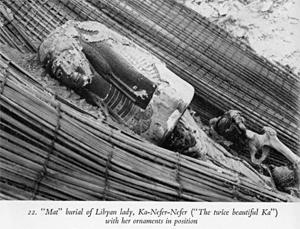
In 1952 Mohammed Zakaria Goneim, chief inspector of antiquities, excavated an Egyptian mummy and mask at Saqqara. This mummy mask was acquired by the St Louis Art Museum in 1998 from Phoenix Ancient Art for $499,000. The purchase led to a legal claim by the Egyptian authorities. However, the outcome was that the court confirmed the ownership with the St Louis Art Museum. The release of internal documents from the museum reveals a story that suggests that key members of the museum’s curatorial team were aware of sensitivities relating to the history of the mummy mask. 

There are two parallel and irreconcilable accounts of the mask between 1952 and 1998. The vendor had acquired a statement from Charly Mathez in 1997 that claimed that the mummy mask had been seen by him in Brussels in 1952 (or 1958). The mask is then reported to have been part of the collection of Suzana Jelinek in Zagreb, before moving into an anonymous Swiss private collection. The mask was then reported to have been displayed for a short time in Geneva’s Musées d’art et d’histoire in 1997 prior to its sale. 

The Egyptian authorities claimed that the mask had followed a different path and that it was recorded in the archaeological store in Saqqara in 1959. It then moved to the Cairo Museum from 1959 to 1962 when it returned to the store in Saqqara. It went back to Cairo in 1966, and was finally noted as missing in 1973. It appears to be significant that the personal name in hieratic script that was visible on the right hand of the mask when excavated had been removed by the time that the piece passed through the dealer in Switzerland as demonstrated by publicity photographs taken around 1997. 

The museum does not appear to have responded to suggestions (in January 2006) that it should check with the Egyptian authorities to ensure that the mask had not been stolen from the Saqqara store. Zahi Hawass, the then Secretary General of the Egyptian Supreme Council of Antiquities, raised his concerns about the mask in February 2006. This was supported by well-documented instances of thefts from the Saqqara stores, including two alabaster ducks that were returned to Egypt. 

The legal case developed in January 2011, and a case for forfeiture was filed in March 2011; this was dismissed on 31 March 2012 by a US District Judge. A parallel case for declamatory relief was finally withdrawn in June 2014. It does not appear to have been disclosed during the hearings that John H. Taylor, an Egyptologist at the British Museum, had raised his concerns about the mask to SLAM curators in February 1999. Such concerns were apparently left uninvestigated by the museum or the legal teams. 

The SLAM case raises the issue that legal challenges may not be the most effective way to reclaim cultural property. In contrast the Italian government has managed to secure the return of several hundred objects from North American public museums and private collections through the effective use of the media that has placed moral pressure on museums, auction houses and private individuals. The way ahead may be to develop a more rigorous due diligence process for museum acquisitions that would enhance the legal ownership of objects acquired through the market.

Bookmark and Share so Your Real Friends Know that You Know

Friday, 12 January 2018

Phoenix Ancient Art responds to seizures

Source: ARCA

A spokesperson for Phoenix Ancient Art has responded to the seizures of antiquities that took place last week (see Search Warrant listing the items). In a statement to Artnet News ("New York Antiques Dealer Phoenix Fine Art Raided on Suspicion of Selling Looted Artifacts", 11 January 2018) it was stated:
“We immediately notified the US private collection that consigned the works to us of the situation, and we do know that the works have a long museum exhibition history spanning from the Geneva Musée d’art et d’Histoire, 1978–1981, and at the Getty Museum, Los Angeles, 1984–1996.”
The temporary display of recently surfaced antiquities in public museums is an interesting one. How are these documented? What about the display of the Ka Nefer Nefer mummy mask in Geneva? And was the (anonymous?) loan to the J. Paul Getty Museum by a dealer or a collector? This recalls the loan of fragments of the Berlin painter krater, a pot that was subsequently returned to Italy.

Should museums be accepting loans for antiquities that do not have documented and authenticated histories that stretch back to the period before 1970?

North American museums will be aware of The Association of Art Museum Directors Releases New Guidelines on Loans of Antiquities and Ancient Art  (2006) that states "Potential long-term loans (i.e. loans not part of visiting exhibitions) with incomplete relevant provenance histories should be evaluated under criteria comparable to those for acquisitions". This should now be read against Revisions to the 2008 Guidelines on the Acquisition ofArchaeological Material and Ancient Art (2013), and specifically, "Member museums normally should not acquire a Work unless provenance research substantiates that the Work was outside its country of probable modern discovery before 1970 or was legally exported from its probable country of modern discovery after 1970".


Bookmark and Share so Your Real Friends Know that You Know

Monday, 22 December 2014

The Ka Nefer Nefer Mummy Mask: its collecting history

My article on the acquisition of the Ka Nefer Nefer mummy mask by the St Louis Art Museum has been published in The Journal of Art Crime ("The case of the Ka Nefer Nefer mummy mask", vol. 12, 13-25). It discusses previously undisclosed information about when the curatorial team at SLAM became aware of aspects of the collecting history. In particular, there is discussion of the exchanges in 1999 that brought about "new" information about when the mask had first been sighted.

The article is likely to raise issues about the apparent lack of rigour in the due diligence process adopted by SLAM during the acquisition, and the unwillingness to discuss the collecting history with Egyptian authorities when concerns were first raised with SLAM (including with the Director).

I close with this question:
Will professional responsibilities bring the SLAM team to reopen discussions with the Egyptian authorities to ensure the mask's return to Egypt?

Friday, 7 November 2014

AIA and St Louis

The Archaeological Institute of America has issued a statement about the sale of antiquities by the St Louis branch of the organisation ("New AIA Statement on the St. Louis Society", November 4, 2014). The AIA's Governing Body has highlighted three reasons why the St Louis branch should not sell (and I have restructured the format):

  • First, the objects from Egypt were entrusted to the Society by the British School of Archaeology in Egypt in 1914 for the benefit of the citizens of St. Louis and were intended to be placed in a public institution where they would be used for public education and scholarly study. Selling them breaks this fundamental commitment, now a century old. The citizens of St. Louis have been deprived of part of their legitimate heritage. 
  • Second, the objects were obtained by division from an authorized excavation, thus enhancing their scholarly and educational value. Such objects should remain in the public domain, not sold off in a manner that risks removing them from public view. 
  • Third, the actions of the St. Louis Society have seriously compromised the Archaeological Institute of America itself as an organization that upholds the value of preserving, studying and presenting the record of the human past for the benefit of future generations. 

The Egyptian objects on sale at Bonhams last month were withdrawn and purchased by New York's Metropolitan Museum of Art.

The St Louis Art Museum clearly feels that it wants to display Egyptian antiquities and even went as far as acquiring a mummy mask that subsequently turned out to have been excavated at Saqqara (and allegedly removed from the archaeological store).

Now some Mesoamerican pieces are due to be sold by Bonhams in New York.

The ArtNewspaper has drawn attention to the issue ("St Louis society attempts second sale of antiquities", November 6, 2014). Washington Paid Lobbyist Peter Tompa has now added his voice to the debate (as a comment to the ArtNewspaper):
In the golden age of archaeology, archaeologists were collectors and some wealthy collectors were amateur archaeologists. Now, its seen as heresy for an AIA chapter to sell a well-provenance piece which has somehow become inalienable for the ideologues that run the organization. Hopefully, this episode will prompt a much needed discussion of the issue and how the AIA's positions have only alienated itself from others who also care about preserving artifacts from the past.
He conveniently overlooks the AIA's position in order to promote the position maintained by those organisations who retain the services of his law firm. I note that the IAPN has increased its contribution to Bailey & Ehrenberg by $10,0000 in 2014.

Tompa's incautious language ("heresy", "ideologues", "alienated") highlights the insecure position held by the lobbyist.

I hope that the St Louis Society realise their responsibility to retain the objects for future generations in St Louis. It is not too late for their officers to withdraw the pieces from the sale.

Bookmark and Share so Your Real Friends Know that You Know

Friday, 24 October 2014

The Curator, the Fax and the Mummy Mask


I remain puzzled by the St Louis Art Museum. It seems that less than one year after acquiring the Ka-Nefer-Nefer mummy mask (the one with the name erased from the hand), a distinguished Egyptologist from a major international museum faxed a member of the curatorial team at SLAM drawing attention to the link with Saqqara.

It also seems that another museum-based Egyptologist encouraged the leadership team at SLAM to contact the Egyptian Supreme Council of Antiquities (SCA), in part because it was known that the archaeological store at Saqqara had been 'disturbed'.

The leadership team at SLAM will need to explain how they responded to this information. Or did they wait until Zahi Hawass contacted SLAM's director of February 14, 2006?


Bookmark and Share so Your Real Friends Know that You Know

Wednesday, 22 October 2014

US Government Pays $425,000 for Legal Case

It now appears that the US Government has had to pay $425,000 in legal fees and costs to the St Louis Art Museum (Jenna Greence, "Feds Lose Fight Over Ancient Mummy Mask", National Law Journal October 21, 2014).

The mask was purchased for $499,000 in 1998.

Pat McInerney of Dentons and Husch Blackwell was quoted:
"The Mask of Ka-Nefer-Nefer was a fascinating case that ultimately showed the extent to which the government unfortunately overreached in an attempt to literally take an artifact from the Saint Louis Art Museum using a lawsuit the court said was ‘completely devoid of any facts’ supporting their claims,” McInerney of Dentons said. “Credit really belongs to the art museum and its leadership for not caving in to the government's threats and, after winning the case, for compelling the government to pay the cost of defending a lawsuit that never should have been filed."
There are continuing questions about the acquisition that need to be resolved. The key ones are these:

  • When did curators at SLAM become aware that the mask was linked with Saqqara?
  • Did curators at SLAM contact the Egyptian SCA on learning that the mask was linked to Saqqara?
  • When was the personal name of Ka-Nefer-Nefer removed from the hand on the mask?


Bookmark and Share so Your Real Friends Know that You Know

Ka-Nefer-Nefer Mummy Mask: the unanswered questions

Paul Barford has drawn attention to the response by SLAM's legal team to the conclusion of the two parallel legal cases.

Patrick McInerney will need to explain when his client was first informed that the Ka-Nefer-Nefer mask was derived from Saqqara. How did curators at SLAM respond? Then there is the issue of when (or if) SLAM contacted the Egyptian SCA about the mask. And was the Director of SLAM ever advised to contact Zahi Hawass about the acquisition and the Saqqara link? Did the curator responsible for the acquisition provide misleading or inaccurate information to the Cairo Museum? How was the collecting history authenticated?

The discussion about the mask is far from over.

Bookmark and Share so Your Real Friends Know that You Know

Saturday, 11 October 2014

Due dilgence: time for a rethink?

I have been writing my regular column for the Journal of Art Crime. My focus is on the what auction-houses consider to be an appropriate level of "due diligence". Is there an over-reliance on searching the databases of bodies such as the Art Loss Register? Is this the time for a more rigorous due diligence process to be adopted? (I have made a suggestion in my column.)

I have also finished a separate major study of the acquisition of the Ka-Nefer-Nefer mask by the St Louis Art Museum. The underlying theme is on the quality of the due diligence process but also the professional responsibilities of museum professionals when concerns are raised about the origins of a piece. Readers of LM over the last few weeks will have realised that this has been a fairly regular topic.

Bookmark and Share so Your Real Friends Know that You Know

Tuesday, 30 September 2014

Ka Nefer Nefer Mask: a review of its acquisition

I have now reviewed the available correspondence and memoranda for the acquisition (and related due diligence process) of the Ka Nefer Nefer mask purchased by the St Louis Art Museum. There is clearly new evidence that has not been discussed before and that did not appear to form part of the legal cases that concluded in 2014.

I am grateful to numerous colleagues who have assisted in pointing me to leads - and for making helpful comments.

The key questions are as follows:
a. What was the reported collecting history of the mask as known at the point of acquisition by SLAM?
b. How was the emerging collecting history (and documentation) verified?
c. How did SLAM curatorial staff respond to the February 1999 revelation that the mask had been excavated at Saqqara? Did they contact the Egyptian SCA?
d. Did SLAM curatorial staff contact Dr Zahi Hawass and the SCA when allegations were made about how the mask surfaced?
e. When was the identifying personal name removed from the hand on the mask?


Bookmark and Share so Your Real Friends Know that You Know

Thursday, 25 September 2014

SLAM and the SCA

It is now clear that curators at SLAM knew that the Ka Nefer Nefer mummy mask (but with name removed) was the one excavated (with name intact) at Saqqara when they were informed by an Egyptologist in February 1999. I remain puzzled by the apparent lack of contact with the Egyptian Supreme Council of Antiquities (SCA). Why did SLAM contact the Cairo Museum in 1997 (prior to the purchase) in preference to the SCA?

Were the authorities at SLAM ever advised to contact the SCA? Was that advice heeded?


There are continuing questions about the depth of rigour in the due diligence process both pre and post the acquisition of the mask.

Bookmark and Share so Your Real Friends Know that You Know

Monday, 22 September 2014

Ka Nefer Nefer Mask: some clarification

I am very grateful to officials at SLAM for clarifying some of the collecting history of the Ka Nefer Nefer mask. It has now been confirmed that a SLAM conservator was informed by a European Egyptologist in February 1999 that the mask was the one excavated at Saqqara by Goneim (and subsequently published by him). It is not clear if curators at SLAM contacted the SCA immediately or if they waited seven years until they received a letter from Zahi Hawass in February 2006.

Bookmark and Share so Your Real Friends Know that You Know

Wednesday, 17 September 2014

The identification of Ka Nefer Nefer

I have already reflected on the significance of 1999 for the collecting history of the Ka Nefer Nefer mask acquired by the St Louis Art Museum.

It now appears that a member of the curatorial team at SLAM was informed about the Saqqara link by an Egyptologist at a major encyclopedic museum less than a year after its acquisition.

This is correspondence that has not been mentioned in the discussion of the mask up to this point.

During the subsequent few months Sidney Goldstein seems to have been made aware of Charly Mathez's claim to have seen the mask in Belgium, and in late September 1999 Goldstein wrote to him for clarification. (Up to now it has not been clear what prompted Goldstein to write his letter.)

Did Goldstein write again to Mohammed Saleh in Cairo seeking further advice? Which Egyptian officials were contacted by SLAM curators in 1999 to check out the Saqqara story?

What additional due diligence steps did SLAM undertake to explore the emerging collecting history for the mask?

Bookmark and Share so Your Real Friends Know that You Know

Tuesday, 16 September 2014

The Ka Nefer Nefer Mask and 2005

Paul Barford has written about Michel van Rijn's public comments on the acquisition of the Ka Nefer Nefer mask by the St Louis Art Museum.

I am grateful to a reader of LM for sending me the archived link to van Rijn's post. Although it is not dated (there is an update on 18 December 2005), the correspondence confirms a date in December 2005.

Leaving aside style and presentation, what did van Rijn suggest and reveal?

  • the mask had been removed from the store at Saqqara
  • the name of the person responsible
  • the removal took place in the 1990s
  • the mask had been published by Goneim

In December 2005 this information had not been made public although it appears that SLAM curators had been advised of the Saqqara link and the Goneim publication some years before.

So how did van Rijn know this?

SLAM officials need to release documents that will outline what they knew and when.

And what did they do to investigate these claims?

Bookmark and Share so Your Real Friends Know that You Know

Monday, 15 September 2014

The Ka Nefer Nefer Mask and the Saqqara link

In the spring of 1998 the St Louis Art Museum acquired the Ka Nefer Nefer mask that is now known to have been excavated at Saqqara. In late December 2005 a notice on the Museum Security Network drew attention to that association of find-spot. In January 2006 Brent R. Benjamin, the Director of SLAM, issued a memorandum in which he stated:
The St Louis Post-Dispatch, the Riverfront Times, and the Art Newspaper have made inquiries regarding the provenance of the Museum’s Mummy Mask, acquired in 1998. These inquiries resulted from an allegation, posted on an internet website, that the mask was stolen from storage of a Museum in Saqqarah, Egypt. You may visit the site at http://www.michelvanrijn.nl/artnews/st-louis.htm. In our opinion, it speaks for itself. Michael van Rijn is the proprietor of this website, based in the Netherlands, which is devoted to art theft issues. Mr. van Rijn has supplied no information in support of his accusation.
It should be noted that this website is no longer available.

SLAM needs to release the full set of documentation that would reveal when members of staff in the museum first became aware of the Saqqara association.

Serious questions will need to be raised if it becomes clear that SLAM staff knew about the link months or even years before December 2005 but did not contact the Egyptian authorities.

Bookmark and Share so Your Real Friends Know that You Know

Thursday, 11 September 2014

The Ka Nefer Nefer mask and 1999

In the fall of 1999 Sidney Goldstein seems to have been very concerned to clarify when the Ka Nefer Nefer mask had surfaced on the 'Belgian' antiquities market. What new information had been received by the curatorial team?

Earlier today I requested a series of documents from the curatorial team at St Louis Art Museum. As far as I can see these letters have not been released - or some of them only in part.

I hope that in the interests of transparency those documents will be made public (and in full).

There is a growing possibility --- and I stress the possibility, no more --- that SLAM officials could have been aware of the Saqqara and Goneim link for several years before the information became public in late 2005.

Bookmark and Share so Your Real Friends Know that You Know

Tuesday, 9 September 2014

Where was Ka Nefer Nefer displayed in Geneva?

Mask excavated at Saqqara
Last week I commented on issues about Sidney Goldstein's explicit statement that the Ka Nefer Nefer mask had been displayed in Geneva's Museum of Art and History. This was stated in a letter to the Cairo Museum apparently prior to acquisition. Indeed the letter has been cited as proof of the rigour of the due diligence process conducted by the curatorial team at the St Louis Art Museum.

It became clear last week that curatorial staff at Geneva's Musées d'art et d'histoire could find no clear record of the mask's display in the museum. Indeed there was a strong rejection of the link between the museum and the mask.

The letter to Cairo has not been placed in the public domain so some of the detail is unclear.

So was Goldstein mistaken? He had presumably been to Geneva to view the mask. Where did he see it? Was it in the museum? Or was it elsewhere? When did he see it?

We should also remember that the letter suggests that Goldstein's is asking about parallels for the mask.

Does the Goldstein letter contain two statements that could have been misleading? Does this undermine the claim that curatorial staff at SLAM conducted a rigorous due diligence process?

It would be helpful for SLAM to reveal details of the acquisition process in order to eliminate any uncertainty.

Bookmark and Share so Your Real Friends Know that You Know

Monday, 8 September 2014

Ka Nefer Nefer and the detached flake

Mummy mask excavated at Saqqara
Last week I commented on the existence of a photograph that predated the acquisition of the Ka Nefer Nefer mummy mask by the St Louis Art Museum. I was particularly interested in the issue of when the personal name had been erased. Paul Barford has now noted a flake of paint that seems to have become detached and wonders what caused it.

Could the removal of the name have destabilised the surface of the mask in the immediate area? And does this hint at when the name was removed?

It would be helpful for SLAM to release their conservation report on the mummy mask.

Bookmark and Share so Your Real Friends Know that You Know

Wednesday, 3 September 2014

The mummy mask and the erased inscription

Mummy mask from Saqqara
The mummy mask that all now agree was excavated at Saqqara once had a hieratic inscription on the (right) hand, a feature observed by Paul Barford back in March 2011 ("A question for St Louis"). Paul has an image from Goneim's 1956 publication that shows the inscription quite clearly. Yet this personal name has been erased as K.M. Johnston's recent photo of the mask shows.

I have now seen an image of the mask taken c. 1997 (or perhaps a little before) that shows that the inscription had been erased prior to acquisition by the St Louis Art Museum.

So when was this name removed? At what point in the collecting history?

And why would someone want to remove a personal name that would have identified the mask?

Curators at SLAM never seem to have addressed this significant (lost) detail.

Bookmark and Share so Your Real Friends Know that You Know

Tuesday, 2 September 2014

Goldstein, Geneva, and the Mummy Mask

Mummy mask excavated at Saqqara
It is known that Sidney Goldstein, the Associate Director of the St Louis Art Museum (SLAM) as well as the curator of Ancient Art, wrote a letter to Dr Mohammed Saleh, then director of the Cairo Museum, prior to the acquisition of the Egyptian mummy mask—known to have been excavated at Saqqara—by the museum in March 1998. The letter does not appear to have been released by SLAM, but a copy was made available to Malcolm Gay for his key article in February 2006. As the veracity of this letter has never been challenged we must assume its accuracy. (The letter was mentioned in a statement, "Press inquiry regarding provenance of mummy mask, 19.1998", issued by Brent Benjamin in January 2006.)

The letter includes a statement by Goldstein:
It [sc the mask] is currently on exhibition in the Egyptian exhibition at the Museum of Art and History in Geneva.
Goldstein, who also appears to have been a donor supporting the acquisition ("Sid Goldstein in memory of Donna and Earl Jacobs"), appears to be making a statement that the mask was on display in a major European museum. This claim would no doubt suggest to Saleh that the enquiry about "parallels" for the mask on display in Geneva was about a well-established object.

Was Goldstein mistaken about the venue? When was the mask displayed in the Musée d'histoire et d'art? What is the documentation for this exhibition?

| |
Bookmark and Share so Your Real Friends Know that You Know

Thursday, 21 August 2014

Was Kaloterna 'disappeared'?

Egyptian mummy mask excavated at Saqqara
Paul Barford has written on the Kaloterna collection that once (allegedly) possessed the Egyptian mummy mask discovered at Saqqara and for the time being in the St Louis Art Museum (SLAM). He raises an uncomfortable possibility for the curatorial team at SLAM:
One might quite legitimately ask, whether there is a possibility that Kaloterna was 'disappeared' by the Socialist Federal Republic of Yugoslavia's State Security Apparatus for political reasons.
I am sure that SLAM officials would not wish to be seen to have gained an object that could have been released back onto the market by such a means.

Did the SLAM rigorous due diligence process explore (and eliminate) this possibility?

My own position is that I think that it is likely that the Kaloterna collection is fictional. No authenticated documentation has yet been produced through the due diligence process to show that it existed.

Bookmark and Share so Your Real Friends Know that You Know

Further returns to Italy from the MMA

Formerly New York MMA 1991.11.6.1–2. Source: MMA New York's Metropolitan Museum of Art has returned another batch of Greek and Roman ant...