Showing posts with label India. Show all posts

Thursday, 22 December 2016

Arrest of New York dealer

The New York Times is reporting continuing fall-out over the antiquities from Asia case (Tom Mashberg, "Prominent Antiquities Dealer Accused of Selling Stolen Artifacts", New York Times December 21, 2016). The case relates to Nancy Wiener.

The complaint states:
“Defendant used a laundering process that included restoration services to hide damage from illegal excavations, straw purchases at auction houses to create sham ownership histories, and the creation of false provenance to predate international laws of patrimony prohibiting the exportation of looted antiquities,”
Such claims undermine the position of the market at a time when dealers are claiming to conduct due diligence. How common is the creation of "sham ownership histories"? What about placing objects in collections so that they pre-date the 1970 UNESCO Convention?

Jason Felch adds an important observation:
“Even after a decade of reforms, the art market continues to be pervaded with stolen and looted antiquities.”

Bookmark and Share so Your Real Friends Know that You Know

Friday, 7 August 2015

Heritage Crime Matters

My review article of two edited volumes has now appeared in the latest issue of Antiquity 89 (2015) 991-93 [Contents]:

DUNCAN CHAPPELL & SASKIA HUFNAGEL (ed.). Contemporary perspectives on the detection, investigation and prosecution of art crime: Australasian, European and North American perspectives (Farnham & Burlington (VT): Ashgate, 2014).

LOUISE GROVE & SUZIE THOMAS (ed.). Heritage crime: progress, prospects and prevention (Basingstoke & NewYork: Palgrave Macmillan, 2014).

There were a number of profitable contributions, perhaps my favourite being the essay by Dr Sam Hardy on 'Threats to cultural heritage in the Cyprus conflict'.
This essay resonates with the early 2015 debates about the looting of archaeological sites in Syria and northern Iraq during the present conflict with IS.
A second important contribution was:
In Contemporary perspectives, Duncan Chappell and Damien Huffer bring a helpful perspective on the looting of archaeological sites in Southeast Asia and the appearance of material on the Australian market. They comment on material acquired by major Australian museums from the art dealer Subhash Kapoor; some of the items have now been returned to India
Some of the papers written from a legal perspective were disappointing and, in my opinion, rather failed to engage with the reality of the issues.

Some of the comments I make in the review relating to the situation in the UK are now dated given the changes announced for the Portable Antiquities Scheme.

At the end of the article I ask two key questions:
Is the academic discourse of ‘heritage crime’ failing to address such significant archaeological concerns? Is the continuing and unsustainable destruction of the archaeological record to supply the insatiable demands of the market having serious intellectual consequences for our discipline?
Can I suggest that readers of LM have a look at the books in a library before spending £135?

Bookmark and Share so Your Real Friends Know that You Know

Thursday, 2 April 2015

"Owning stolen stuff is not part of our mission"

I applaud the Stephan Jost, Director of the Honolulu Museum of Art, for his comments about the voluntary return of antiquities to India (Jennifer Sinco Kelleher, "Antiquities looted from India end up at Honolulu museum", Denver Post April 2, 2015). The items have been linked to Subhash Kapoor.

Jost added: "I'm not sure we've done anything heroic. We just want to do the right thing."

The article cites James Cuno:
It's very rare for evidence to come to light to show a museum has items that were illegally obtained, said James Cuno, president and CEO of the J. Paul Getty Trust. 
"Claims might come from time to time. But most often those claims are based on just interest or the construction of national identity," he said. "If evidence is provided that's convincing, no museum will resist."
Perhaps the Director of the St Louis Art Museum could read this story and "do the right thing" and return the Ka-Nefer-Nefer mummy mask.

Perhaps the present proprietor of the Icklingham Bronzes could read this story and "do the right thing" and return the Roman objects to the UK.

Perhaps the curator at Fordham would like to return the bronze Caracalla from Bubon to Turkey?

Perhaps the New York owner of the Koreschnica krater would like to return it to FYROM? (And perhaps also the North American university museum that acquired some of the other burial goods.)

And the list could go on.

What we are seeing is a professional response to the shame of the Indian antiquities scandal.

And could the AAMD add "Owning stolen stuff is not part of our mission" to its policy on acquiring archaeological material? It might just help curatorial staff to remember.


Bookmark and Share so Your Real Friends Know that You Know

Thursday, 5 March 2015

National Gallery of Australia to return statue to India


The National Gallery of Australia will be returning one of its statues to Australia. This seems to be another instance of unauthenticated documentation.

The full story can be found on Chasing Aphrodite. There is an interesting comment on how new ethical standards are likely to be applied retrospectively ... and making those adopted in the US (by AAMD) look very dated.

Bookmark and Share so Your Real Friends Know that You Know

Monday, 8 September 2014

Shiva Returns to India

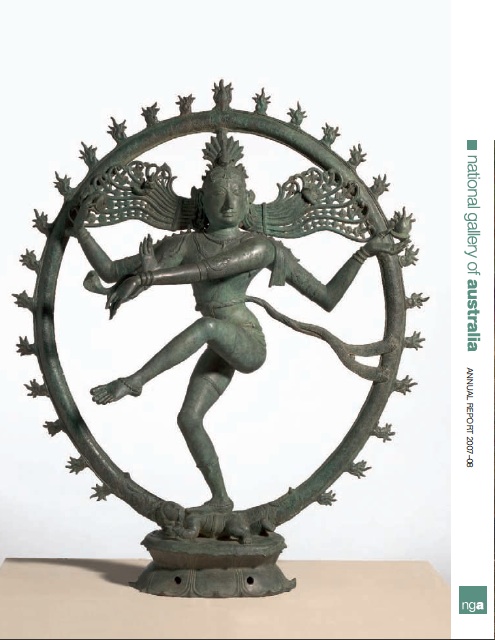
In August 2008 I commented on the Shiva acquired by the National Gallery of Australia.

The BBC has now reported that the museum will be returning the bronze to India along with another from the Art Gallery of New South Wales ("Australia to return 'stolen' Hindu statues to India", 5 September 2014). The story quoted a statement from the Australian Prime Minister's office:
Returning the sculptures "is testimony to Australia's good citizenship on such matters and the importance with which Australia views its relationship with India". 
I hope that the Prime Minister and his government team will reflect on how these two major museums acquired the objects in the first place. What went wrong with the due diligence process? How could museums in Australia adopt a more rigorous acquisition policy?

And what about the other objects that were derived from the same source? Will those same Australian museums be handing them over as well?

For the earlier statement from Canberra see here.

Bookmark and Share so Your Real Friends Know that You Know

Tuesday, 19 August 2014

Visual Heritage Project

Apsara Iyer has been researching the formation and persistence of antiquities trafficking markets in Peru and India. Iyer has now launched the Visual Heritage Project.
The site aims to crowd sources images for archaeological sites from Instagram or Flickr and pairs these photos with older archival images. The goal is to create a visual record of archaeological sites that allows viewers to see how a location has changed over time and can be consulted in cases of looting, automatically updating to incorporate up-to-date photography via public social media posts. Right now, the crucial step is raising awareness about the site to gather more photographs and documentation. 
Readers of LM should consider contributing to the project.

Bookmark and Share so Your Real Friends Know that You Know

Tuesday, 7 August 2012

Robust provenance and the Sackler

The Arthur M. Sackler Gallery, part of the Smithsonian, has issued a statement in response to the Subash Kapoor case (August 3, 2012). Interestingly concerns are spreading to material linked to his brother Ramesh. The statement notes:
The Sackler owns four South Asian art objects purchased from a separate business, Kapoor Galleries (1015 Madison Avenue, New York), owned by Ramesh Kapoor, Subhash Kapoor’s brother. These include: a marble bracket figure, India, 13th c. (purchased in 1995); a seated figure of Jambala, Tibet, bronze, 13th c. (purchased in 1996); a Gautama Buddha, Tibet, gilt copper, 14th c. (purchased 1997); and a pair of lamps of fortune, India, bronze, 17th c. (purchased in 2000).
What are the authenticated collecting histories of these four items?

I also note that the release mentions that the curatorial staff are investigating the "robust provenance information" for the items. I hope that museum professionals will consider dropping the use of the misleading word "provenance" and replace it with "collecting history". Perhaps the curatorial staff would like to read more on the terminology.

Bookmark and Share so Your Real Friends Know that You Know

Monday, 6 August 2012

Shiva in Canberra: statement

The National Gallery of Australia has issued a statement about the acquisition of the bronze Shiva.
The National Gallery of Australia is aware of media reports that Indian police have arrested the New York based art dealer, Mr Subhash Kapoor, for allegedly trafficking Indian antiquities and that the case against him is currently underway. 
At this point, the Gallery has not been contacted by Indian police or any other authority regarding this matter. 
The Gallery contacted the Indian High Commission in Canberra earlier this week to ensure a fully co-operative approach will be taken if required. 
The Gallery is one of at least 18 major international art institutions including the Metropolitan Museum of Art in New York; Museum of Fine Arts, Boston; the Smithsonian’s Freer and Sackler Galleries in Washington DC and the Art Institute of Chicago that have acquired works of art through gifts or purchased from Mr Kapoor. 
‘As with all leading art institutions around the world, the Gallery is committed to strict due diligence when acquiring works of art, particularly with regards to determining provenance,’ said Ron Radford AM, Director of the National Gallery of Australia. 
The Gallery purchased its Shiva as Nataraja, Lord of the Dance from Mr Kapoor in 2008 following a thorough due diligence process regarding the quality, provenance and time of its departure from India. 
‘It is yet to be determined if this work is one of the stolen works as has been speculated about in certain media outlets. 
The Gallery has not received any advice from Indian authorities to this effect at this time,’ said Ron Radford. 
The Gallery adheres to the principles of the UNESCO Convention on the Means of Prohibiting and Preventing the Illicit Import and Export and Transfer of Ownership of Cultural Property. The Australian Government is a signatory to this Convention. 
The Gallery has commenced plans to undertake a comprehensive re-examination by a panel of internal and external art experts of the supplied documentation as well as the provenance of work acquired from Mr Kapoor, as many international Galleries are also doing. 
The Gallery is liaising closely with the Indian High Commission in Canberra to ensure that the internationally accepted protocols for dealing with such issues are followed.
There is currently no image available on the NGA website. The earlier collecting history for the piece is unstated.

Bookmark and Share so Your Real Friends Know that You Know

Shiva in Canberra

The National Gallery of Australia is finding itself being asked serious questions about its acquisition policies. At the heart of fuss is the bronze sculpture of Shiva as Lord of the Dance, acquired in 2008 with the assistance of National Gallery of Australia Foundation. The bronze appears on the back cover of the Annual Report of the NGA.

Michaela Boland ("NGA admits buying from disgraced dealer", The Weekend Australian August 4, 2012) noted
The National Gallery of Australia has admitted to acquiring 21 items from disgraced New York antiquities dealer Subhash Kapoor, who was arrested on an Interpol warrant and extradited to India, where he is being held on suspicion of trading in stolen precious artefacts. 
Among $11 million worth of antiquities Kapoor has so far admitted to trading is a large 900-year old bronze sculpture of the Indian god Shiva, which the Canberra gallery bought in 2008 and displayed prominently on the back cover of its annual report that year.
The museum seems reluctant to comment:
Gallery director Ron Radford, who was director when the statue was acquired, declined to answer questions from The Weekend Australian about the discovery or say how the gallery would address the concerns of the collecting community.
The NGA now needs to present its due diligence process and to demonstrate that the Shiva had a recorded history that could be recorded back to at least 1970.

Bookmark and Share so Your Real Friends Know that You Know

Australia and Indian antiquities

I have already noted the issue of recently surfaced Indian antiquities in North America. It is now reported that dealer Subhash Kapoor supplied six Indian objects to the Art Gallery of New South Wales ("Shady dealer sold art to AGNSW", The Australian August 6, 2012).

Among the pieces reported to be from Kapoor is a stela from West Bengal showing Varaha "rescuing the earth goddess" (inv. 164.1999). This was "Purchased with funds provided by the Art Gallery Society of New South Wales 1999". Two other pieces had been purchased in 1994, and another also in 1999.

The Director of AGNSW is Dr Michael Brand whose comments drew attention to the way that looting "destroyed the evidence used by archaeologists to build stories"..

This new revelation follows news that Kapoor also sold material to the National Gallery of Australia in Canberra. The NGA said that the acquisition of the objects was subject to a "thorough due diligence process".

The Australian makes a major point "about the lack of thorough research conducted by Australia's collecting institutions when accepting gifts and buying works".

I have had caused elsewhere to note the display of classical material in Australian collections.

Bookmark and Share so Your Real Friends Know that You Know

Saturday, 28 July 2012

Indian Antiquities Seized in New York

I note that US authorities have seized $20 million worth of Asian antiquities in Manhattan ("Museums Studying Dealer’s Artifacts", New York Times July 27, 2012). The dealer, Subhad Kapoor, is presently under arrest in India. The NYT notes:
Before his arrest, Mr. Kapoor, 63, used the Web site (now closed) for Art of the Past, his gallery at 1242 Madison Avenue, at 89th Street, to advertise the many prominent museums to which he had donated or sold items. The list includes the Metropolitan Museum of Art; the Norton Simon Museum in Pasadena, Calif.; and the Smithsonian Institution’s Freer Gallery of Art and Arthur M. Sackler Gallery in Washington.
I have been checking the Annual Report of the Trustees of the Metropolitan Museum of Art and note the appearance of Kapoor's name as a donor. Harold Holzer of the Met comments to the NYT about the gifts from Kapoor, though I also observe that they include a West Bengal antiquity "in honor of his daughter" and a West Bangal terracotta figure "in memory of his mother". One of his earliest gifts was a stone figure of Nagaraja in 1991.

Bookmark and Share so Your Real Friends Know that You Know

Tuesday, 1 September 2009

Reflecting on the Significance of Operation Blackhole

Back in 1991 the British press was full of investigations relating to a particular auction house. Among the stories was the London dealer who denied that he had hidden in a wardrobe during a police raid in India (Sarah Jane Checkland, "Sotheby's expert denies hiding", The Times (London) November 28, 1991).

Now 18 years is a long time ... but something caught my eye. In 2007 Patrick Radden Keefe wrote up the issue of Indian antiquities ("The Idol Thief; Inside one of the biggest antiquities-smuggling rings in history", The New Yorker May 7, 2007). It starts with the June 2003 arrest of Vaman Narayan Ghiya in Jaipur, India. The article, well worth a read, eventually turns to Peter Watson's investigations of the mid 1990s and documented in Sotheby's: Inside Story (1997). Watson records the way that a former employee of the auction house, James Hodges, disclosed information. Keefe puts it like this:
Hodges explained that Ghiya was "a kind of Indian Medici," whose relationship with Sotheby's was so close that he would stop at Hodges's house in Shepherds Bush on his way into London from the airport to drop off antiques he had carried on the plane.
Think of the impact that Giacomo Medici has had on the world of classical antiquities: museum after museum returning antiquities to Italy ... and who knows what other 1000s (literally) of items have yet to identified.

So Ghiya's role in supplying Indian antiquities is compared to Medici. Keefe continued with the account of Operation Blackhole and the work of Indian superintendent of police, Anand Shrivastava, who is tracking down the looters.

But Keefe dropped in a really interesting comment and observation:
A regal Jain Tirthankara that the police say Ghiya's men stole from Krishna Vilas, an Archaeological Survey-protected site in Rajasthan, turned up as Lot 135 in Sotheby's September, 2000, catalogue, with an estimated price of twenty-five thousand to thirty-five thousand dollars. (A Sotheby's spokeswoman told me that the auction house has "not knowingly sold any items" consigned by Ghiya since 1997, and has "the most rigorous due diligence program in the art market." She also said that Lot 135 was consigned by a New York dealer who to her knowledge has no connection to Ghiya.)
Lot 135 in the "Indian and Southeast Asian Art" sale of Friday September 22, 2000 was described as follows:
An Indian red sandstone figure of a Jina circa 12th century
standing naked on a block pedestal containing a pair of guardian lions, his hands pendent by his sides, and quadrapartite chest ornamented with a diamond shaped srivatsa, his circular face with serene expression and smiling mouth with recessed corners, wide heavy-lidded eyes, delicately arched eyebrows, attended by two smaller figures, the upper section with a pair of apsaras beneath a pair of rampant elephants flanking a prostrate central figure surmounting a tiered canopy
height 56 in. (142.2 cm.)
Its estimate was $25000-$35000. It remained unsold. There is no mention of collecting history.

The piece appears to have been mentioned in an earlier report (Antony Barnett, "Sotheby's faces probe on sales of temple loot: The arrest of an Indian millionaire on charges of stealing antiques has raised questions about the role of a famous British auction house in the sale of rare artefacts", The Observer July 6, 2003).
On 22 September 2000, there was a major auction of Indian art and antiques at Sotheby's in New York. One lot in the catalogue was a twelfth-century red sandstone figure that was priced at Dollars 35,000 (pounds 21,000).

Indian police now confirm that this valuable sculpture was stolen from the Vilasgarh temple in September 1999. The theft had been recorded at the local police station.

'Ghiya purchased these idols for one million rupees (pounds 13,000) and smuggled them out of India,' said Srivastava.
Barnett's article finished with a statement from Sotheby's:
The spokeswoman said: 'Sotheby's requires all its consignors to warrant that they have legal title to sell items consigned by them and we do not accept for sale items where there is any reason to think that this warranty may not be true. If we were ever subsequently provided with information suggesting that any items, sold or to be sold, had been stolen, we would always cooperate with the authorities and/or any claimants.'
Why am I interested in this story? Why should I be curious about Indian antiquities that surfaced without documented histories on the New York market in 2000?

What will be scale of the fallout from the "Ghiya Conspiracy"?


Bookmark and Share so Your Real Friends Know that You Know

Saturday, 1 November 2008

AAMD and Antiquities: The Object Register's First Listing

Back in June the Association of Art Museum Directors (AAMD) tightened the acquisition policy of its member institutions by launching its Object Register ("AAMD and Antiquities: The Object Register"). The point of the register was explained:
The AAMD Object Registry provides access to all relevant information known about our members' acquisitions of archaeological material and ancient art lacking complete provenance after November 1970, the date of the UNESCO Convention on the Means of Prohibiting and Preventing the Illicit Import and Export and Transfer of Ownership of Cultural Property. Art museums regularly acquire archaeological material and works of ancient art - of which objects with incomplete provenance represent but a fraction.
The first piece has now appeared: "Ganesha Stele: an image of a seated Ganesha in high relief, a vidyādhara above his right shoulder and his rat vehicle at his feet" (Portland Art Museum 2008.66). The "provenance information" (i.e. the collecting history) is provided: "Christie’s Rockefeller Center, Sale #2024, 16 September 2008, Lot 377. Sotheby’s New York, 23 March 2000, Lot 139".

Where was this piece between 1970 (the date of the UNESCO Convention) and 2000 (the date of its surfacing in New York)? Perhaps somebody will recognise it - after all, that is the point of the AAMD Object Register.


Image
From the AAMD Object Registry: Portland Art Museum 2008.66

Finds from Afrati, Crete

Source of image: Michael C. Carlos Museum Creative Commons The repatriation of Norbert Schimmel's helmets and mitrai from New York's...