Showing posts with label Geneva. Show all posts

Friday, 7 October 2022

From Geneva to the Steinhardt Collection


Source: Manhattan DA

Five objects (Attic head aryballos; Protocorinthian duck and owl; Corinthian bull's head; Ionian ram's head; Apulian head vase) in the seizure of antiquities from the collection of Michael Steinhardt have something in common: they were placed on loan with Geneva's Musée d'Art et d'Histoire (1978–81). And all of them were subsequently placed on loan with the J. Paul Getty Museum (1984–96). And all of them were sold by Robin Symes to the Beierwaltes in 1996. All but the Apulian head vase appear in images from the Medici Dossier: the head vase itself appears in the Becchina archive (with an Attic skyphos now returned from the Shelby White collection).

Such loans to these two museums were used as a response to seizures  in 2018 from another dealer. It is almost as if the loans created an acceptable collecting history. This raid seems to relate to another group of material. 

The Geneva museum has associations with other loans such as the Ka-Nefer-Nefer mummy mask (though the museum does not have a record of the loan). And the Getty accepted loans of fragments from some of these same individuals, as well as complete pots such as the Steinhardt hydria.

It should be noted that the same Geneva museum appears to be linked to the Apulian grave group acquired by Berlin

What part did Geneva play in handling recently surfaced antiquities and providing them with a history? What other objects passed this way? The papers relating to the Steinhardt seizure expand on this aspect.

And how many of these objects were then placed on loan with the J. Paul Getty Museum? 

Note: Identifications from the Medici Dossier and the Becchina Archive were made by Christos Tsirogiannis.

| |
Bookmark and Share so Your Real Friends Know that You Know

Wednesday, 24 July 2019

The return of looted objects to their countries of origin


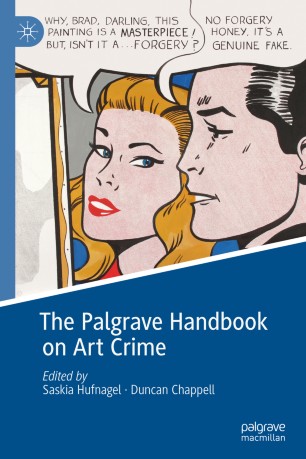
‘The return of looted objects to their countries of origin: the case for change’, in S. Hufnagel and D. Chappell (eds.), The Palgrave handbook on art crime (London: Palgrave Macmillan, 2019), 797–813.

Abstract
The journalistic investigation into the activities of a major London auction house in the 1990s led directly to the seizure of an important cache of documentation and images at the Geneva Freeport. As a result over 350 items have been returned to Italy from dealers, galleries and auction houses, North American public museums and private collectors. The 1970 UNESCO Convention on the Means of Prohibiting and Preventing the Illicit Import, Export and Transfer of Ownership of Cultural Property has provided a benchmark for claims on the return of cultural property. There is a need to enhance the due diligence process undertaken by the market. Although some North American museums have changed their acquisition policies, some curatorial staff display open hostility towards enhanced ethical responsibilities and an unwillingness to comply with further investigations. [online]
 
Bookmark and Share so Your Real Friends Know that You Know

Friday, 12 January 2018

Phoenix Ancient Art responds to seizures

Source: ARCA

A spokesperson for Phoenix Ancient Art has responded to the seizures of antiquities that took place last week (see Search Warrant listing the items). In a statement to Artnet News ("New York Antiques Dealer Phoenix Fine Art Raided on Suspicion of Selling Looted Artifacts", 11 January 2018) it was stated:
“We immediately notified the US private collection that consigned the works to us of the situation, and we do know that the works have a long museum exhibition history spanning from the Geneva Musée d’art et d’Histoire, 1978–1981, and at the Getty Museum, Los Angeles, 1984–1996.”
The temporary display of recently surfaced antiquities in public museums is an interesting one. How are these documented? What about the display of the Ka Nefer Nefer mummy mask in Geneva? And was the (anonymous?) loan to the J. Paul Getty Museum by a dealer or a collector? This recalls the loan of fragments of the Berlin painter krater, a pot that was subsequently returned to Italy.

Should museums be accepting loans for antiquities that do not have documented and authenticated histories that stretch back to the period before 1970?

North American museums will be aware of The Association of Art Museum Directors Releases New Guidelines on Loans of Antiquities and Ancient Art  (2006) that states "Potential long-term loans (i.e. loans not part of visiting exhibitions) with incomplete relevant provenance histories should be evaluated under criteria comparable to those for acquisitions". This should now be read against Revisions to the 2008 Guidelines on the Acquisition ofArchaeological Material and Ancient Art (2013), and specifically, "Member museums normally should not acquire a Work unless provenance research substantiates that the Work was outside its country of probable modern discovery before 1970 or was legally exported from its probable country of modern discovery after 1970".


Bookmark and Share so Your Real Friends Know that You Know

Tuesday, 21 February 2017

More surfacings from Symes and Medici in London

Source: Schinousa Archive.
Dr Christos Tsirogiannis spotted three items that were auctioned in Westminster, London today.

It is a good reminder of the apparently poor due diligence process conducted by some sectors of the antiquities market.

a. Lot 49 Scythian rhyton. Sold: £3100. Collecting history: 'Property of a London gentleman; acquired from a major Mayfair gallery; acquired on the London art market before 2000.' As this seems to appear in the Schinousa archive it should be associated with the London dealer Robin Symes.

b. Lot 79 Silver Sycthian moose.
Sold: £2790. Collecting history: 'Property of a London gentleman; acquired from a major Mayfair gallery; acquired on the London art market before 2000.' This also seems to appear in the Schinousa archive indicating an association with Symes.
Source: Schinousa Archive.
Source: Medici Dossier

c. Lot 183. Roman head of a youth. Opening bid: £900. Collecting history: 'Property of a London gentleman; acquired from a major Mayfair gallery; acquired on the London art market before 2000.'  This head appears to be the one that features in the Medici Dossier seized in the Geneva Freeport.

These three examples suggest that owners of material that passed through the hands of Symes and Medici are now looking for less high profile ways of disposing of their collections. Notice that in all three cases the date of surfacing is said to be 'before 2000' yet clearly well after the 1970 UNESCO Convention.

I understand that the relevant UK and European police authorities have been informed of the auction.


Bookmark and Share so Your Real Friends Know that You Know

Thursday, 4 February 2016

Robin Symes, Returns from Geneva and the Medici Dossier

Source: Medici Dossier
Dr Christos Tsirogiannis has identified the Etruscan male and female heads from the two sarcophagi returned from Geneva to Italy. The two feature in the Medici Dossier.

This raises issues about how this material moved from Medici to Symes. Was the return based on positive photographic identification?

In addition, where was the sarcophagus conserved? Who was responsible for the restoration?

We look forward to the official Italian press release where further information is likely to be revealed.

Bookmark and Share so Your Real Friends Know that You Know

Tuesday, 2 February 2016

More on the Symes material returned from Switzerland

© Ministère public genevois
There is growing interest in the 45 cases of antiquities returned to Italy from Switzerland. The Swiss authorities have issued a press statement (January 14, 2016). The statement does not identify Symes but merely states:
The antiques had been brought to Geneva by a former high-profile British art dealer, whose name has been linked in the past to the trading of several looted antiquities throughout the world.
It also tells us that the material was stored under the name of an offshore company. It also appears that the warehouse owner had not been paid for 15 years.

What other storage facilities are likely to emerge? What about the material seized in London? There can be no reason for the UK Government to fail to co-operate with one of our European partners on this important cultural property issue.

Bookmark and Share so Your Real Friends Know that You Know

Tuesday, 9 September 2014

Where was Ka Nefer Nefer displayed in Geneva?

Mask excavated at Saqqara
Last week I commented on issues about Sidney Goldstein's explicit statement that the Ka Nefer Nefer mask had been displayed in Geneva's Museum of Art and History. This was stated in a letter to the Cairo Museum apparently prior to acquisition. Indeed the letter has been cited as proof of the rigour of the due diligence process conducted by the curatorial team at the St Louis Art Museum.

It became clear last week that curatorial staff at Geneva's Musées d'art et d'histoire could find no clear record of the mask's display in the museum. Indeed there was a strong rejection of the link between the museum and the mask.

The letter to Cairo has not been placed in the public domain so some of the detail is unclear.

So was Goldstein mistaken? He had presumably been to Geneva to view the mask. Where did he see it? Was it in the museum? Or was it elsewhere? When did he see it?

We should also remember that the letter suggests that Goldstein's is asking about parallels for the mask.

Does the Goldstein letter contain two statements that could have been misleading? Does this undermine the claim that curatorial staff at SLAM conducted a rigorous due diligence process?

It would be helpful for SLAM to reveal details of the acquisition process in order to eliminate any uncertainty.

Bookmark and Share so Your Real Friends Know that You Know

Tuesday, 2 September 2014

Goldstein, Geneva, and the Mummy Mask

Mummy mask excavated at Saqqara
It is known that Sidney Goldstein, the Associate Director of the St Louis Art Museum (SLAM) as well as the curator of Ancient Art, wrote a letter to Dr Mohammed Saleh, then director of the Cairo Museum, prior to the acquisition of the Egyptian mummy mask—known to have been excavated at Saqqara—by the museum in March 1998. The letter does not appear to have been released by SLAM, but a copy was made available to Malcolm Gay for his key article in February 2006. As the veracity of this letter has never been challenged we must assume its accuracy. (The letter was mentioned in a statement, "Press inquiry regarding provenance of mummy mask, 19.1998", issued by Brent Benjamin in January 2006.)

The letter includes a statement by Goldstein:
It [sc the mask] is currently on exhibition in the Egyptian exhibition at the Museum of Art and History in Geneva.
Goldstein, who also appears to have been a donor supporting the acquisition ("Sid Goldstein in memory of Donna and Earl Jacobs"), appears to be making a statement that the mask was on display in a major European museum. This claim would no doubt suggest to Saleh that the enquiry about "parallels" for the mask on display in Geneva was about a well-established object.

Was Goldstein mistaken about the venue? When was the mask displayed in the Musée d'histoire et d'art? What is the documentation for this exhibition?

| |
Bookmark and Share so Your Real Friends Know that You Know

Another Bürki object returns to Italy

Source: MMA A psykter column-krater attributed to the Troilos painter was deaccessioned by New York's Metropolitan Museum of Art in June...