Showing posts with label Bonham's. Show all posts

Thursday, 27 November 2025

Two lots withdrawn from Bonham's sale

Becchina Archive
Source: Christos Tsirogiannis.

Dr Christos Tsirogiannis has identified two lots that were due to be auctioned at next week's sale of antiquities at Bonham's (4 December 2025). Both feature in the Becchina archive. They have now been withdrawn (along with lot 126).


Lot 15 is a South Italian terracotta figure. It was said to have been in a private collection in France in 1979 before entering the Nina Borowski collection in the 1990s. It is reported to be part of unnamed private collection in Switzerland. The entry in the Palladion Antike Kunst records suggest that it was part of an unnamed Swiss private collection.

Lot 123 is an Attic red-figured pelike showing an Eros on horseback currently in the Lloyd and Jeanne Raport collection. Tsirogiannis informs me that the pelike was consigned by Becchina to Sotheby's in London on 17 May 1983 (lot 264).

Did the staff at Bonham's attempt to authenticate the information relating to the collecting histories (so-called "provenance") prior to the sale? 


| |
Bookmark and Share so Your Real Friends Know that You Know

Wednesday, 1 December 2021

Becchina and a Sardinian boat-shaped lamp

Entry from the Becchina archive
Courtesy of Dr Christos Tsirogiannis
Associate Professor Christos Tsirogiannis has identified a Sardinian boat-shaped lamb in the seized Becchina archive with what appears to be same piece shortly to be offered at auction in London.

Why does this matter? The archive clearly shows that the lamp passed through Palladion Antike Kunst in 1993. (We note that the value at SFr 60,000 shows that the piece has clearly lost its value over the years.) Yet the auction house claims that this passed into an Austrian private collection after being acquired in Vienna in the 1960s. Now, the 1960s would conveniently place the lamp in the period before the 1970 UNESCO Convention. 

But is the history supposed to be something like this? Sold in Vienna in the 1960s; acquired by an Austrian private collection; sold through Palladion Antike Kunst in Switzerland in 1993; acquired by an anonymous individual or corporate body; consigned for auction in London.

Here are the questions. Was the current vendor unaware that the lamp had passed through the hands of Palladion Antike Kunst in the 1990s? Had the auction house checked the history of the object or had they accepted the oral account? Which Vienna gallery sold the lamp in the 1960s? What is the authenticated documentary evidence? Finally, who consigned the lamp to Palladion Antike Kunst in the 1990s?

We presume that the auction house has contacted the Italian authorities.


Bookmark and Share so Your Real Friends Know that You Know

Monday, 29 November 2021

A Sardinian boat-shaped lamp from an "old Austrian collection"

Sardinian boat-shaped lamp. 
Left: Bonhams.
Right: Becchina archive (courtesy of Christos Tsirogiannis)
The sale of antiquities at Bonhams (7 December 2021) includes a copper alloy Sardinian boat-shaped lamp (lot 83). It has an estimate of £2,000-£3,000.

The history of the piece (or as some would continue to say, the "provenance") is stated as:
Private collection, Austria, acquired in the 1960s in Vienna.
But how can this be? The same lamp appears to have passed through the hands of Palladion Antike Kunst in 1993 and appears in the Becchina archive (with date 12-2-93). Incidentally the lamp sold for SFr 60,000. 

Who supplied the history of the piece to Bonhams? What sort of due diligence did Bonhams conduct as part of the cataloguing process? How reliable is the information that the lamp formed part of an old Austrian collection? 

Will Bonhams be contacting the Italian authorities about the lamp and its appearance in the Becchina archive?

I am grateful to Associate Professor Christos Tsirogiannis for making the identification from the Becchina archive, and for providing information on this lamp.


Bookmark and Share so Your Real Friends Know that You Know

Wednesday, 30 November 2016

Collecting histories and the Chesterman collection

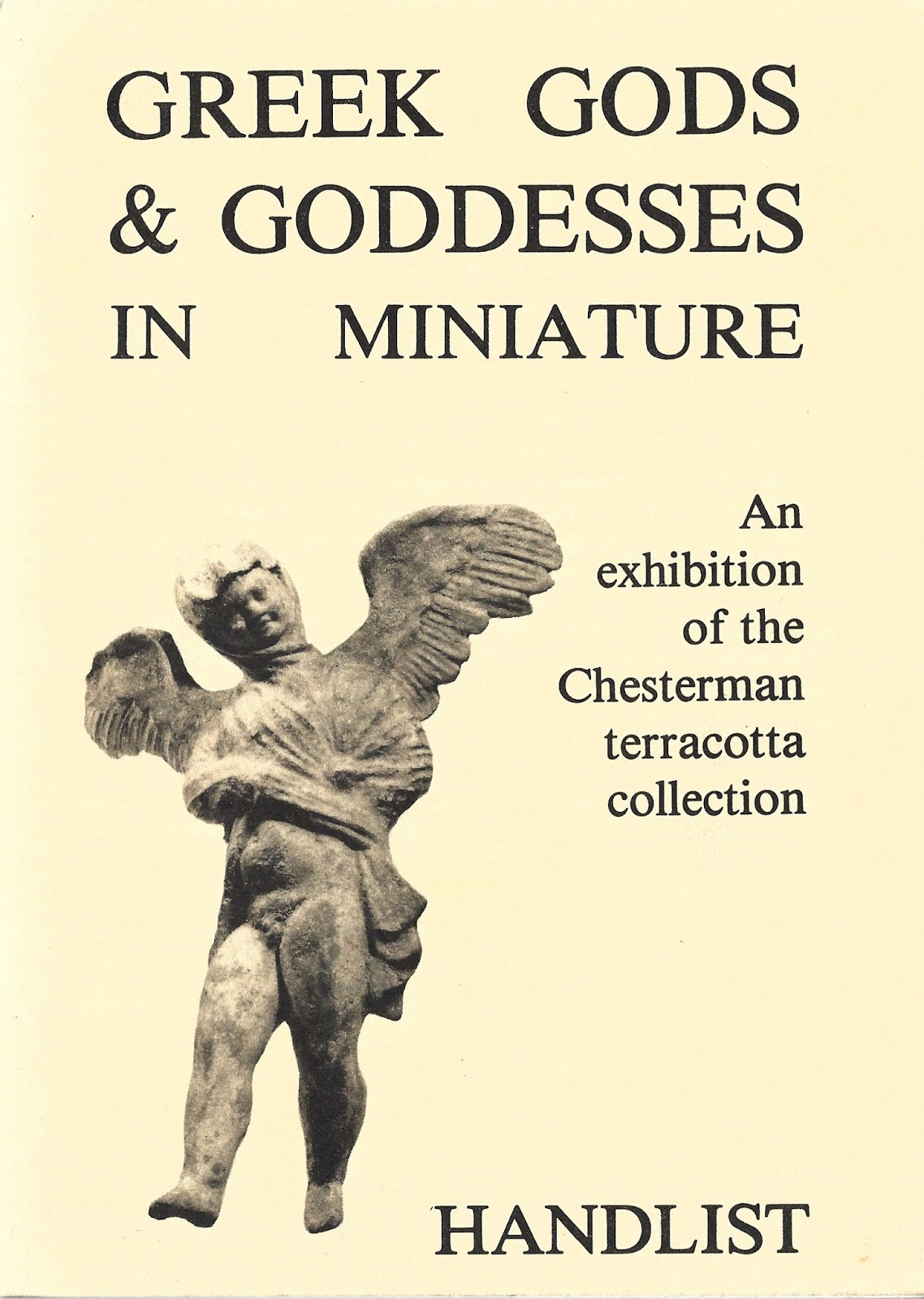
Now that Bonhams has withdrawn an Etruscan antefix from its auction due to what appear to be links with the Medici Dossier it is important that the collecting histories of the Chesterman collection of terracottas are explored and investigated.

Are any of the sources for these terracottas ones that are already known from the hundreds of objects already returned to Greece and Italy?

Bookmark and Share so Your Real Friends Know that You Know

Wednesday, 9 November 2016

Bonhams withdraws ex-Chesterman lot

Images courtesy of Dr Christos Tsirogiannis
Bonhams has withdrawn the Etruscan antefix from its sale of antiquities after images of what appeared to be the piece were identified by Dr Christos Tsirogiannis in the Medici Dossier.

The staff of Bonhams now need to reflect on their due diligence process and perhaps the auction house's use of "stolen" art databases. It has been pointed out at the APPG in Westminster that there are clear issues about the over reliance of such databases for identifying recently surfaced archaeological objects.

The decision to withdraw the lot will presumably imply a detailed analysis of the Chesterman collection and the origins of each of the terracottas.

Bookmark and Share so Your Real Friends Know that You Know

Tuesday, 8 November 2016

The Medici Dossier and the James Chesterman collection

Images from Medici Dossier. Source: Dr Christos Tsirogiannis.
Dr Christos Tsirogiannis has made another identification from the Medici Dossier. The piece in question is a 6th century BC Etruscan terracotta antefix that is due to be auctioned in London later this month (Bonhams 30 November 2016, lot 14). The collecting history ("provenance") is given as:
  • James Chesterman Collection (1926-2014), formed in the UK in the 1970s-2000. 
  • With À la Reine Margot, Paris, acquired in December 1986.
The antefix appears in two images, one as a standard Polaroid, the other as a record card for the Hydra Gallery. Hydra Galerie has been associated with Medici and has been discussed before, for example:
It is not clear why Bonham's has not mentioned Hydra Galerie in the collecting history. But note that on the card there is the annotation that the piece was to be assigned "v[ia] Londr[a]" with a value of $1,500.

The association with James Chesterman clearly has implications. I have listed some of his terracottas (and the associated bibliography) in:
  • David W. J. Gill. “Museum Supplement: Recent Acquisitions by the Fitzwilliam Museum, Cambridge, 1971-1989.” The Journal of Hellenic Studies 110 (1990), pp. 290–294. www.jstor.org/stable/631820.
I note that among the three examples I described was one that was acquired from N. Koutoulakis.

This new identification yet again raises issues about the due diligence process conducted by and on behalf of the auction houses. Staff at Bonhams are, I am sure, aware that the Cultural Property (Armed Conflicts) Bill is passing through the UK Parliament at the moment and that it is in the interest of those involved with the sale of archaeological material to be seen to be taking action when concerns are raised about objects that surface on the market.

I understand that the relevant authorities in Italy and the UK have been informed.

For further discussion of the antefix see ARCA.

Bookmark and Share so Your Real Friends Know that You Know

Wednesday, 10 June 2015

The Koutoulakis Herm returns to Greece

Source: Hellenic Ministry of Culture
In October 2014 Bonhams offered a Roman herm that it was claimed to have been in the collection of Nicolas Koutoulakis collection in Geneva since 1965. But Glasgow University researcher Dr Christos Tsirogiannis spotted that the head had been offered on the market in the spring of 1987, undermining the collecting history presented in the catalogue.

The head has now been returned to Athens and features in a major press release. Sadly Tsirogiannis' contribution is not acknowledged.

I have written on the issues relating to this herm in the Journal of Art Crime ("Context Matters: Learning from the Herm: The Need for More Rigorous Due Diligence Searches").

This case reminds us of the need to authenticate the documentation used to present collecting histories, and it brings into question the issues relating the due diligence search conducted by Bonhams (and its agents).

It perhaps shows that objects associated with Koutoulakis are not above suspicion. I was recently viewing such an object linked with that individual in a high profile London gallery. What questions should be asked about that piece?

For my earlier discussion of this herm see here.

Bookmark and Share so Your Real Friends Know that You Know

Saturday, 28 March 2015

Mosaic glass: from Antinoupolis to London

Bonhams online catalogue showing lot 65
Dr Roberta Mazza has published an important discussion of a piece of Roman mosaic glass apparently from Antinoupolis in Egypt ("From Egypt to London: looting in Antinoupolis (el Sheikh ‘Abadah)", Faces and Voices, March 27, 2015). She draws attention to published research by Rosario Pintaudi who  has worked at the site. Mazza notes:
This little and beautiful piece traveled from Egypt to the showrooms of Bonhams in London, where the sale was stopped by the police, after the object sold for about £ 5,000.
The fragment was offered at Bonhams in London in their sale of antiquities on 23 October 2013, lot 65. The collecting history ("provenance") was given as "English private collection, acquired in the late 1960s".

The article is “Latrones: furti e recuperi da Antinoupolis”, Analecta Papyrologica XXVI 2014 pp. 359-402 and is available from academia.edu. This fragment is discussed on pp. 367-70.

Mazza also raises questions about lot 64 that came from "English private collection, acquired in the mid-1970s".

This raises various questions for Bonhams. Who was the vendor? What other objects were consigned by this individual (or individuals) in this and other sales? Which member of the Bonhams team conducted the due diligence search? What is the basis of the stated so-called "provenance"? What documents were shown to Bonhams?

It is significant that concerns were raised by the Egyptian authorities at the time of the sale ("Egypt’s government cracks down on illicit sales", Art Newspaper 31 October 2013):
This month, Bonhams planned to auction a set of 165 Egyptian artefacts. According to the website Egypt Independent, Mohamed Ibrahim, Egypt’s head of antiquities, requested documentation from the auction house to prove that the artefacts had left Egypt legally. Bonhams spokesman Julian Roup, however, says that that the firm received no official request from the police, the Egyptian embassy or Egypt’s Ministry of Antiquities, and that the provenance in all cases was sound. The sale went ahead ...
Will Bonhams be conducting an internal investigation into how this piece was allowed to come to auction?

Bookmark and Share so Your Real Friends Know that You Know

Friday, 7 November 2014

AIA and St Louis

The Archaeological Institute of America has issued a statement about the sale of antiquities by the St Louis branch of the organisation ("New AIA Statement on the St. Louis Society", November 4, 2014). The AIA's Governing Body has highlighted three reasons why the St Louis branch should not sell (and I have restructured the format):

  • First, the objects from Egypt were entrusted to the Society by the British School of Archaeology in Egypt in 1914 for the benefit of the citizens of St. Louis and were intended to be placed in a public institution where they would be used for public education and scholarly study. Selling them breaks this fundamental commitment, now a century old. The citizens of St. Louis have been deprived of part of their legitimate heritage. 
  • Second, the objects were obtained by division from an authorized excavation, thus enhancing their scholarly and educational value. Such objects should remain in the public domain, not sold off in a manner that risks removing them from public view. 
  • Third, the actions of the St. Louis Society have seriously compromised the Archaeological Institute of America itself as an organization that upholds the value of preserving, studying and presenting the record of the human past for the benefit of future generations. 

The Egyptian objects on sale at Bonhams last month were withdrawn and purchased by New York's Metropolitan Museum of Art.

The St Louis Art Museum clearly feels that it wants to display Egyptian antiquities and even went as far as acquiring a mummy mask that subsequently turned out to have been excavated at Saqqara (and allegedly removed from the archaeological store).

Now some Mesoamerican pieces are due to be sold by Bonhams in New York.

The ArtNewspaper has drawn attention to the issue ("St Louis society attempts second sale of antiquities", November 6, 2014). Washington Paid Lobbyist Peter Tompa has now added his voice to the debate (as a comment to the ArtNewspaper):
In the golden age of archaeology, archaeologists were collectors and some wealthy collectors were amateur archaeologists. Now, its seen as heresy for an AIA chapter to sell a well-provenance piece which has somehow become inalienable for the ideologues that run the organization. Hopefully, this episode will prompt a much needed discussion of the issue and how the AIA's positions have only alienated itself from others who also care about preserving artifacts from the past.
He conveniently overlooks the AIA's position in order to promote the position maintained by those organisations who retain the services of his law firm. I note that the IAPN has increased its contribution to Bailey & Ehrenberg by $10,0000 in 2014.

Tompa's incautious language ("heresy", "ideologues", "alienated") highlights the insecure position held by the lobbyist.

I hope that the St Louis Society realise their responsibility to retain the objects for future generations in St Louis. It is not too late for their officers to withdraw the pieces from the sale.

Bookmark and Share so Your Real Friends Know that You Know

Thursday, 2 October 2014

Roman Herm Withdrawn from Bonhams: Becchina association established

Bonhams in London were due to sell a Roman marble herm today (lot 41) but it was withdrawn (Euthimis Tsiliopoulos, "Hermes head withdrawn from auction", Times of Change 1 October 2014). It was estimated to sell for £10000-£15000. 

The collecting history had been given as "Nicolas Koutoulakis Collection, Geneva, acquired circa 1965, thence by descent".

However Glasgow-based researcher Dr Christos Tsirogiannis has separately spotted the herm in the Becchina photographic archive. He writes:
I also identified the object in the Becchina archive. The origin of the head is Greece, because it is a Greek looter named Costas Gaitanis (from Herakleion, Krete) who sent to Becchina on May 29th, 1987 the Polaroids depicting the head. The envelope containing the Polaroids arrived in Switzerland (Basel, at Becchina's gallery) on June 1st, 1987. The envelope is included in a larger file that Becchina kept regarding dealings he had with a Greek middleman named Zenebisis. The same file includes the image of the gold wreath that the Greek state repatriated from the Getty Museum.
If the Polaroids were sent from Gaitanis to Becchina in May 1987 it seems that the collecting history provided by Bonhams is likely to be flawed.

This raises questions about how auction-houses and museums authenticate collecting histories. What questions do they ask? How do they check the paperwork? How are facts verified?

More interesting is why this "history" was not identified by the Art Loss Register or whichever agency had been asked to conduct a search on the objects.

Bonhams has not had a good track-record for handling antiquities:


Bookmark and Share so Your Real Friends Know that You Know

Thursday, 3 April 2014

Bonhams and Becchina

Bonhams has withdrawn one of its lots from a sale. It was a Canosan pyxis that had passed through the Ariadne Galleries in New York during the 1980s. So it surfaced well after 1970, has an obvious link with Italy, and was handled by a gallery that has been linked with recently surfaced antiquities (such as the Icklingham bronzes). These would be three good reasons to conduct a thorough due diligence search.

Yet an unnamed spokesperson for Bonhams is quoted by the BBC ("'Looted' artefacts removed from auction", April 2, 2014):
"We take immense trouble to check and verify the history of any object we sell and work closely with the Art Loss Register, the British police and Interpol on establishing accurate provenance. 
"At this point there is no evidence to show that it was illegally excavated. But we take any such intimation very seriously and hence we have withdrawn it for further investigation."
Bonhams is well aware of the issues relating to these Italian photographic archives after the case of the Geddes sale. Or what about the "Medici" statue? And note the similarity of this statement to ones in previous cases.

Perhaps the spokesperson for Bonhams would care to expand on Becchina's role in the handling of antiquities. Or will the "further investigation" include contacting Becchina and asking him for the full collecting history?

And we note that in the list of sources Bonhams did not think of contacting the Italian authorities. The omission is perhaps significant.

Is it time for the senior management at Bonhams to tighten up the due diligence procedures for selling antiquities? (I suggested this precisely four years ago.)


Bookmark and Share so Your Real Friends Know that You Know

Wednesday, 2 April 2014

Becchina, Medici and the London market

Peter Watson has reported in today's Times (London) that the objects linked to Gianfranco Becchina and Giacomo Medici have been withdrawn from auction in London. This is due to identifications made by Cambridge University researcher Dr Christos Tsirogiannis.

The remaining question is why the due diligence process conducted by the two major auction houses were unable to detect these objects? We also note that one of the auction-houses appeared to be the vendor or co-vendor of one of the pieces.

Bookmark and Share so Your Real Friends Know that You Know

Friday, 28 March 2014

Becchina, Ariadne and a London sale

My Cambridge colleague Dr Christos Tsirogiannis has spotted that a Canosan polychrome painted and lidded pottery pyxis being offered at Bonhams London next week (April 3, 2014, lot 22) seems to appear in two photographs from the Becchina Archive. The pyxis has an estimated value of £3000-£5000. The stated collecting history is: "American private collection, New York, acquired from Ariadne Galleries, New York City in the late 1980s". Did Becchina sell the pyxis to the Ariadne Galleries as the paperwork seems to suggest? (And what else did Ariadne Galleries acquire from this source?)

British readers will know that the Ariadne Galleries are associated with the infamous case of the Icklingham Bronzes. (When will they be returned to the UK?)

Will Bonhams be contacting the Italian authorities? How has Bonhams tightened up it due diligence process? How has it changed since the Geddes issue?

Bookmark and Share so Your Real Friends Know that You Know

Friday, 19 October 2012

The Geddes Collection at Auction

Bonhams managed to attract significant adverse publicity when they attempted to auction part of the collection formerly owned by Graham Geddes in 2008.

I note that the sale of antiquities next week (October 24, 2012) includes four ex-Geddes pieces:
  • lot 81. Apulian red-figured hydria, attributed to the Truro painter. Surfaced: Sotheby's, London, 9 December 1985, lot 375. Exhibited: the University of Melbourne, March 1988-July 2003; the Museum of Mediterranean Antiquities, Monash University, Melbourne, Australia, November 2005-April 2008 .
  • lot 82. Apulian hydria, attributed to the Patera painter. Surfaced: Sotheby's London, 21 May 1984, lot 222. Exhibited: the Borchardt Library, La Trobe University, Melbourne, Australia, March 1986-April 2008.
  • lot 85. Gnathian volute krater. Surfaced: Sotheby's London, 9 Dec 1985, lot 378. Exhibited: University of Melbourne, Australia, March 1986 - February 1994.
  • lot 86. Campanian red-figured neck-amphora, attributed to the Pilos Head group. Surfaced: Sotheby's London, July 11th, 1988, lot 178. Exhibited: the Museum of Mediterranean Antiquities, Monash University, Melbourne, Australia, December 1989 - April 2008.
It should be noted that these four pieces surfaced at Sotheby's, London between 1984 and 1988. Such a shared "pedigree" can be noted for other Geddes pieces. The May 1984 sale is particularly significant. Will Bonhams reveal who consigned these four pieces to Sothebys in 1984, 1985, and 1988? What sort of due diligence checks have been made?

The loan of material to various Australian collections is also of note.

Some of the ex-Geddes material can now be found in the Mougins Museum of Classical Archaeology and the National Museum of Archaeology in Madrid.

Bookmark and Share so Your Real Friends Know that You Know

Tuesday, 6 September 2011

Ex Borowski material on sale in London

I note that the October sale at Bonhams is now back on line. It includes a piece of jewellery formerly in the Elie Borowski collection (lot 245).

There is a particularly fine Roman bronze of Lar (lot 107). This has an interesting collecting history. It surfaced in a Swiss private collection in the 1980s before passing through "Hesperia Art Ltd, New York, early 1990s". Is this the same as Hesperia Arts of New York that sold a selection of antiquities in November 1990?

Bookmark and Share so Your Real Friends Know that You Know

Monday, 5 September 2011

Bonhams October sale

The sale catalogue for Bonhams (London) 5 October sale was available. Hopefully it will be back on line shortly.

Bookmark and Share so Your Real Friends Know that You Know

Wednesday, 8 June 2011

Behbeit el-Hagar Fragment: Update

Source: Luxor Times
Yesterday I noted that the Luxor Times had reported that a fragmentary relief from Behbeit el-Hagar had been returned to Egypt from London. Archaeologist Paul Barford spotted a report in Ahramonline.org that named the auction-house ("Granite depiction of cow-shaped deity returns to Egypt", June 7, 2011).

I am grateful to Julian Roup, Director of Press and Marketing at Bonhams, for confirming the veracity of the report. He noted that procedures were initiated once concerns about the relief's collecting history had been raised.

The vendor for the relief has not been named and it is not yet clear where the fragment had been residing since 1990 when it was detached from a larger block on the site.

In 2008 Bonhams withdrew a fragment from the Tomb of Mutirdis (TT410) that was said to have come from an Australian seafarer's collection.

Bookmark and Share so Your Real Friends Know that You Know

Thursday, 26 May 2011

Further Apulian pottery formerly in the Geddes Collection

On Tuesday I noted the appearance of an Apulian krater that had formed part of the Geddes collection. The Gnathian krater ("Apulian Monumental Volute Krater") that appears alongside it on the website of the newly formed Mougins Museum of Classical Art had also derived from the same collection. It was sold at Bonham's (London) on 15 October 2008 (lot 23) for £36,000. It, too, had surfaced at Sotheby's (London) in 1985 (9 December, lot 378) and had then be placed on loan to the University of Melbourne, Australia (March 1985 - February 1994).

The observant will wonder if there is some sort of mistake. How could a krater be on loan to the University of Melbourne from March 1985, but be sold in London in December 1985, and then return to Melbourne until 1994? I suspect that there has been some inaccurate recording. Several of the items that were withdrawn from the same Geddes sale were also put on loan to the University of Melbourne.

What was the collecting history of the Gnathian krater prior to its 1985 appearance at Sotheby's?

Bookmark and Share so Your Real Friends Know that You Know

Tuesday, 24 May 2011

Apulian pottery formerly in the Geddes Collection

LM has taken an interest in the Geddes collection. I took another look at the Mougins Museum of Classical Art that is opening this month. I have already noted that the museum has being buying from the Royal Athena Galleries and that the curator, Dr Mark Merrony, the editor-in-chief of Minerva, now owned by Christian Levett (Dalya Alberge, "'Compulsive' art collector builds French museum to display ancient treasures", Observer March 27, 2011). I was thus interested to note that one of the three ancient pieces highlighted in the Greek section was an Apulian hydria.
This exquisite red-figure example from south Italy shows a mythological scene featuring Eros, the god of Love and Hermes, the messenger god. Attributed to the Trudo [sic.] Painter.
The hydria, more accurately attributed to the Truro painter, had apparently surfaced at Sotheby's (London) on 9 December 1985 (lot 375). It had then been placed on loan to the University of Melbourne (March 1988 - July 2003) and the Museum of Mediterranean Antiquities, Monash University, Melbourne (November 2005 - April 2008). It was then sold at Bonham's (London) in October 2008, lot 18. (This sale was particularly significant.)

The sale of objects at Sotheby's in 1985 is not without interest.

What is the full collecting history of the Mougins hydria prior to 1985?

Bookmark and Share so Your Real Friends Know that You Know

Another Bürki object returns to Italy

Source: MMA A psykter column-krater attributed to the Troilos painter was deaccessioned by New York's Metropolitan Museum of Art in June...