Showing posts with label Crete. Show all posts

Monday, 22 January 2024

The Carlos Museum: Time to Reflect?


The return of three antiquities acquired in 2002 and 2003 raise a number of issues for the curatorial team at the Michael C. Carlos Museum at Emory University. The museum appears to overlook a number of 'facts' in the way that it has written about the return.

First, a Greek journalist, Nikolas Zirganos, raised the issue of three pieces back in 2007: two of the pieces are included in the return. 
Second, there was a suggestion that the Greek authorities had raised concerns about the three pieces at the time.
Third, the identifications had been made by Christos Tsirogiannis.
Fourth, discussion of these issues had been raised on social media and in an academic paper by 2009.

Yet, reading the Emory press statement you would never realise that concerns had been raised over such a long period of time. You could even have been forgiven for thinking that the road to repatriation had been researched by one of their own. Why did it take the museum so long to enter negotiations with the Greek authorities?

The link to the page listing the three objects does not give a complete picture of the owners / handlers of the three pieces. Indeed, there is no mention of the association of one of the items with Japan.

It would have been helpful if the museum had given the full (and correct) history of each of the pieces. And the suggestion that two of the pieces are associated with a particular dealer pointed to problems with the collecting history. Yet the third piece mentioned by Zirganos was linked to this same dealer: why has this been excluded from the agreement? Is it assumed that the full history had been disclosed?

How much of the supplied information is trustworthy? What is the basis of this knowledge? Is there supporting evidence?

What other pieces in the collection need to be investigated with the same level of rigour?

| |
Bookmark and Share so Your Real Friends Know that You Know

Returns to Greece from Michael C. Carlos Museum


Some things take time. Back in 2007 Nikolas Zirganos wrote a story about three antiquities in the Michael C. Carlos Museum [see here]. The identifications had been made by Christos Tsirogiannis. 

Over the years the museum has released further snippets of information: e.g. the revised history for the larnax

It was announced today that as part of a cultural agreement between Emory University and the Hellenic Ministry of Culture, three items would be returning to Greece:
a. Minoan larnax (inv. 2002.034.001). "The Carlos purchased the larnax from Robert Haber, New York in 2002. At the time of purchase, the museum believed the larnax to have been in the collection of Nicholas Koutoulakis (1910-1996) since the late 1960s."
b. Statue from funerary naiskos (inv. 2003.005.001). "The Carlos purchased the figure in 2003 from Michael Ward, New York. No provenance information was given by the dealer. "
c. Statue of a muse (formerly inv. 2002.031.001A/B). "Carlos purchased the sculpture in 2002 from New York-based dealer Robert Hecht (1919-2012), who stated he and partner George Zakos (1911-1983) had owned it since 1974."


It is puzzling that the pithos was not included in the return even though it appears in the Becchina archive (see here). It was said to have resided in the Goumaz collection and was sold to the Carlos by Phoenix Ancient Art. The pithos featured in the original Zirganos article.

Nor is there mention of the fragmentary Cycladic figures from the Keros haul. The Greek Government sought to stop their sale when they passed through an auction in London in 1990 for the benefit of Save the Elephants.

For more on the agreement: press release.

| |
Bookmark and Share so Your Real Friends Know that You Know

Wednesday, 23 August 2023

Acquiring Antiquity at the Carlos Museum


Stephanie M. Lee has provided a detailed look at the way that the Michael C. Carlos Museum at Emory University developed its collection of antiquities. It includes a discussion of the Minoan larnax that was first raised on LM back in 2008.

Lee, S. M. 2023. "The Little Museum’s Big Score: Emory University wanted only the finest antiquities. It didn’t ask a lot of questions." The Chronicle of Higher Education August 23, 2023.


| |
Bookmark and Share so Your Real Friends Know that You Know

Wednesday, 2 March 2022

Revised history for the Carlos Museum Minoan Larnax

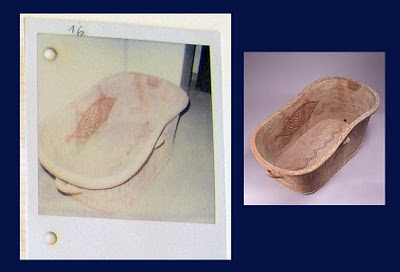
L: image from Becchina archive.
R: larnax in Michael C. Carlos Museum

Back in 2007 Christos Tsirogiannis identified a Minoan larnax in the Michael C. Carlos Museum at Emory University from an image in the Becchina archive showing that it had passed through Palladion Antike Kunst. The larnax had been acquired in 2002. The museum has apparently declined to negotiate with the Hellenic authorities.

Two years ago, almost to the day, I checked the history of the larnax and found that the sequence was presented as:
  • Ex private collection, Switzerland, 1980s. 
  • Ex private collection, Japan, 1990s. 
  • Purchased by MCCM from Robert Haber & Associates, Inc., New York, New York.
The paperwork for the Steinhardt seizure mentioned the Carlos Museum larnax (due to the mention of Haber [pp. 70–71]). This has prompted me to check the museum website and found that the history of the object has been clarified and amplified.

PROVENANCE With Nicolas Koutoulakis (1910-1996), Geneva, Switzerland, late 1960s. Ex private collection, Switzerland, 1980s. Ex coll. Noriyoshi Horiuchi, Japan, 1990s. Purchased by MCCM from Robert Haber & Associates, Inc., New York, New York.

It now appears that the anonymous Japanese collection is in fact the dealer Noryioshi Horiuchi. Horiuchi was linked to Becchina as a result of the investigations as part of Operation Andromeda.  It is unclear why the museum still fails to acknowledge that the larnax passed through Palladion Antike Kunst: why is a gallery and a dealer described as a Swiss private collection? Is the Becchina image too awkward to accept?

It now appears that Koutoulakis has been added to the history with a date just prior to the 1970 Convention. What is the authenticated documentation to support this claim? Why has it taken twenty years for this information to come to light? Indeed, the association of an object with Koutoulakis should sound an alarm bell. Another Koutoulakis linked larnax is currently in New York's Metropolitan Museum of Art: what is its (authenticated) prior history? (For more on Koutoulakis see here.)

Is the time fast approaching when the Michael C. Carlos Museum will return to the values held by EUMILOP in the late 1980s? A university museum needs to uphold the highest ethical standards when it comes to acquisitions as well as resolving cases when new information comes to light. 

| |
Bookmark and Share so Your Real Friends Know that You Know

Thursday, 20 January 2022

The Steinhardt Returns: The Implications for the Michael C. Carlos Museum

Left: Larnax shown in the Becchina archive
Right: larnax in the Michael C. Carlos Museum

The return of the Steinhardt Minoan larnax to Greece has implications for the Michael C. Carlos Museum at Emory University as it appears in the Statement of Facts

Back in 2007 the larnax was identified by Associate Professor Christos Tsirogiannis; it had been acquired by the museum in 2002. 

Why have the authorities at the Michael C. Carlos Museum yet to resolve this long-standing request from the Hellenic authorities? Could the return of the Steinhardt larnax be the prompt that will allow them to take the appropriate action? 

| |
Bookmark and Share so Your Real Friends Know that You Know

Wednesday, 29 December 2021

Steinhardt objects returning to Greece

Minoan larnax formerly in the Steinhardt collection
Source: Manhattan DA

The Hellenic Ministry of Culture and Sports has announced that 47 objects "surrendered" by Michael Steinhardt will be returning to Greece ("Trove of stolen antiquities coming home from US", ekathimerini.com December 29, 2021).

Highlighted items are:
Items that stand out include a Minoan larnax dated to to 1400-1200 BC and valued at US$1million, a $14 million torso of a Kouros statue dated to 560 BC, as well as a bronze griffin protome, Cycladic vessels, figurines and bronze swords.

The paperwork indicates these include:
  • a marble Cycladic spouted bowl [p. 28] acquired from Medici. First surfaced in 1980 allegedly in the collection of Marie LaForet. Sold by Robin Symes to the Beierwaltes in 1997; assigned to Phoenix Ancient Art in 2006; purchased by Steinhardt on November 9, 2006 for $500,000.
  • a 9th century BCE Geometric oinochoe [p. 34]. Smuggled by Georgios Zenebisis to Switzerland and sold to Becchina; sold by Hecht to Steinhardt on November 17, 2000 for $23,485.
  • Attic white ground lekythos attributed to the Triglyph painter [p. 56]. Identified from the Symes archive. Symes sold it to the Beierwalters for $360,000 (June 22, 1995); consigned to Phoenix Ancient Art (2006); Steinhardt purchased from Phoenix Ancient Art for $380,000 (December 14, 2006).
  • a Minoan larnax [pp. 77–78]. Stylistically placed at Rethymnon. Restored from fragments by Flavio Bertolin in Munich; Ralf Kotalla conducted a TL test in April 2016. Purchased by Steinhardt for $575,000 from FAM Services; 
  • Five objects from Naxos [pp. 78–81] acquired from Eugene Alexander between 2010 and 2014. 
    • They consist of a marble female folded arm figure (ECII), purchased December 15, 2010 for $100,000; 
    • two marble plates, acquired November 6, 2012 for $15,000, and April 9, 2014, for $10,000; 
    • a marble kandila, acquired November 6, 2012 for $75,000; 
    • and a marble cup, acquired February 20, 2013 for $20,000.  
  • Bronze griffin protome [p. 81] acquired from Eugene Alexander on November 6, 2012 for $350,000. Reported to be from the Samian Heraion.
  • Marble kouros [pp. 61–62] acquired from Robert Hecht, November 17, 2000 for $2,348,000. Restored by Fritz Bürki in Zurich.
  • Gold broach from Rhodes [pp. 63–64] acquired from Robert Hecht; purchased from Harry Bürki on September 29, 1999 for $728,000. Said to have been found with an alabastron carrying the cartouche of Nekko II.
  • Minoan hoard of 33 items containing spears, metal objects and stone vessels. [pp.64–65] acquired from Robert Hecht; purchased from Harry Bürki on September 29, 1999 for $92,000.
  • a glass oinochoe [p. 112], probably from Rhodes. Consigned by George Ortiz to Robert Haber April 2, 2002; Steinhardt acquired it on February 22, 2008 for $433,500; loaned to New York's Metropolitan Museum of Art on August 11, 2015.
  • bronze female figure from Crete [pp. 113–14] acquired from Noriyoshi Horiuchi. Acquired from Phoenix Ancient Art by Horiuchi on May 15, 1991; December 8, 1994 placed on loan to New York's Metropolitan Museum of Art; December 11, 2009, purchased by Steinhardt for $650,000.

These 47 objects were purchased for $6.2 million, though their current value is considerably more (clearly in excess of $15 million).

| |
Bookmark and Share so Your Real Friends Know that You Know

Monday, 6 December 2021

Michael Steinhardt and the return of antiquities valued at $70 million

Michael Steinhardt has agreed to hand over antiquities valued at $70 million (Karen Matthews, "Fund manager to turn over $70 million in stolen antiquities", ekathimerini.com December 6, 2021). Some 180 antiquities are due to be handed over (Dan Morgan, "Hedge-Fund Pioneer Michael Steinhardt Surrenders 180 Stolen Antiquities Valued at $70 Million, Manhattan DA Vance Says", nbcphiladelphia.com December 6, 2021). The antiquities are said to have been derived from 11 different countries, and passed through some 12 networks. Steinhardt has also agreed not to acquire any antiquities in the future; he will not be facing any criminal charges. 

Among the objects to be handed over is a Cretan larnax, a silver rhyton in the shape of a stag's head acquired from the Merrin Gallery, a fragmentary fresco acquired from Robert Hecht and Fritz Bürki.

Press Release from the New York District Attorney's Office: D.A. Vance: Michael Steinhardt Surrenders 180 Stolen Antiquities Valued at $70 Million, December 6, 2021.

Bookmark and Share so Your Real Friends Know that You Know

Saturday, 28 March 2020

The anonymous history of a Minoan larnax

Minoan larnax from the Becchina archive (l), and in the Michael C. Carlos Museum (r)
The Minoan larnax in the Michael C. Carlos Museum has been provided with a 'history'.

  • Ex private collection, Switzerland, 1980s. 
  • Ex private collection, Japan, 1990s. 
  • Purchased by MCCM from Robert Haber & Associates, Inc., New York, New York.

As the larnax appears in the Becchina photographic archive, it would be logical to identify Becchina (a dealer) as 'private collection, Switzerland'. There is no history prior to Becchina; in other words, there is no history that predates the 1970 UNESCO Convention.

The identity of the 'private collection, Japan' is not provided. But we know that Becchina had links with at least one Japanese dealer. And as the Michael C. Carlos Museum seems to describe dealers and private collections, it could be fair to assume the possibility that the 'private collection, Japan' is also a 'dealer, Japan'.

As for Robert Haber & Associates, there is an instance of them handling what appears to be ex-Becchina material. What was their due diligence process to check the history of the larnax?

A responsible university museum would have resolved an issue that was first raised in 2007. Are the museum's curatorial team unaware of the apparent Becchina link with this piece? How do they explain the movement of the larnax from Crete to Switzerland in the '1980s'? Is there any supporting documentation?

I am grateful to Associate Professor Christos Tsirogiannis who made the first identification of the larnax from the Becchina archive.


Bookmark and Share so Your Real Friends Know that You Know

Wednesday, 16 May 2018

The Minoan Larnax and the Michael C. Carlos Museum

Minoan larnax from the Becchina archive and in the Michael C. Carlos Museum
I was recently asked to comment on the acquisition of recently surfaced antiquities in Greece as part of an interview. One of the examples I gave was the Minoan larnax that was acquired by the Michael C. Carlos Museum. Although this piece has been discussed in the Greek press, the museum has not yet responded to the apparent identification in the Becchina archive.

Is the time now right for the Michael C. Carlos Museum or the wider authorities at Emory University to negotiate the return of this impressive piece so that it can be placed on display in a museum in Greece?

Bookmark and Share so Your Real Friends Know that You Know

Thursday, 18 January 2018

The Becchina archive, a Minoan larnax, and the Michael C. Carlos Museum

Left: Becchina archive. Right: Michael C. Carlos Museum
More than 10 years ago, back in 2007, Dr Christos Tsirogiannis identified two pieces in the Michael C. Carlos Museum, a Minoan larnax and a pithos, with photographs from the Becchina archive. There is a case number with the General Secretary of the Greek Ministry of Culture: prot. no. 61/1-6-2007.

Source: MiBAC
In 2015 the Italian authorities revealed a major collection of antiquities, worth some 50 million Euros, seized from Becchina in Switzerland. The Becchina archive itself contains some 10,000 photographs and 200 bundles of receipts. These images have led to the identification, largely by Tsirogiannis, of a substantial number of items in public and private collections as well as from auction houses and galleries.

A museum director who was faced with the identification of objects, i.e. more than one object, in their collection from this contentious source would no doubt wish to resolve the issue, not least because there is an obligation under the AAMD guidelines (2013). These state:
If a member museum, as a result of its continuing research, gains information that establishes another party’s right to ownership of a Work, the museum should bring this information to the attention of the party, and if the case warrants, initiate the return of the Work to that party, as has been done in the past. In the event that a third party brings to the attention of a member museum information supporting the party’s claim to a Work, the museum should respond promptly and responsibly and take whatever steps are necessary to address this claim, including, if warranted, returning the Work, as has been done in the past.
Given that the identifications have been made public in the Greek press as well as elsewhere on the internet, it seems unlikely that the director of the Michael C. Carlos Museum is unaware of the issue. In fact it is very unlikely as the museum issued a press release in 2008 on this very case.

There are some questions to be raised. Has the director of the Michael C. Carlos Museum contacted the Greek authorities in the light of the information that came to light after the acquisition of the larnax and pithos? Has the director of the Michael C. Carlos Museum ignored the issue and hoped that it would go away?

Has the AAMD responded to the situation relating to one of its members?

What do academics in the rest of Emory University think of the situation?

I suspect that the Greek authorities may wish to take the case further.


Bookmark and Share so Your Real Friends Know that You Know

Monday, 23 October 2017

Michael C. Carlos Museum under renewed scrutiny

Left: image from Becchina archive.
Right: larnax in Michael C. Carlos Museum
Objects in the Michael C. Carlos Museum are under renewed scrutiny after the latest Becchina appearances of archaeological material from Greece in London. The museum has let the case go unresolved for 9 years; the story was broken in the Greek press more than 10 years ago.

There are three items: a Minoan larnax, a pithos, and a statue of Terpsichore.

It is about time that the curatorial team at the Michael C. Carlos Museum offered to return the items to Greece.

Bookmark and Share so Your Real Friends Know that You Know

Wednesday, 25 January 2017

Setting high ethical standards for collecting antiquities

Ka Nefer Nefer mummy mask. Source: SLAM
Victoria Reed, from the Museum of Fine Arts, Boston, has been discussing the need for due diligence in museums ("How should museums respond to art smuggling scandals?", Apollo January 24, 2017). This is clearly an important issue for the museum as it was one of the first of the North American museums to return objects to Italy in the wake of the Medici Conspiracy (see  "From Boston to Rome: reflections on returning antiquities").

Reed makes an important point about 'verified' information; I choose to talk about 'authenticated' documentation. How to we chart the collecting history of an object? What are the confirmed sources?

I was taken by this section:
If, however, an investigation turns up looted antiquities in a museum collection (for example, if photographs show an object shortly after it was illicitly removed from the ground, or if its provenance documentation was demonstrably forged), then a museum has an obligation to redress the break in the chain of that object’s ownership in some way. Usually such a resolution is achieved through a financial settlement with, or physical return to, the country of modern discovery. Museums hold their collections as public trusts, and no museum should wish knowingly to retain stolen property on behalf of the public.
It is worth returning to the case of the Ka Nefer Nefer mummy case at the St Louis Art Museum ("The Case of the Ka Nefer Nefer Mummy Mask"). Now that the email discussions have been made public it would be appropriate for the museum to revisit the acquisition and to start negotiating with the Egyptian authorities.

Minoan larnax. Source Becchina archive, and Carlos Museum
And what about the Minoan larnax in the Carlos Museum at Emory University? Why has there been no attempt to resolve this claim from Greece that has been on-going for so many years? Is the imagery from the Becchina unconvincing for the museum curators? How do they explain the images and the documentation?

Reed, I am sure, is sincere in what she writes. But her writing does not take full account of museums in North America that have yet to adjust their ethical positions in defiance of their public and educational roles.

Bookmark and Share so Your Real Friends Know that You Know

Monday, 31 August 2015

"Credible provenance" and the Minoan larnax

Back in September 2008 the Michael C. Carlos Museum spoke about the importance of a "credible provenance" or "history of ownership" in a press statement responding to Greek claims for three items in the museum.

As far as I can see the museum has never presented the authenticated collecting history (sometimes obsoletely termed the "provenance") for the Minoan larnax in its collection.

I have read the documentation on this piece and the photographic evidence from the Becchina archive is compelling.

I am also aware that the positive identification was made by Dr Christos Tsirogiannis.

We know that the "credible" collecting history for this larnax places it in the hands of Gianfranco Becchina. Why has it taken the Michael C. Carlos Museum seven years to ignore this "credible" evidence?

Bookmark and Share so Your Real Friends Know that You Know

Saturday, 29 August 2015

The Minoan Larnax in the Michael C. Carlos Museum

I am much enjoying Adam Nicolson's The Mighty Dead: Why Homer Matters (London: William Collins, 2014). I love the weaving of the literary landscapes and the application of Homer's works to contemporary society. And I am about to move from "Grasping Homer" to "Loving Homer".

The book has a series of "Homeric" (broadly speaking!) colour images: a gold mask from the shaft graves at Mycenae; inlaid Myceanean daggers; representations of the Homeric narratives on Athenian black- and red-figured pottery; a writing tablet from the Ulu Burun shipwreck; the walls of Tiryns; the "Homeric" cup from Ischia; an Egyptian ivory cosmetic container; the Kypselid gold phiale from Olympia.

And I wait to see how this diverse group of objects are woven into Nicolson's narrative.

But I am not writing a review. Readers of LM can always get a copy of the book for themselves. [Amazon.co.uk | Amazon.com]

So why am I writing about this book?

One of the colour plates shows "A Cretan bath from the mid-fourteenth century BC, one of the elements of Mediterranean civilisation most greedily adopted by Homeric Greeks".

The credit is "© Carlos Collection of Ancient Art, Emory University".


But wait. Is this the Minoan larnax that was acquired in 2002? Is this the Minoan larnax that appears in the Becchina photographic archive? Is this the Minoan larnax that the Greek authorities asked the Michael C. Carlos Museum to return back in 2007? Is this the larnax that was featured on LM back in 2008? (And see the museum's press release issued back in 2008.)

And we need to remember that part of Becchina's holdings was revealed in a major publicity event in Rome earlier this year. And this has implications for the Michael C. Carlos Museum.

Nicolson's book is a good reminder of why the museum staff at Emory University need to be contacting the Greek authorities as a matter of urgency. This case needs to be resolved not ignored. (See also the professional responsibilities for the museum.)

And of course the fish on the cover of the book (and elsewhere in the volume) rather evoke the fish on the Minoan larnax. So every time that I pick up this book I will be reminded of the larnax. And if readers of LM take up my suggestion, they too will be reminded of the larnax.

Bookmark and Share so Your Real Friends Know that You Know

Thursday, 29 January 2015

The Michael C. Carlos Museum and the Basel Dossier

Minoan larnax.
Left, Basel dossier. Right, Michael C. Carlos Museum
The public display in Rome of the 5000 plus antiquities seized in Basel, Switzerland were a reminder of the scale of archaeological material surfacing on the market. The objects were seized alongside photographs and bundles of receipts. And so there are museums that will need to respond to the identification of material in their collections.

The Michael C. Carlos Museum at Emory University was the subject of a report in 2007, followed by a request by the Greek authorities to return three items acquired in 2002 and 2004. Will the museum reveal the full collecting histories of the three pieces? Will they explain why the pieces are linked to the Basel archive?

Bookmark and Share so Your Real Friends Know that You Know

Thursday, 2 October 2014

Roman Herm Withdrawn from Bonhams: Becchina association established

Bonhams in London were due to sell a Roman marble herm today (lot 41) but it was withdrawn (Euthimis Tsiliopoulos, "Hermes head withdrawn from auction", Times of Change 1 October 2014). It was estimated to sell for £10000-£15000. 

The collecting history had been given as "Nicolas Koutoulakis Collection, Geneva, acquired circa 1965, thence by descent".

However Glasgow-based researcher Dr Christos Tsirogiannis has separately spotted the herm in the Becchina photographic archive. He writes:
I also identified the object in the Becchina archive. The origin of the head is Greece, because it is a Greek looter named Costas Gaitanis (from Herakleion, Krete) who sent to Becchina on May 29th, 1987 the Polaroids depicting the head. The envelope containing the Polaroids arrived in Switzerland (Basel, at Becchina's gallery) on June 1st, 1987. The envelope is included in a larger file that Becchina kept regarding dealings he had with a Greek middleman named Zenebisis. The same file includes the image of the gold wreath that the Greek state repatriated from the Getty Museum.
If the Polaroids were sent from Gaitanis to Becchina in May 1987 it seems that the collecting history provided by Bonhams is likely to be flawed.

This raises questions about how auction-houses and museums authenticate collecting histories. What questions do they ask? How do they check the paperwork? How are facts verified?

More interesting is why this "history" was not identified by the Art Loss Register or whichever agency had been asked to conduct a search on the objects.

Bonhams has not had a good track-record for handling antiquities:


Bookmark and Share so Your Real Friends Know that You Know

Tuesday, 12 August 2014

Greece and the Michael C. Carlos Museum


The Michael C. Carlos Museum seems to be trying to stall on the issues surrounding the acquisition of three Greek objects in 2002 and 2004. This is a case that was highlighted in 2007.

Will the museum release the full authenticated collecting histories of the three objects?

Why does the Minoan larnax apparently appear in the dossier of photographs and documentation seized in Switzerland?

And the same is true for the pithos with impress decoration.

The 2008 press statement is well worth re-reading for outlining the museum's policy towards acquisitions.

Bookmark and Share so Your Real Friends Know that You Know

Monday, 9 June 2014

Will the Michael C. Carlos Museum be returning the Minoan larnax?

Composite picture showing the Minoan larnax
in the Michael C. Carlos Museum (right)
and image from one of the seized photographic archives.
Last week's news that Karlsruhe returned two Cycladic objects acquired in the 1970s to Greece is likely to place increased pressure on the Michael C. Carlos Museum at Emory University. It is some seven years since the Greek Government made a request for three items acquired in recent years. One of the three items is a Minoan larnax that is clearly recognisable in the paperwork of one of the seized photographic archives.

Will the museum continue to ignore the Greek claim? What is the professional response from the curatorial staff?

And what about the larnax in Houston?

I am grateful to Dr Christos Tsirogiannis for information about this larnax.

Bookmark and Share so Your Real Friends Know that You Know

Saturday, 19 January 2013

From Greece to Atlanta: overview

Minoan larnax
The Michael C. Carlos Museum at Emory University acquired three disputed antiquities: two in 2002, and one in 2004. The first concerns were raised in the press by Greek investigative journalist Nikolas Zirganos in June 2007. In September 2008, in the wake of returns to Greece from the collection of Shelby White (including an impressive krater that had been part of a loan exhibition at the Michael C. Carlos Museum), it was announced that the Greek authorities were investigating the three objects: a statue of Terpsichore, a pithos, and a Minoan larnax. Emory University issued a press statement about the Greek request at the end of the same month.

I returned to the topic in August 2010 when it became clear that the Minoan larnax and the Greek pithos could be traced directly to Palladion Antike Kunst due to the raids on Basel in 2005.

In August 2011 it emerged that the Carlos Museum had acquired Egyptian antiquities from the Joseph Lewis collection. Enquiries were met with the same lack of co-operation.

Is it time that the museum, once known for its strong ethical acquisitions policy, should resolve the situation with Greece? Maxwell Anderson gave a strong lead for Dallas and, given his links with the Carlos, could provide an appropriate model for them to adopt.

Bookmark and Share so Your Real Friends Know that You Know

Another Bürki object returns to Italy

Source: MMA A psykter column-krater attributed to the Troilos painter was deaccessioned by New York's Metropolitan Museum of Art in June...