Showing posts with label Shelby White. Show all posts

Saturday, 2 September 2023

Bubon: More Returning Sculptures

Line drawing of part of the base in the Sebasteion at Bubon, Türkiye with portrait statues of Marcus Aurelius and Lucius Verus at the appropriate positions. Note: the figures are not to scale.


Christopher Chippindale and I drew attention to the imperial bronzes associated with the Sebasteion at Bubon in Turkey back in 2000: discussion of this group can be traced back to the 1970s. The looting of this space seems to have taken place in the early 1960s. It now seems that the (headless) portrait of Marcus Aurelius as a philosopher will be returned from the Cleveland Museum of Art and will be reunited with the portrait of Lucius Verus from the Shelby White and Leon Levy collection: the pair were originally displayed, appropriately, next to each other. They will join the Lipson statue of Septimius Severus that was seized from New York's Metropolitan Museum of Art. Other pieces include the head of Caracalla that had been displayed at Fordham University. 

Elizabeth Marlowe ("Bronze Roman statue, believed to have been looted from Turkey, seized from Cleveland Museum of Art", The Art Newspaper 31 August 2023) has pointed out that Cleveland has played down both the identification with Marcus Aurelius and the association with Bubon. The same phenomenon is being played out with the bronze statue in the Houston Museum of Fine Arts. The online entry now notes: 
It was associated throughout the 1970s and 1980s, by some scholars, with other bronzes that had been found near Bubon, Turkey. However, that opinion was ultimately disproved in 1993. The Houston sculpture was acquired in 1962; the excavations at Bubon commenced two years after, in 1964.
The start of the illicit activity at Bubon may well have preceded 1962 and the museum would be sensible to be cautious.

It appears that a portrait of a woman from the Worcester Art Museum (inv. 1966.67) has also been removed from display. It was reported to have been found 'in south-western Anatolia'. Andrew Oliver associated this find with Bubon. 

| |
Bookmark and Share so Your Real Friends Know that You Know

Monday, 17 July 2023

"A profoundly generous supporter of the Met"

The New York Times has reflected on the seizure of antiquities collected by Shelby White. There are informed comments from academics who research cultural property. 

Bowley and Mashberg commented:
For all the understanding of the ancient world that White had fostered, her ambitious collecting upset some archaeologists who thought it helped create a market that encouraged looting. When objects were wrenched from their original context, they complained, it undermined the very understanding of antiquity that she was trying to develop.
Patty Gerstenblith is quoted:
“If you pick a trustee whose financial generosity is the most important factor, then fine ... But should a trustee be a model of conduct when it pertains to the purpose of the museum itself? Her collecting practices do not fit the model of how a museum should be pursuing knowledge and preserving the historical record.”
Max Hollein, the director of the Metropolitan Museum of Art, and who is said to be championing a new spirit of transparency at the museum stated:
“Shelby White is a profoundly generous supporter of the Met ... and she has had an enormous impact at this museum and many other institutions."
This report by Bowley and Mashberg comes 23 years after the first analysis of the Shelby White and Leon Levy collection. 

When will the Icklingham Roman bronzes be returned to Suffolk (UK) so that they can be displayed in the county museum? What about the krater that was on loan to Houston Museum of Fine Arts?

There continue to be some unanswered questions.

  • Bowley, G., and T. Mashberg. 2023. "At the Met, She Holds Court. At Home, She Held 71 Looted Antiquities." New York Times July 17, 2023.
  • Chippindale, C., and D. W. J. Gill. 2000. "Material consequences of contemporary classical collecting." AJA 104: 463-511.  [DOI]
  • Gill, D. W. J. 2023. "Context matters: Returns from the Shelby White Collection." Journal of Art Crime 29: 49–55.
| |
Bookmark and Share so Your Real Friends Know that You Know

Thursday, 23 March 2023

Return of antiquities to Türkiye

Source: Manhattan DA


Twelve antiquities have been handed over to Türkiye ("D.A. Bragg Returns 12 Antiquities to the Republic of Türkiye", March 22, 2023). Nine of the objects are derived from the Shelby White collection. The remaining three include a head from Perge:
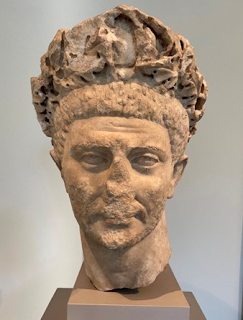
The Perge Theater Head, dating back to 290 C.E., was looted from Perge, an archaeological site in Türkiye. The piece first surfaced on the international art market at Sotheby’s in 2000. It then resurfaced at Christie’s in 2012, when it was purchased by a private collected who loaned it to the Met. It remained at the museum until it was seized by the Office in January.
Formerly New York MMA L.2011.4
© David Gill
Another is a bronze statue apparently looted from Bubon:
A bronze statue of the Roman emperor Septimius Severus, dating back to 225 C.E. The statue was stolen in the late 1960s from Bubon, an archaeological site in Türkiye, by looters and was eventually smuggled into Switzerland by Robert Hecht. Coin dealer Charles Lipson eventually loaned the piece to the Museum of Fine Arts in Boston. It landed at the Metropolitan Museum of Art in 2011, which it remained on display until it was seized by the Office in February. With its partners in Türkiye, the ATU was able to find and interview one of the individuals who actually looted and smuggled this statue.
This statue will join the Lucius Verus returned to Türkiye from the White collection in 2022. This will have implications for other European and North American museums that currently possess bronzes from this particular site.

It is possible to recognise some of the items from pictures from the press conference. They include a marble 'stargazer' (Glories no. 4), a bronze waggon with oxen (Glories no. 19), and an East Greek trefoil oinochoe decorated with two grazing ibex (Glories  no. 100). A further White piece is:
The Sitting female figure from Çatalhöyük, which dates between 6000 and 5000 B.C.E. After it was smuggled out of Türkiye, it first appeared on the market in London at the Rabi Gallery, where it was purchased by Shelby White in 1985. It remained in his possession until it was seized by the Office in 2023.
This is the steatite sitting female figure (Glories no. 3).

Source: Türkiye, Consulate NY


| |
Bookmark and Share so Your Real Friends Know that You Know

Wednesday, 22 March 2023

Bronze Hydria Returns to Greece

Source: Homeland Security

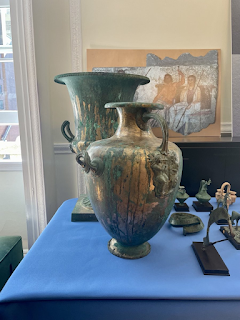
Further photographs of the latest return to Greece have been released. The bronze hydria from the Shelby White collection is of particular interest (Greek Bronze Vessels no. 8). Jasper Gaunt drew a parallel with a bronze hydria in the Michael C. Carlos Museum at Emory University (inv. 2002.012.001). The 'provenance' for this second hydria is given as:
Ex coll. Doris Seebacher, Munich, Germany. Purchased by MCCM from Robert Hecht (1919-2012) [Robert Hecht Gallery], New York, New York.
Is this the Doris Seebacher linked to Nino Savoca? Should the Michael C. Carlos Museum be contacting the Hellenic Ministry of Culture?

| |
Bookmark and Share so Your Real Friends Know that You Know

Further returns to Greece

Source: Manhattan DA

The Manhattan DA has announced the return of 29 antiquities, worth over $20 million, to Greece ("D.A. Bragg Returns 29 Antiquities to Greece", March 21, 2023 press release; see also here).

The items include a gold coin celebrating the assassination of Julius Caesar that surfaced on the Munich market in 2016.

The press release mentions the seizure of a bronze krater:
The Bronze Calyx Krater, which dates to 350 B.C.E., once held the bones of a deceased individual in a chamber tomb. It was looted and smuggled into Switzerland, where it was cleaned and restored by Fritz and Harry Bürki, the Zurich-based restorers and business partners of Robert Hecht. Hecht then arranged to smuggle the piece into New York, where it was sold to Leon Levy and Shelby White. It was seized by the Office in January of this year.
This seems to be a companion to the krater apparently looted from Pieria that was returned to Greece in 2008.

Unmentioned in the release, but placed next to the krater, was a bronze hydria that appears to be the one from the Shelby White collection (Bronzes no. 8). It is decorated beneath the vertical handle with a relief of Orpheus and a satyr. Chi and Gaunt draw attention to a companion piece in the Michael C. Carlos Museum (inv. 2002.012.001) that was acquired from Robert Hecht.

The release also mentions the return of a Late Neolithic marble group:
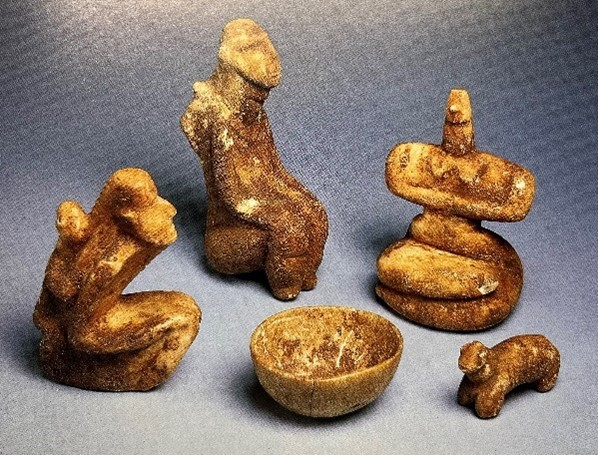
The Neolithic Family Group, which dates to 5000-3500 B.C.E and valued at $3 million. This group of objects compromises five human and animal figures carved from marble, and was looted from the island of Euboea by a Greek trafficker who smuggled the pieces into Switzerland. In 1982 dealer-trafficker Nicolas Koutoulakis sold the group to New York-based collectors Leon Levy and Shelby White. White loaned the group to the Metropolitan Museum of Art in 2000, where they remained on display until March of this year, when it was seized by the Office.
The group had been owned by Charles Gillet and Marion Schuster. They are "said to be from Euboea, or the east coast of Attica opposite, near Porto Raphti, perhaps from an islet attached to the mainland in prehistoric times" (Glories no. 8). It is interesting that the release emphasises the findspot on Euboea rather than Porto Raphti or more generally Attica preferred by Getz-Preziosi and Thimme. There are aspects of the group that make me wonder if they are ancient, a concern raised by Thimme back in 1977.

Next to the Late Neolithic group, but unmentioned in the release, was a double Cycladic figure: a small female figure standing on the head of a larger one. This appears to be the figure in the Shelby White collection (NAC no. 18; Glories no. 9; Katonah no. 15). Next to them was an Early Cycladic II bowl that also appears to be from the Shelby White collection (Glories no. 15).

Among the other items that appear to have been other items that formed part of the Shelby White collection:
  • Glories no. 76: A Late Geometric pair of horses 'said to have been found on Corfu, and for at least twenty years was in a collection in Austria. In October 1970, the group was lent to the Kunsthistorisches Museum in Vienna for restoration.'
  • Glories no. 80: an armlet, two lidded pyxides, and an oinochoe from a hoard of at least 40 pieces found in northern Greece.
  • Glories no. 141: a gold treasure consisting of a pair of coiled snake armbands, a pair of earrings with swans, a gold and carnelian necklace, a gold ring with carnelian intaglio, part of a gold wreath, and a gold diadem. 
The press release mentions that the Royal-Athena Galleries have co-operated with the investigation suggesting that some of the other items were from that source (perhaps including a fragment of wall-painting).

I note that Christos Tsirogiannis was involved with some of the identifications. 

We await for a full list of the return.

| |
Bookmark and Share so Your Real Friends Know that You Know

Saturday, 4 February 2023

Further returns to Italy from San Antonio Museum of Art and Shelby White

Oinochoe fragment
attributed to the Harrow painter
returned from
the San Antonio Museum of Art.
Source: San Antonio Museum of Art

The Manhattan DA has reportedly returned 14 more antiquities to Italy: though the objects and images presented at the press announcement counted 16 ("D.A. Bragg Returns 14 Stolen Antiquities to Italy", Manhattan DA February 2, 2023). Two sources were acknowledged: Shelby White and the San Antonio Museum of Art. The third, the source of a silver coin, was left anonymous in the press release.

At least three of the objects appear in the Glories of the Past catalogue of the Shelby White and Leon Levy collection. The release gives further information about the Attic black-figured hydria attributed to the Priam painter.
The piece first surfaced in Italy after being looted by Giovanni Franco Becchina, a well-known antiquities trafficker. From Italy, the piece was then smuggled and laundered by Paris-based Robert Hecht. Hecht ultimately sold the piece with false provenance to Shelby White in New York County in 1989.
These add to the 14 pieces featured in the catalogue that have been returned to Greece, Italy and Turkey.

The nine pieces featured in the images at the press statement are derived from the San Antonio Museum of Art. The objects are derived from several sources: Sotheby's in London; Christie's in London and Geneva; Galerie Palladion Antike Kunst; Galerie Günter Puhze; Royal Athena Galleries; Robin Symes. For example, the oinochoe fragment attributed to the Harrow painter surfaced through Galerie Palladion Antike Kunst, and was sold to Gilbert M. Denman, Jr. by Robert Hecht.  The nine objects may be added to other pieces that were handed over in 2022. We are also expecting further details about three other objects derived from Frederick Schultz that have been handed over by the museum. 

Three other objects featuring in the press statement have yet to be linked in a formal way to a specific collection though Christos Tsirogiannis has identified two of them in the Becchina archive and one in the Schinousa archive. 

The final piece is a silver coin.
The Sicily Naxos Coin. Minted circa 430 B.C.E in the Greek colony of Naxos, on Sicily, this silver coin features the bearded Dionysus on one side and his squatting drinking partner, Silenus, on the reverse. The Sicily Naxos Coin first surfaced on the international art market in 2013, when a known trafficker offered the coin for sale with no provenance whatsoever. Prior to its appearance at a London-based auction house, a co-conspirator of the trafficker supplied false provenance for the coin. The Sicily Naxos Coin is currently valued at $500,000 and was among a group of coins seized at JFK airport as it was being smuggled into New York pursuant to an ongoing joint investigation between this Office, HSI, and Italy. At least one individual has been arrested in the course of this investigation with more to follow.
Three Shelby White pieces, nine objects from San Antonio, one silver coin, and three other pieces equal 16 objects (not 14).

Objects from the San Antonio Museum of Art and in the Shelby White and Leon Levy collection were the subject of an extended discussion by Chippindale and Gill in the American Journal of Archaeology back in 2000. 
Chippindale, C., and D. W. J. Gill. 2000. "Material consequences of contemporary classical collecting." AJA 104: 463-511. [DOI]
LM expects to add further detail to this summary in due course.

| |
Bookmark and Share so Your Real Friends Know that You Know

Saturday, 3 December 2022

Apulian Dinos Seized from NYC Private Collection

Source: Manhattan DA.

It seems that another piece displayed in the exhibition, Glories of the Past, was seized from a NYC private collection in June 2021 (though the information has only just been made available). The object is an Apulian dinos attributed to the painter of Louvre MNB 1148 (Glories no. 128). The catalogue entry by Dietrich von Bothmer notes that the dinos 'has been broken into many fragments and repaired'. Who restored the piece?

This adds to the 14 other pieces from the exhibition that have been returned to Greece, Italy or Turkey.

I am grateful to Jason Felch for pointing me in the direction of the relevant Search Warrant. 

| |
Bookmark and Share so Your Real Friends Know that You Know

Friday, 2 December 2022

$24 million worth of antiquities reported to have been seized from NYC collector

Source: BusinessTurkeyToday.com

I understand that back in April this year 18 antiquities valued at $24.393 million were seized from a New York private collection. The most valuable was a bronze statue of Lucius Verus valued at $15 million, followed by an Attic red-figured calyx-krater and a bronze bust, each valued at $3 million. Some of these items had been displayed in an exhibition, Glories of the Past, at New York's Metropolitan Museum of Art. Two of the seized items have been returned to Turkey, and others to Italy: it is unclear if and when one or more of the items will be returned to Greece.

The Art Newspaper revealed today that the objects formed part of the Shelby White collection (Claire Voon, "Looted antiquities returned to Turkey and Italy were seized from New York home of Met trustee Shelby White", December 2,  2022).

Source: Manhattan DA.


I grateful to Jason Felch for assistance with this post, and to Christos Tsirogiannis who made many of the identifications. 

| |
Bookmark and Share so Your Real Friends Know that You Know

Thursday, 1 December 2022

Returning Glories of the Past

Source: Manhattan DA.
The return of the marble sarcophagus fragments and the bronze statue of Lucius Verus from Bubon highlight how far the Leon Levy and Shelby White collection has been the source of returns to Greece, Italy and Turkey.

Many of these identifications were made by Christos Tsirogiannis.

Returned items that appeared in Glories of the Past include:
87: Bronze statue of naked youth. [Italy]
97: Fragment of an Attic funerary stele. [Greece]
102: Chalcidian neck-amphora, attributed to the painter of the Cambridge Hydria Cavalcade. [Italy]
104: Attic black-figured neck-amphora of Panathenaic shape, attributed to the painter of Louvre F6. [Italy]
107: Attic black-figured neck-amphora, attributed to the painter of the Medea group. [Italy]
112: Attic black-figured psykter. [Italy]
113: Attic black-figured skyphos. [Italy]
117: Attic red-figured calyx-krater, A: Zeus and Ganymede, B: Herakles and Iolaos, attributed to the Eucharides painter. [Italy]
129: Apulian guttus with ram's head spout. [Italy]
131: Apulian fishplate attributed to the Cuttlefish painter. [Italy]
142: Fragment of Roman fresco. [Italy]
143: Fragment of Roman fresco. [Italy]
169: Four fragments of Roman sarcophagus. [Turkey]
174: Bronze statue of Lucius Verus from Bubon. [Turkey]

Concerns about the Shelby White and Leon Levy collection were discussed in:
Chippindale, C., and D. W. J. Gill. 2000. "Material consequences of contemporary classical collecting." AJA 104: 463-511. [DOI]

There appear to be other returned items that do not feature in Glories.

| |
Bookmark and Share so Your Real Friends Know that You Know

Tuesday, 15 November 2022

Shelby White sarcophagus fragments return to Antalya


Bookmark and Share so Your Real Friends Know that You Know

Lucius Verus from Bubon Returns to Antalya

Source: BusinessTurkeyToday.com

Back in 2008 I discussed on LM that the bronze statue of Lucius Verus was one of a series of statues that had originated in the sebasteion at Bubon in Turkey (and an earlier discussion in the American Journal of Archaeology in 2000). It now appears that this statue from the collection of Shelby White (Glories no. 174) has been returned to the Antalya Museum (see story here and here). This return comes soon after the return of further Shelby White material to Italy (discussed here).

This return has serious implications for other museums (e.g. the J. Paul Getty Museum, the Cleveland Museum of Art, Fordham University, and the Ny Carlsberg in Copenhagen) that have bronze statues, or parts of bronze statues, that are derived from, linked to, or associated with Bubon (see previous posts here). 

The return includes other material such as part of the terracotta architectural frieze from the temple at Düver that had surfaced on the North American antiquities market. This will cause concerns for a number of museums, including several in the UK, that acquired parts of the series.

Further details are available in a release from the American Embassy in Ankara. 

| |
Bookmark and Share so Your Real Friends Know that You Know

Tuesday, 20 September 2022

Becchina and the Shelby White collection

Source: Manhattan DA

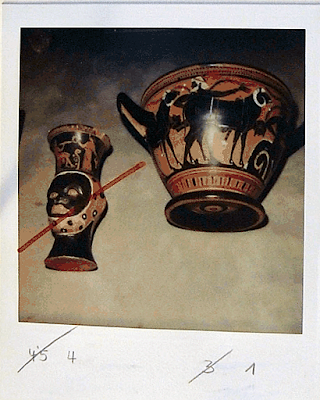
LM noted that two of the objects displayed by the Manhattan DA for return to Italy were in the Shelby White collection. The Attic black-figured skyphos showing Odysseus escaping from the Cave of Polyphemos  clearly appears in one of the photographs seized from the Becchina archive. 

Does this explain why the Italian authorities are revisiting the Shelby White collection? Is it because the previous returns had not taken proper account of the Becchina archive?

It would be interesting to learn how and when Shelby White and Leon Levy acquired the skyphos. Was it directly from Galerie Antike Kunst Palladion? Or was it through another party?

Incidentally, the other piece in the photograph was acquired by a separate New York collection.

It should be noted that the identification of the Shelby White skyphos was made by Associate Professor Christos Tsirogiannis. 

| |
Bookmark and Share so Your Real Friends Know that You Know

Thursday, 8 September 2022

Further Shelby White Antiquities Return to Italy

Source: Manhattan DA (September 6, 2022) / Lynda Albertson (on Twitter)

I was looking through the images of the handover of the antiquities to Italy yesterday. The press statement did not clarify the collections linked with all the objects:
Manhattan District Attorney Alvin L. Bragg, Jr., today announced the return of 58 antiquities valued at nearly $19 million to the people of Italy. The pieces were trafficked by Giacomo Medici, Giovanni Franco Becchina, Pasquale Camera and Edoardo Almagiá.

My main interest was in "21 of the pieces ... seized from the Metropolitan Museum of Art" (see here).

I then thought that two of the pieces looked familiar. On the right side of the table is an Attic black-figured psykter with a procession of riders. A quick search in the Beazley Archive pointed me to the psykter in the Shelby White and Leon Levy collection (Glories no. 112; BAPD 43272). The psykter was known from images in the Medici Dossier and had been discussed on LM back in 2008.

Balancing the psykter on the back left corner is an Attic black-figured skyphos showing Odysseus in the Cave of Polyphemos. This too is in the White-Levy collection and was attributed to the Theseus painter by Dietrich von Bothmer (Glories no. 113; BAPD 43271).

Does this mean that the Italian authorities are revisiting the Shelby White / Leon Levy collection? Will there be further revelations? Are there other items from this collection included in the return?

Does this open the way for the British Government to request the immediate return of the Icklingham Bronzes?

It should be noted that the identification of the Shelby White skyphos and psykter were made by Associate Professor Christos Tsirogiannis. 

| |
Bookmark and Share so Your Real Friends Know that You Know

Saturday, 20 February 2021

Theft in Greece: surfacing in Athens, New York and Basel


Greek archaeologist Angelos Zardakas had identified a head looted from the Liopesi collection in 1967 (Marianna Kakaounaki, "The mystery of two looted heads", ekathermini.com, 18 February 2021).  It was identified in the Paul and Alexandra Canellopoulos Museum in Athens.

A companion piece, stolen from the same collection (also in 1967), had been identified in the 1990s from the Shelby White and Leon Levy collection; it has subsequently been returned to Greece and placed in storage in the National Archaeological Museum. 

A third piece from the same raid, "the top part of the funerary stele of Euthesion of Pallene that is currently on show at the Archaeological Museum of Basel in Switzerland", has yet to be returned to Greece even though it was identified back in 1971.

Who handled these pieces of sculpture? Which networks were used? When does Basel intend to return the stele?

| |
Bookmark and Share so Your Real Friends Know that You Know

Thursday, 21 September 2017

The Guennol Stargazer and its findspot

There has been much attention paid to Turkey's claim on the Guennol Stargazer. It needs to be remembered that Pat Getz-Gentle (Getz-Preziosi) appeared to confirm that the figure was found in central Anatolia, i.e. Turkey.

Incidentally, the Guennol Stargazer is reported to have been found with the Stargazer in the Shelby White collection as well as other figures in several other North American private collections.

The authority for Getz-Gentle's statement is unclear. How did she know that the six figures were found together? Did they pass through common hands?

Bookmark and Share so Your Real Friends Know that You Know

Friday, 14 July 2017

The Perge Weary Herakles in Context

Boston's Museum of Fine Art returned the upper part of the Weary Herakles to Turkey. Indeed it appeared in the Glories of the Past exhibition.

Susan Wood has now placed the sculpture back in its original context with her discussion, "Klaudios Peison Anetheken: a gift of sculpture at the South Baths of Perge", American Journal of Archaeology 121, 3 (2017) 439-66. The Herakles is illustrated (p. 444, fig. 3; noting formerly Museum of Fine Arts, Boston, inv. no. 1981.783.VR), and listed in the appendix (pp. 460-61, cat. no. 4). Wood notes: 'the Weary Herakles ... must have been illegally excavated and exported from Turkey before 1981, when the Museum of Fine Arts, Boston, purchased the fragment' (p. 444).

The full collecting history can be found here.

Bookmark and Share so Your Real Friends Know that You Know

Friday, 9 December 2016

Vibia Sabina and the Kyknos krater

Dr Christos Tsiriogiannis has published a significant study of the routes by which the marble statue of Vibia Sabina and the Kyknos krater passed through the market.

Christos Tsirogiannis, "False Closure? Known Unknowns in Repatriated Antiquities Cases", International Journal of Cultural Property 23 (2016) 407-31. [Cambridge University Press online]

Abstract
Based on research into the confiscated photographic and document archives in the hands of the top antiquities dealers (Robin Symes-Christos Michaelides, Robert Hecht, Giacomo Medici, and Gianfranco Becchina), so far more than 250 looted and smuggled masterpieces have been repatriated from the most reputable North American museums, private collections, and galleries, mainly to the Italian and the Greek states. Most of these repatriations were advertised in the press as voluntary action by the institutions and the individuals who possessed them. However, this is far from true; the repatriations were the results of lengthy negotiations, where the presentation of evidence alternated with diplomatic tactics and legal threats in order for the two parties (in some cases, three) to reach an agreement. Among the much-celebrated repatriated antiquities are at least two cases that require further research regarding their legal owner. This article aims to analyze these two cases and to set out new questions. In the end, there is doubt that the state who finally received these antiquities is necessarily the one from which they have been looted and smuggled. Based on this analysis, the article aims to highlight alternative paths to the discovery of the truth, paths that might have been more effective, if they had been followed.

Bookmark and Share so Your Real Friends Know that You Know

Thursday, 23 April 2015

The Houston bronze krater

The bronze krater (once) on loan to Houston is mentioned by Monica S. Dugot, Thomas R. Kline, Jennifer Anglim Kreder, and Lucille A. Roussin, "Legal and Ethical Problems in Art Restitution", in a paper given in New York on April 4, 2008.
... a bronze krater is currently on loan to the Museum of Fine Arts in Houston from the Shelby White –Leon Levy collection, and there are calls for the museum to release its provenience history. 
As far as I know the collecting history for this krater has not been released.

Interestingly the cases relating to cultural property in Minneapolis (2011) and Toledo (2012) and mentioned in the same paragraph have now both been resolved.

Bookmark and Share so Your Real Friends Know that You Know

Wednesday, 22 April 2015

Bronze krater (once) on loan to Houston

I have been rather taken aback by the amount of interest to my post on a bronze krater that was once (and perhaps still is) on loan to Houston. I had been looking forward to the publication of the piece by Conrad Stibbe in the volume for Leon Levy but I understand from colleagues in NYC that this will not be appearing.

Does this mean that there is a move to return the krater to FYROM?

I have commented elsewhere on the Koreschnica krater and its burial.

Parts of the tomb assemblage appear to be in a major North American university collection so there could be significant implications if this group is investigated.

Bookmark and Share so Your Real Friends Know that You Know

Thursday, 2 April 2015

Please return the Icklingham bronzes to the United Kingdom

The New York Times piece on the "repatriation" of antiquities raises issues beyond Syria and Iraq (Tom Mashberg and Graham Bowley, "Islamic State Destruction Renews Debate Over Repatriation of Antiquities", March 30, 2015). James Cuno, the advocate of retentionism, is concerned that antiquities are taken out of potential war zones and are placed somewhere safe. He is quoted:
“Calamity can happen anywhere, but it is unlikely to happen everywhere at the same time,” Mr. Cuno said in an interview. “I say ‘distribute the risk,’ not ‘concentrate it.’ ”
I presume that Cuno would be happy for looted antiquities to be returned to museums in "safe" countries.

Can I suggest readers of LM turn to page 21-22 of Who Owns Antiquity? to read about a Roman bronze that was welcomed into a Harvard exhibition while Cuno was director? The bronze was removed from a Roman town in Suffolk. And I have discussed it in my review of Cuno's volume for the American Journal of Archaeology.

Would Cuno like to ask the present proprietor of this bronze (and the other pieces found at Icklingham) to return them to the United Kingdom as soon as possible so that they can be placed on public view?

Bookmark and Share so Your Real Friends Know that You Know

Another Bürki object returns to Italy

Source: MMA A psykter column-krater attributed to the Troilos painter was deaccessioned by New York's Metropolitan Museum of Art in June...