Showing posts with label Apulian. Show all posts

Thursday, 7 December 2023

Virginia MFA Returns Antiquities

Apulian lekythos. Formerly Virginia MFA 80.162

It has been announced that the Virginia Museum of Fine Arts in Richmond will be returning 44 antiquities to their countries of origin, namely Egypt, Italy and Türkiye (see press release). The press release gives limited information and omits inventory numbers. One of the pieces is a bronze Etruscan warrior that was stolen from the Museo Civico Archeologico in Bologna in 1963 (apparently inv. 2014.217).

Other pieces that can be identified included an Attic marble funerary stele apparently handled by Gianfranco Becchina (inv. 79.148), and a pair of Apulian lekythoi attributed to the Underworld painter that were acquired from Fritz Bürki (inv. 80.162, 81.55; the one acquired in 1980 was a gift of the Council of the Virginia Museum of Fine Arts on the Occasion of its 25th Anniversary) [see earlier post]. A group of funerary terracottas from South Italy, and acquired in 1985, forms a large batch within the return.

Another piece is the marble statue of a boy (inv. 89.24) that was identified ten years ago by Christos Tsirogiannis:
Tsirogiannis, C. 2013. "A marble statue of a boy at the Virginia Museum of Fine Arts." Journal of Art Crime 9: 55-60.
The statue was purchased from Galerie Nefer (Freida Tchacos) though it can be traced back to Becchina. 

We look forward the VMFA releasing more details about  the returns. 

| |
Bookmark and Share so Your Real Friends Know that You Know

Tuesday, 31 October 2023

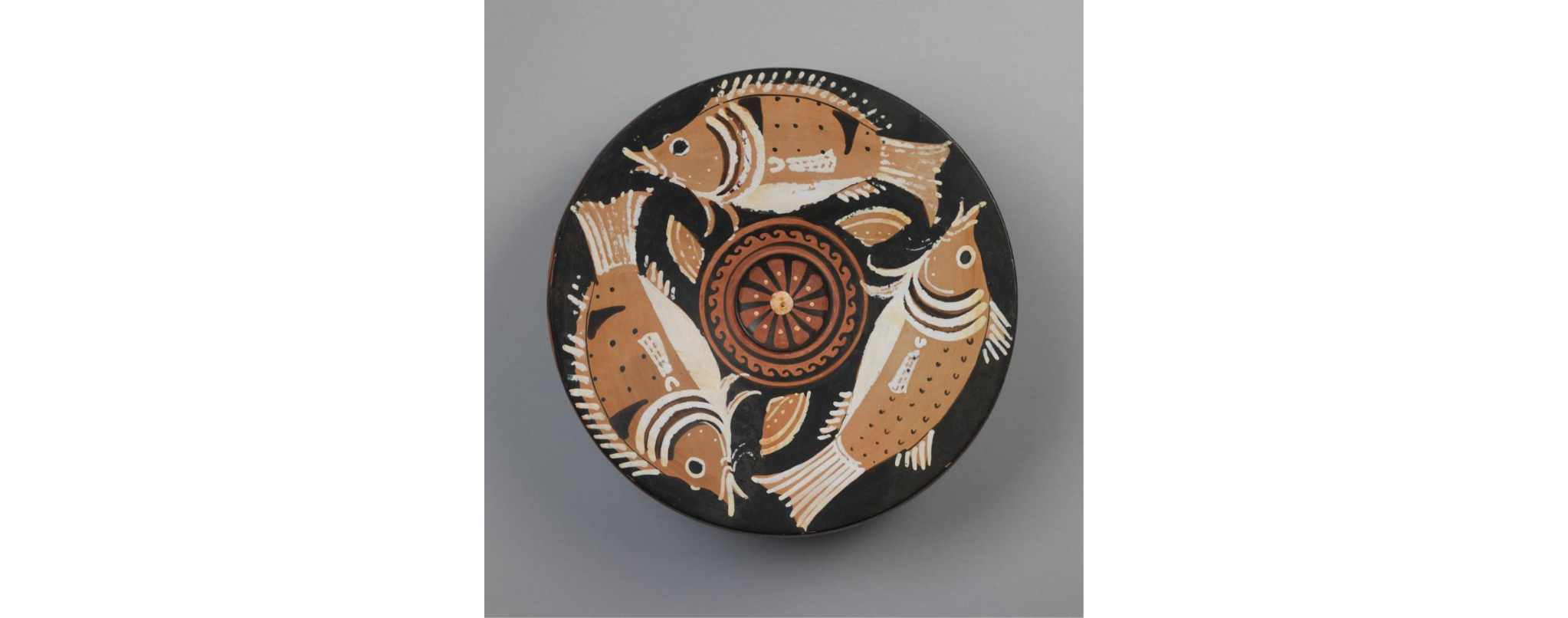
The Michael C. Carlos Museum and an Apulian Fishplate

Source: Michael C. Carlos Museum

The Michael C. Carlos Museum at Emory University has noted that it will be returning an Apulian fishplate attributed to the group of Karlsruhe 66/140 (inv. 1986.015). The website provides the so-called 'provenance':
Probably with Gianfranco Becchina, Zurich, Switzerland. Ex coll. William Knight Zewadski, United States, purchased from Sotheby's London, 17 May 1983, lot 261. Deaccessioned by MCCM for repatriation to the Italian Republic, August 29, 2023.
What does 'probably with' mean? What is the basis for returning the fishplate? Who consigned the piece to Sotheby's in London in 1983? 

What other ex-Becchina pieces in the Carlos Museum need explaining?

I am grateful to Dr Cynthia Patterson for drawing my attention to this piece of information.

| |
Bookmark and Share so Your Real Friends Know that You Know

Monday, 30 October 2023

Michael C. Carlos Museum and Italy

Source: Michael C. Carlos Museum


There have been unannounced developments at the Michael C. Carlos Museum at Emory University (no mention in the press releases). At least three items have had their title transferred to Italy on 29 August 2023 and now appear as loans. I am grateful to Dr Cynthia Patterson who spotted the changes to the records.

The objects include:
  • a Laconian cup attributed to the Rider painter (L2023.004.003). Surfaced via Palladion Antike Kunst, Basel (from at least 1988; first published by Conrad Stibbe in 1990); purchased from Palladion.
  • an Attic black-figured Band Cup (L2023.004.001). Surfaced via Palladion Antike Kunst, Basel (from at least 1975 when it appeared in an advertisement in Apollo); Brian T. Aitken, Acanthus Gallery, New York.
  • an Apulian volute-krater attributed to the Underworld painter (L2023.004.002). Surfaced in Galerie Hydra (Christian Boursaud), Geneva (by 1986); Pierre Sciclounoff (1926-1997), Geneva; purchased through Christoph Leon. 
Galerie Hydra is discussed in Peter Watson's, Sotheby's: Inside Story (1997). The Apulian krater appeared in: C. Aellen, A. Cambitoglou, and J. Chamay, Le Peintre de Darius et son Milieu: Vases grecs d'Italie méridionale (Hellas et Roma, vol. 4. Geneva: Association Hellas et Roma, 1986), 190–99 (Sciclounoff collection); A. D. Trendall, Red Figure Vases of South Italy and Sicily; A Handbook (London: Thames and Hudson, 1989), 261, fig. 210.

Can we presume that the Minoan larnax, known from the Becchina dossier, will be transferred to Greece in the near future? And what about the other material handled by Palladion Antike Kunst? 

| |
Bookmark and Share so Your Real Friends Know that You Know

Saturday, 15 July 2023

A pair of Nereids from an old Swiss collection

Two Nereids in the Louvre.
Source: Louvre


Two Apulian terracotta reliefs showing the Nereids were acquired by the Louvre in 1982 (CA 6823, CA 6824). They are alleged to have been derived from "une ancienne collection suisse" prior to 1939. However, the official museum website fails to mention this prior history.

What is key about these two Nereids is that they feature in the Becchina archive. Will the Louvre disclose the identity of the "old Swiss collection"? And what is the nature of the authenticated documentation that can demonstrate that the Nereids were known prior to 1939? 

Presumably this pair of terracottas form part of the Italian claims. Will the Louvre seek to be co-operative with the request?

What other items were acquired from Becchina or Palladion Antike Kunst?

I am grateful to Christos Tsirogiannis for advising me on the Becchina archive. The identifications were first made by Daniela Rizzo and Maurizio Pellegrini.

Besques, S. 1988. "Deux reliefs apuliens en terre cuite." Monuments et mémoires de la Fondation Eugène Piot 69: 1–28.

| |
Bookmark and Share so Your Real Friends Know that You Know

Saturday, 3 December 2022

Apulian Dinos Seized from NYC Private Collection

Source: Manhattan DA.

It seems that another piece displayed in the exhibition, Glories of the Past, was seized from a NYC private collection in June 2021 (though the information has only just been made available). The object is an Apulian dinos attributed to the painter of Louvre MNB 1148 (Glories no. 128). The catalogue entry by Dietrich von Bothmer notes that the dinos 'has been broken into many fragments and repaired'. Who restored the piece?

This adds to the 14 other pieces from the exhibition that have been returned to Greece, Italy or Turkey.

I am grateful to Jason Felch for pointing me in the direction of the relevant Search Warrant. 

| |
Bookmark and Share so Your Real Friends Know that You Know

Monday, 28 February 2022

Apulian grave group in Berlin subject to Italian court order

Apulian grave group currently in Berlin
© David Gill

The apparent grave group consisting of Apulian pottery now in Berlin is the subject of a court order from the Tribunale di Roma ("Scoppia la "guerra" dell'arte Italia-Germania. Il tribunale di Roma confisca 21 vasi al museo di Berlino", ItTempo.it February 25, 2022). The group has been the subject of discussion by LM back in 2007. Three of the volute-kraters are attributed to the Darius painter. This painter was the subject of an exhibition in Geneva: 
Aellen, Christian, Alexandre Cambitoglou, and Jacques Chamay. 1986. Le Peintre de Darius et son Milieu: Vases grecs d'Italie méridionale. Hellas et Roma, vol. 4. Geneva: Association Hellas et Roma.
The Berlin pots were acquired in 1983 (and accessioned in 1984), and they appear in the Medici Dossier. 

The acquisition record links the group to Jacques Chamay of Geneva's Museum of Art and History. 
«l’organo giudicante evidenziava una complicità con Medici degli indagati Jacques Chamay, all’epoca direttore del museo archeologico di Ginevra, e Fiorella Cottier Angeli, restauratrice, nella vendita al museo archeologico di Berlino dei 21 vasi».
It has been suggested that the grave group had once resided in a 19th century collection but there does not appear to be any authenticated documentation to support this claim. 

Will Berlin finally return this group to Italy?

| |
Bookmark and Share so Your Real Friends Know that You Know

Monday, 17 January 2022

The ownership trail of an Apulian krater

Apulian volute-krater
attributed to the Virginia Exhibition painter
Source: Fordham University

In February 2018 I drew attention to the Fordham Apulian volute-krater, attributed to the Virginia Exhibition painter, and its association with Edoardo Almagià (formerly inv. 8.001). I subsequently asked the question, 'Has the curatorial team at Fordham contacted the Italian authorities to check the history of the Apulian krater?' One of my concerns was that the name of the pot-painter is derived from the display, at Virginia, of five pieces all said, according to Dale Trendall, 'to come from the same tomb'. We do not, however, know the location of that tomb.

The krater was presented to Fordham in 2006 by William D. Walsh. Walsh had declared that it had been purchased from Arte Primitivo in 1994. Yet Trendall and Cambitoglou recorded the krater in 1992 as residing with Almagià on the New York market.

What other pieces from the Walsh collection were acquired from Arte Primitivo? When did the Apulian krater pass from Almagià to Arte Primitivo?

| |
Bookmark and Share so Your Real Friends Know that You Know

Saturday, 18 December 2021

The Fordham Antiquities and the New York Galleries

The announcement that "Ninety-six pieces with an estimated value of $1.8 million [were] seized from the Fordham Museum of Greek, Etruscan, and Roman Art on May 28, 2021" raises new questions (Press Release, Manhattan DA: "Manhattan D.A.’s Office Returns 200 Antiquities to Italy", December 15, 2021). The statement reports, "All but two of the pieces seized from Fordham were trafficked by [Edoardo] ALMAGIÀ." One of these two pieces is probably the Apulian patera attributed to the Baltimore painter that surfaced through Sotheby's in London in December 1983.

It is clear that some of the Fordham objects have a public and published record that they had surfaced on the New York market through Almagià. What is more surprising is that four New York galleries appear to be associated with the returning material: at least 85 of the seized objects are reported to have passed through these routes. (Around 80 objects come from just two of the galleries.)

Separate legal papers present the way that Almagià's material is said to have moved from Italy to north America. Does this mean the bulk of the Fordham material that had allegedly been "trafficked by ALMAGIÀ" had been passed to specific New York galleries? (This would imply that the donor of the material to Fordham had purchased the items from these four New York galleries rather than directly from Almagià.) 

These four galleries are not ones that have featured in the sorry tale that so far has been told about the selling and collecting of cultural property from Italy. This raises the possibility—and I would stress the possibility—that further revelations are likely given that, as the Manhattan DA press release reminds us, Almagià's "Green Book" contained "entries for almost 1,700 looted antiquities that ALMAGIÀ purchased from tombaroli in Italy and then sold in the United States." 

Bookmark and Share so Your Real Friends Know that You Know

Monday, 4 March 2019

Apulian hydria returned to Italy

Apulian hydria.
Sources: MiBAC (left), Becchina archive (right, courtesy of Dr Christos Tsirogiannis)
Last month Christie's was reported to have returned eight antiquities to Italy [press release]. This initiative appeared to be a new one but it now appears that the objects may relate to historic cases. For example, the returned Apulian hydria attributed to the Varrese painter appears to be the one identified at the April 2015 Christie's sale [see Looting Matters] by Dr Christos Tsirogiannis from an image in the Becchina archive. 

One wonders why this historic information as well as Tsirogiannis' contribution has been omitted. Back in 2015 I commented on why the hydria's history (and the histories of its companions) had not been spotted by the auction-house.

Bookmark and Share so Your Real Friends Know that You Know

Wednesday, 13 June 2018

Horse Trading and Virginia

The latest number of the Journal of Art Crime (19, Spring 2018) has appeared. It contains my 'Context Matters' column, ‘Horse trading: museum exhibitions and cultural property’, The Journal of Art Crime 19 (Spring 2018), 63-70. 

Back in February I write about some of the sources behind the objects in the collection. There is a consideration of material associated with Walter M. Banko of Montreal. More important is the identification of material derived from Fritz Burki that now resides in Virginia.

The paper also considers Apulian pots attributed to the Virginia Exhibition painter (some of which have been sold for the benefit of Columbia University). 

I had written to the curatorial staff in Virginia to clarify some of the detail in the paper but, as I stated in the paper, I have yet to receive a reply.

Bookmark and Share so Your Real Friends Know that You Know

Monday, 5 March 2018

Surfacing Apulian tomb-group in 1981

I have been reflecting on a group of Apulian pots that are said, by A.D. Trendall, to have been derived from the same tomb. All surfaced on the New York market in 1981 and then passed to the same private collection.

Some initial questions. Who provided the information to Trendall? Was it the New York dealer? If so, who provided the information to the dealer? Or was Trendall aware of the source in, say, Switzerland? If this group does not appear to have been known prior to 1970, will the present proprietors seek to contact the Italian authorities?

Bookmark and Share so Your Real Friends Know that You Know

Saturday, 3 March 2018

Ex Almagià Apulian krater at Fordham University


Among the returns from the Cleveland Museum of Art was a pair of Etruscan silver bracelets that were derived from Edoardo Almagià. Then there was a major return from the Princeton University Art Museum that contained numerous pieces derived from Almagià (discussion here). The Dallas Museum of Art decided to investigate its collections and returned ex Almagià to Italy (discussion here). And other museums have ex Almagià material: Boston Museum of Fine Art, Indiana University Art Museum, Tampa Museum of Art. Chasing Aphrodite has added material in the San Antonio Museum of Art.

Among the items in the Walsh collection at Fordham University is an Apulian volute-krater attributed to the Virginia Exhibition painter (inv. 8.001). The catalogue entry does not appear to provide a statement about the kraters' history. However, the krater is currently on view at the Virginia Museum of Fine Arts (VMFA), and the catalogue entry helpfully states: "Ex. coll. Edouardo [sic.] Almagiá [sic.]; Arte Primitivo, 1994; Gift of William Walsh, 2006".

Can I suggest that the curatorial teams at Fordham and VMFA contact the Italian authorities to check the background to this krater?

Bookmark and Share so Your Real Friends Know that You Know

Saturday, 10 February 2018

History of objects in Virginia exhibition


Colleagues have suggested that I had a look at the exhibition catalogue of The Horse in Ancient Greek Art that will be opening at the Virginia Museum of Fine Arts (VMFA) in a week's time. Among the interesting sources for the objects are:

  • Edoardo Almagià: no. 43, Apulian volute-krater attributed to the Virginia Exhibition painter, Fordham University Collection 8.001 [Fordham cat. no. 32]
  • Fritz Bürki: no. 19, Apulian lekythos attributed to the Underworld painter, Virginia MFA 81.55; no. 20, Apulian lekythos attributed to the Underworld painter, Virginia MFA 80.162; no. 26, Corinthian skyphos showing a boar hunt, Virginia MFA 80.27; no. 41, Apulian calyx-krater attributed to the Dublin Situlae group, Virginia MFA 81.81; no. 53.1, Apulian Xenon oinochoe, Virginia MFA 81.82; no. 53.2, Apulian Xenon oinochoe, Virginia MFA 81.83
  • Sotheby's, London (12–13 December 1983): no. 42, Apulian patera attributed to the Baltimore painter, Fordham University Collection 11.003 [Fordham cat. no. 25].
  • Summa Galleries Inc. Beverley Hills: no. 12, a Phrygian terracotta revetment, Virginia MFA 78.62.5. (This looks as if it could be part of the Düver frieze.)
  • Robin Symes: no. 55, Villanovan or early Etruscan bronze horse bit, Sidney and Lois Eskenazi Museum of Art, Indiana University 84.28
The series of acquisitions from Fritz Bürki is particularly significant as Dr Christos Tsirogiannis has written on a Gnathian askos acquired by Virginia MFA in 1980. Not only was this acquired from Bürki but it had previously been handled by Giacomo Medici. Has VMFA conducted a rigorous due diligence search on the series of objects that it acquired from Bürki? Has VMFA contacted the Italian authorities about the controversial askos?

Has Fordham University contacted the Italian authorities about the Almagià volute-krater? And what about the Apulian patera that surfaced at Sotheby's, London in 1983?

We should be grateful to Peter Schertz and Nicole Stribling, the editors of the VMFA catalogue, for printing the histories of the objects.


Bookmark and Share so Your Real Friends Know that You Know

Saturday, 6 January 2018

Steinhardt seizure in Manhattan

Source: Manhattan District Attorney's Office

It has been reported that at least nine antiquities were seized from the Manhattan apartment of Michael H. Steinhardt (James C. McKinley Jr., "Looted Antiques Seized From Billionaire’s Home, Prosecutors Say", New York Times January 5, 2018). The pieces included:

  • a Protocorinthian owl
  • a Protocorinthian duck
  • an Ionian ram's head
  • an Attic white-ground lekythos
  • an Attic aryballos
  • an Apulian head vase
The Attic lekythos is likely to have come from a funerary context in Attica, and should therefore be linked to activity in Greece. 

Steinhardt has been linked to material from Eshmun in the Lebanon, a gold phiale from Sicily, a tomb fragment from Paestum, a Sardinian figure, and a Faliscan askos. 

Which dealers were the sources for these seized objects? Are these derived from Robin Symes?


Bookmark and Share so Your Real Friends Know that You Know

Friday, 17 November 2017

Gordon McLendon and Fritz Bürki

The returns from the J. Paul Getty Museum have included Apulian pots that were given by Gordon McLendon in 1977 (Inv. 77.AE.14–15). 

Some of McLendon's gifts were derived from Fritz Bürki:
a. Apulian volute-krater, attributed to the Baltimore painter. Inv. 77.AE.112. Acquired from Bürki in 1977.
b. Apulian volute-krater, attributed to the Baltimore painter. Inv. 77.AE.113. Acquired from Bürki in 1977.
c. Apulian volute-krater, attributed to the Patera painter. Inv. 77.AE.114. Acquired from Bürki in 1977.
d. Apulian volute-krater, attributed to the Patera painter. Inv. 77.AE.115. Acquired from Bürki in 1977.
e. Apulian bell-krater, attributed to the Patera painter. Inv. 77.AE.116. Acquired from Bürki in 1977.

Note that these Apulian pieces moved almost directly from Bürki to the museum via McLendon.


Bookmark and Share so Your Real Friends Know that You Know

Tuesday, 30 May 2017

Kantharos from an old Swiss collection

Source: Google
It appears that the kantharos seized from a second Manhattan gallery came from an old Swiss collection.

This appears to have surfaced in Basel in February 1994 and then passed to a New York private collection. It was then being offered by a New York gallery for $8,500.

The District Attorney's office have yet to release the name of the gallery.

I am willing to amend this entry if this collecting history is incorrect or partial.

The kantharos appears to be the one in Royal-Athena Galleries, Art of the Ancient World 28 (2017) no.  105. It formerly resided in the 'J.M.E. collection' in New York.

Bookmark and Share so Your Real Friends Know that You Know

Antiquities from a Manhattan gallery

Source: New York County District Attorney's Office
For completeness I note the seizures from a second gallery in Manhattan.

  • a Sardinian bronze ox, 8th century BC, valued at $6,500
  • a Sardinian bronze warrior wearing a helmet and carrying a bow, 8th century BC, valued at approximately $30,000 
  • a Greek bronze Herakles holding the horn of Achelous, 4th-3rd centuries BC, valued at $12,500.
  • an Apulian Xenon kantharos, decorated with the image of two goats butting heads, late 4th century BC, valued at $8,500
  • a Proto-Corinthian oenochoe, decorated with rams and panthers, c. 650 BC, valued at $22,500 
  • a Paestan red-figure lekythos, decorated with a man holding a plate of fruit, c. 340 BC, valued at $9,500

The name of the gallery has not yet been released.

Bookmark and Share so Your Real Friends Know that You Know

Saturday, 3 December 2016

An Apulian Situla, the Becchina Archive, and a Munich Auction

Source: Becchina Archive
The forthcoming auction at Gorny & Mosch is due to include an Apulian situla attributed to the Lycurgus painter (Lot 87). The collecting history is presented:
Aus der James Stirt Collection, Vevey in der Schweiz, erworben 1997 bei Heidi Vollmöller, Zürich.
Dr Christos Tsirogiannis has pointed out that an image of the situla appears in the Becchina archive. He notes: "A handwritten note indicates that the images were sent from Raffaele Montichelli, a convicted antiquities trafficker, to Becchina on 18 March 1988". The image shows that the situla is covered in salt encrustations and is presumably relatively fresh out of the ground.

It is known that part of the James Stirt collection was derived from Ellie Borowski (e.g. an Athenian black-figured cup that passed through Christie's London in 2014 [see Beazley Archive]). In this case the source is Heidi Vollmöller of Zurich.

Dale Trendall [not Sir John Boardman as in the catalogue] described the Lycurgus painter as representing "the culmination of the second phase of the 'Ornate'" (Red Figure Vases of South Italy and Sicily, p.80).

The Becchina image suggests that this situla surfaced post-1970. The Munich auction-house needs to be seen to act responsibly, to withdraw the situla from the auction, and to contact the Italian authorities.


Bookmark and Share so Your Real Friends Know that You Know

Friday, 23 September 2016

Spotlight on European collections


Attic black-figured amphora
 from the Schinoussa Archive. Courtesy of Christos Tsirogiannis.
Following the recent return of antiquities from the Ny Carlsberg Glyptotek to Italy, the spotlight will be on other European collections that contain archaeological material that appears to have been derived from Italy. Among the museums are:
The Italian authorities will no doubt be negotiating with each of these institutions to secure the return of this material.


Bookmark and Share so Your Real Friends Know that You Know

Krater fragments in Princeton

Greek, Attic, probably by the Kleophrades Painter, ca. 490–480 BCE, Two non-joining fragments from a calyx-krater (mixing bowl) depicting ar...