Showing posts sorted by relevance for query schøyen. Sort by date Show all posts

Wednesday, 12 February 2020

The Schøyen Collection

It has been some time since LM commented on the incantation bowls from the Schøyen Collection and the discussion (including the report available via wikileaks).

A detailed study of the Schøyen collection is now available:
Prescott, C., and J. M. Rasmussen. 2020. "Exploring the “cozy cabal of academics, dealers and collectors” through the Schøyen Collection." Heritage 3: 68–97.
DOI https://doi.org/10.3390/heritage3010005

This raises important ethical issues for academics who are involved in the research on and publication of such newly surfaced materials.

Abstract
In the wake of the trade in ancient materials, several ethical and political issues arise that merit concern: The decimation of the cultural heritage of war-torn countries, proliferation of corruption, ideological connotations of orientalism, financial support of terrorism, and participation in networks involved in money laundering, weapon sales, human trafficking and drugs. Moreover, trafficking and trading also have a harmful effect on the fabric of academia itself. This study uses open sources to track the history of the private Schøyen Collection, and the researchers and public institutions that have worked with and supported the collector. Focussing on the public debates that evolved around the Buddhist manuscripts and other looted or illicitly obtained material from Afghanistan, Pakistan and Iraq, this article unravels strategies to whitewash Schøyen’s and his research groups’ activities. Numerous elements are familiar from the field of antiquities trafficking research and as such adds to the growing body of knowledge about illicit trade and collecting. A noteworthy element in the Schøyen case is Martin Schøyen and his partner’s appeal to digital dissemination to divorce collections from their problematic provenance and history and circumvent contemporary ethical standards. Like paper publications, digital presentations contribute to the marketing and price formation of illicit objects. The Norwegian state’s potential purchase of the entire Schøyen collection was promoted with the aid of digital dissemination of the collection hosted by public institutions. In the wake of the Schøyen case, it is evident that in spite of formal regulations to thwart antiquities trafficking, the continuation of the trade rests on the attitudes and practice of scholars and institutions.

Bookmark and Share so Your Real Friends Know that You Know

Saturday, 13 October 2007

UCL and the incantation bowls

UPI reported over last weekend ("Iraqi antiquities center of British battle", October 7, 2007) that the UCL inquiry concerning the incantation bowls from the Martin Schøyen collection took a new direction.

Colin Renfrew, a member of that inquiry, is quoted as saying in response to a decision to withhold the report:

"UCL tried to do the right and ethical thing by setting up a committee of inquiry. Then, when threatened with a lawsuit, in my view, it gave way under pressure".

No doubt the signs were there last March when The Times reported, "Tycoon orders university to return his ‘magic’ artefacts" (March 22, 2007). The 654 bowls has been loaned to UCL "for academic research purposes" back in 1996.

In 2005 The Times ("Museum inquiry into 'smuggling' of ancient bowls" [archived]) reported that the bowls "were exported from Jordan, but their country of origin may have been Iraq, the site of ancient Mesopotamia."

Michael Worton, UCL's vice-provost, was quoted as saying:

"until recently, most universities have taken a relaxed approach to the acquisition of such objects, with academic staff acquiring and publishing research and teaching collections. To restrict such activities would have been seen as restricting academic freedom. However, in the 21st century new principles and policies are emerging. In 2002, the UK signed up to the 1970 Unesco convention on illicit cultural trade and in 2003 the UK implemented the Dealing in Cultural Objects (Offences) Act. Intelligence on the pillaging of archaeological sites has greatly increased and attitudes are changing."

If attitudes are really changing why has UCL really taken the decision to stop the report from being made public? And is it a little misleading to suggest "in the 21st century new principles and policies are emerging"? Staff at UCL have made their views known on archaeological ethics since the last millennium. (A copy of Antiquities: Trade or Betrayed. Legal, Ethical and Conservation Issues [1995] is sitting on my shelf.)

Not only does the report appear to have been buried, but money seems to have changed hands. A Joint statement from UCL and the Schøyen Collection: Aramaic Incantation Bowls issued on June 27, 2007 [mirrored] recorded:

"UCL has no basis for concluding that title is vested other than in the Schøyen Collection. UCL has now returned the bowls to the Schøyen Collection and has agreed to pay a sum in respect of its possession of them."

The Schøyen Collection website makes the interesting observation:
"Over two-thirds of all discovered incantation bowls have an unknown original provenance, as they are usually surface finds, rather than artefacts found in a particular strata or location of an archaeological dig."

In other words, over 65% of the all the known incantation bowls --- some 2000 --- do not have a recorded find-spot. (Conversely, and by implication, less than 700 have some kind of find-spot.) What are the intellectual consequences for their study?

Then it struck me that the case of these texts is not unlike the debate around "unprovenanced" texts and inscriptions which fall into the broad sphere of "biblical archaeology" (see "Intellectual Consequences for Biblical Archaeology?").

There is a petition concerning the "Publication of Unprovenanced Artifacts" sponsored by the Biblical Archaeology Society. I quote two of the points here:


7. We do not encourage private collection of antiquities. But important artifacts and inscriptions must be rescued and made available to scholars even though unprovenanced. When such objects have been looted, the antiquities market is often the means by which they are rescued, either by a private party or a museum. To vilify such activity results only in the loss of important scholarly information.

8. We would encourage private collectors of important artifacts and inscriptions to make them available to scholars for study and publication. Too often collectors who do make their objects available to scholars are subject to public obloquy. As a result, collectors are disinclined to allow scholars to study their collections, and the public is the poorer.

I notice that one of the original signatories is Professor Shaul Shaked.

And to complete the loop, the Schøyen Collection website informs us:

"Since 1995 Professor Shaul Shaked at the Hebrew University, the world’s foremost authority on incantation bowls, has taken on the Herculanean task of publishing the bowls in the Schøyen Collection ... The Schøyen Collection’s 654 incantation bowls have been housed at University College London for the convenience of Professor Shaked".


Monday, 9 November 2009

UCL and the Incantation Bowls: further comment

Towards the end of October Lord Renfrew of Kaimsthorn cited the UCL incantation bowls in a speech in the House of Lords. The Observer has now published a detailed comment on the story (Vanessa Thorpe and James Doeser, "UK scholars linked to 'stolen' bowls of Babylon", The Observer November 8, 2009). The authors appear to have used a copy of the report on the bowls that has been placed in the Library of the House of Lords.

Thorpe and Doeser cite the report:
The UCL report concludes that "the bowls are subject to the Iraq United Nations sanctions order 2003 as cultural objects illicitly removed from Iraq after 6 August 1990 and that UCL has therefore a duty to deliver them to a constable".
The history of the report is also discussed:
The learned team of academics and researchers who worked on the report concluded that both the university and Schøyen were guilty of not showing enough curiosity about the source of the 654 bowls, although it is not suggested that Schøyen knew they might have been looted when he bought them. The team recommended they be returned immediately and asked for the findings to be made public. But in 2007 the report's three authors were made to keep quiet about their conclusions and UCL paid an undisclosed sum of compensation to Schøyen. The authors are believed to have been unhappy about the legal gag.

Bookmark and Share so Your Real Friends Know that You Know

Friday, 30 October 2009

UCL and the Incantation Bowls: Lord Renfrew comments

Earlier this week Lord Renfrew of Kaimsthorn was speaking in the House of Lords on the "Amendment of Treasure Act 1996" [record]. After mentioning the Sevso Treasure he turned to the UCL Incantation Bowls:
The second case to which I shall refer is as scandalous but less well known in view of intimations of libel action by the lawyers of Mr Martin Schøyen, a Norwegian shipowner. He purchased a major series of 654 Aramaic incantation bowls that had been imported into this country in the 1990s in dubious circumstances and lent them for study to a London university. When the university realised that they might be looted antiquities, it rightly set up a committee of inquiry on which I had the honour of sitting under the chairmanship of the distinguished lawyer, Mr David Freeman. We determined that they had indeed been looted from Iraq, or more precisely concluded,
“on the balance of probabilities that the bowls were removed from Iraq, and that their removal took place after 6th August 1990”,
and was therefore illegal. We recommended,
“the return of the incantation bowls to the Department of Antiquities of the State of Iraq”.
A copy of that report is in the Library of the House.

Despite that, I am sorry to say that the bowls were not returned to Iraq: they were returned to the custody of Mr Martin Schøyen. Under the new clause proposed in Amendments 70 and 68, lending and borrowing would both be dealing in terms of the Bill. It would be an offence to deal in undocumented archaeological objects in such a way—and so it should be: it is scandalous that the heritage of Iraq has been treated in this way.


Bookmark and Share so Your Real Friends Know that You Know

Thursday, 18 October 2007

UCL and the incantation bowls: Q&A in the House of Lords

Lord Renfrew of Kaimsthorn has raised the issue of the UCL report concerning the incantation bowls in the House of Lords. He received this written reply last week from Lord Davies of Oldham:

The Department for Culture, Media and Sport has not received a full copy of the report relating to the collection of Aramaic incantation bowls. I understand that University College, London, returned the bowls to the Schøyen Collection.


Saturday, 27 March 2010

Renfrew on Post-disjunctive Forensic Re-contextualisation


Lord Renfrew has issued a summary of the paper ("Combating the Illicit antiquities trade: progress and problems") he gave at the International Meeting on Illicit Traffic in Cultural Property organised by the Ministero per i Beni e le Attività Culturale, in Rome in December 2009. He acknowledged the "real international progress" that has been made, including the return of antiquities from major returns (see our earlier discussion).

Renfrew alludes to other ongoing cases:

Renfrew emphasises 1970 as the benchmark for collecting histories. This is certainly now recognised by the North American community as a key date for acquisitions, though, in my opinion, there is still the issue of long-term loans.

Renfrew touches on the issue of cultural property claims that pre-date 1970 such as the Parthenon marbles and the Benin bronzes. He also discusses the Martin Schøyen collection of incantation bowls that were on loan to UCL.

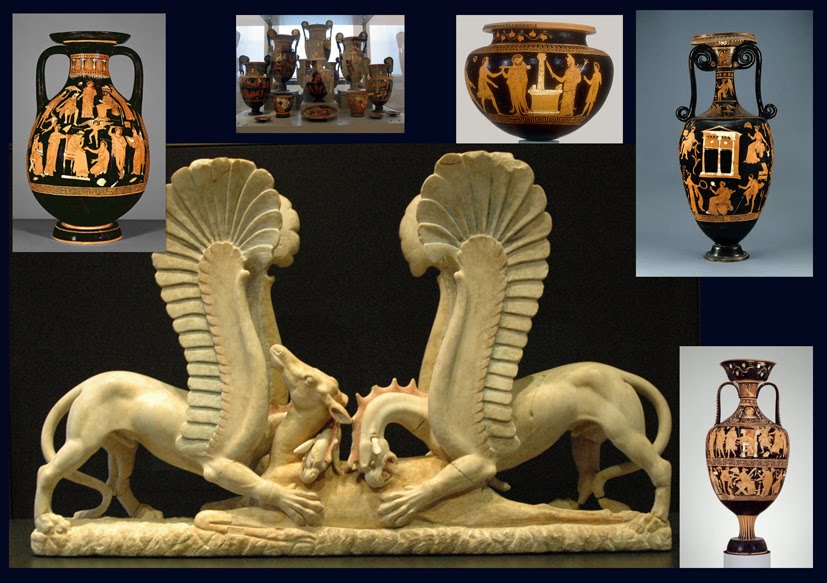
There is a useful reflection on the return of the marbles allegedly found at Ascoli Satriano and returned by the J. Paul Getty Museum. These are now on display in Rome. Renfrew writes:
I had seen the extraordinary marble sculpture of the Griffins at Malibu, both at the Villa where they were originally exhibited by the J. Paul Getty Museum and then at the inaugural installation at the new Getty Museum in Los Angeles. Indeed so striking and unexpected was the impression then made on me that I was quite doubtful of their authenticity. That is one of the prices which one pays when antiquities are clandestinely removed from their context of discovery.
And now, at the Palazzo Massimo I saw not only the Griffins and the remarkable painted marble basin but a whole assemblage of marble artefacts, including the painted calyx crater and the splendidly severe group of marble vessels (loutrophoros, epichysis, oinochoe) which apparently formed part of the original tomb group. A single de-contextualised artwork now had an important series of accompanying pieces. These added greatly to the significance of the extraordinary Griffin piece. But in addition they themselves became of vastly greater importance.
But the marbles are only part  of the "assemblage". It has been reported elsewhere that they were found with "a number of vases by the Darius Painter" (see earlier discussion). One of the interesting features of the returns from North America have been the pots attributed to the Apulian pot-painter dubbed the Darius painter: from Boston's Museum of Fine Arts,  the Cleveland Museum of Art, Malibu's The J. Paul Getty Museum, New York's Metropolitan Museum of Art, and the Princeton University Art Museum. And we must not forget the tomb-group incorporating pots attributed to this painter in Berlin. Could the marbles have been associated with any of these pots? Indeed is it possible that they were found with Apulian cavalry armour?  The answer is we just do not know details of the tomb and its original contents.

Renfrew turns to other re-contextualised material; he dubs it "post-disjunctive forensic re-contextualisation". (Surprisingly, he does not mention Morgantina where Malcolm Bell appears to have discovered the holes from which the silver hoards appear to have been removed.) Renfrew suggests other examples such as the Sarpedon krater for Cerveteri, and the fragmentary marble figures from Keros in the Cyclades ("the Keros haul").

The summary of Renfrew's lecture makes it clear that Italy has been able to address the issue of looting. Now it is the turn of museums, collectors, and dealers to avoid acquiring or selling pieces that do not have a recorded collecting history that can be traced back to the period before 1970.

Image
Composite of some of the returns from North America and other items on display in a European Collection.

Bookmark and Share so Your Real Friends Know that You Know

Another Bürki object returns to Italy

Source: MMA A psykter column-krater attributed to the Troilos painter was deaccessioned by New York's Metropolitan Museum of Art in June...