Showing posts sorted by date for query bubon. Sort by relevance Show all posts

Friday, 12 December 2025

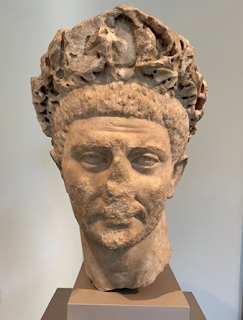
Another statue associated with Bubon returns to Türkiye

The Manhattan DA has announced that a statue that has resided in the collection of Aaron Mendelsohn has been returned to Türkiye (Press Release).

The nature of the return is described:
The D.A.’s Office has been investigating looted Bubon antiquities trafficked into and through New York County since 2022. The ongoing investigation into Bubon has led to the seizure of 16 antiquities from Bubon, 15 of which have already been repatriated, collectively valued at almost $80 million. 
In this ceremony we will be returning an over-life-sized bronze statue of a “Nude Emperor” that was looted from Bubon, trafficked through Manhattan, and purchased by collector Aaron Mendelsohn. Pursuant to a deferred prosecution agreement, Mendelsohn has agreed to surrender the statue of the Nude Emperor so that the D.A.’s Office can repatriate it to the people of Türkiye. Mendelsohn’s federal lawsuit challenging the Office’s investigation of the statue was also dismissed. 
“The looting into ancient sites like Bubon were extensive, and I am pleased that our investigation has yielded such significant results. I thank the work of our prosecutors and analysts for their dedication to uncovering these trafficking networks that target ancient sites rich with cultural heritage,” said District Attorney Bragg. 
“It takes real courage to challenge what is unjust. Today, the dedicated Antiquities Trafficking Unit of the DA’s Office is repatriating artifacts stolen from the Turkish people decades ago. The strong partnership we have built and sustained with determination has carried our national efforts onto the international stage. These restitutions not only reunite the heroes of these cases, but also send a clear message to the world: do not buy cultural property removed illegally from its country of origin. This is how a single return becomes a powerful tool against illicit excavations—and why this work matters more than ever,” said Gökhan Yazgı, Deputy Minister, Ministry of Culture and Tourism of the Republic of Türkiye. 
In the 1960s, individuals from a village near Bubon began plundering a Sebasteion, an ancient shrine with monumental bronze statues of Roman emperors and selling those looted antiquities to smugglers based in the coastal Turkish city of Izmir. Working with Switzerland-based trafficker George Zakos and New York-and-Paris-based trafficker Robert Hecht, they unlawfully removed the looted antiquities from Türkiye, transporting them to Switzerland or the United Kingdom, and then onward to the United States or other European destinations. Once the statues were in the United States, New York-based dealers such as Jerome Eisenberg’s Royal-Athena Galleries and the Merrin Gallery funneled the stolen Bubon bronzes into museum exhibitions and academic publications thereby laundering the pieces with newly crafted provenance. As the Bubon pieces graced the halls of the Metropolitan Museum of Art (Met), the Cleveland Museum of Art, the Getty Museum, Boston’s Museum of Fine Arts, the Santa Barbara Museum of Art, the Worcester Museum of Art, and the Fordham Museum of Art, the reputational value of the institutions that displayed the Bubon pieces increased and the financial value of the statues grew.
Other bronzes associated with Bubon are mentioned here. We look forward to his major group of bronze sculptures being displayed in the same space.

| |
Bookmark and Share so Your Real Friends Know that You Know

Friday, 14 February 2025

Cleveland Museum of Art returns statue linked to Bubon

Source:
Cleveland Museum of Art

The Cleveland Museum of Art has agreed that the bronze figure acquired in 1986 will be returned to Türkiye. Scientific tests on soil samples appear to confirm that the figure was in fact found at Bubon and thus formed part of a series of imperial statues. For many years the headless statue was presented as a representation of the emperor Marcus Aurelius.

The Manhattan DA presented this account of the looting:
In the 1960s, individuals from a village near Bubon began plundering a Sebasteion, an ancient shrine with monumental bronze statues of Roman emperors and selling those looted antiquities to smugglers based in the coastal Turkish city of Izmir. Working with Switzerland-based trafficker George Zakos and New York-and-Paris-based trafficker Robert Hecht, they unlawfully removed the looted antiquities from Türkiye, transporting them to Switzerland or the United Kingdom, and then onward to the United States or other European destinations. Once the statues were in the United States, New York-based dealers such as Jerome Eisenberg’s Royal-Athena Galleries and the Merrin Gallery funneled the stolen Bubon bronzes into museum exhibitions and academic publications thereby laundering the pieces with newly crafted provenance. As the Bubon pieces graced the pages of exhibition catalogues and academic publications, the reputational value of the institutions who displayed the Bubon pieces increased and the financial value of the statues grew.
George Zakos was linked to the Lydian silver treasure that was returned to Türkiye by New York's Metropolitan Museum of Art. Zakos also handled the Sion Treasure that was acquired by Dumbarton Oaks, and three terracotta antefixes in the Metropolitan Museum of Art that appear to come from the Panionion on Mykale in Türkiye (1992.36.1; 1992.36.2; 1992.36.3).

The research of Dr Elizabeth Marlowe on the Bubon material is acknowledged by the Manhattan DA. 

Press release:

| |
Bookmark and Share so Your Real Friends Know that You Know

Wednesday, 27 November 2024

Further Returns to Türkiye

Septimius Severus. Source: Ny Carlsberg Glyptotek

It has been announced that the Ny Carlsberg Glyptotek in Copenhagen will be returning the bronze head of Septimius Severus to Türkiye ("The Glyptotek returns Roman bronze portrait to Türkiye", press release, November 26, 2024). It forms part of a series of imperial bronze statues from the sebasteion at Bubon: the press release notes Bubon returns from New York's Metropolitan Museum of Art, Fordham Museum of Art, Worcester Art Museum, Boston Museum of Fine Arts, The J. Paul Getty Museum, and the Shelby White Collection. The head was acquired from Robert Hecht.

This will put increased pressure on the Cleveland Museum of Art over the claims relating to the bronze "Marcus Aurelius" that has been linked in The Bulletin of the Cleveland Museum of Art to Bubon (A. P. Kozloff, "Bubon: a re-assessment of the provenance," Bulletin of the Cleveland Museum of Art 74 [1987] 130-43).

The announcement from the Ny Carlsberg Glyptotek includes 48 architectural terracottas linked to Düver, and also acquired from Hecht. This will put pressure on other museums in Europe, North America and beyond to return the Düver terracottas that they acquired.

Details of previous returns from the Ny Carlsberg Glyptotek can be found in David W. J. Gill, "The Returns from the Ny Carlsberg Glyptotek, Copenhagen," in Artwashing the Past: Context Matters (Lanham: Rowman & Littlefield, 2024), 27–31.

| |

Thursday, 3 October 2024

Another Bubon Head Returns to Türkiye

Source: Manhattan DA


A bearded head from the Santa Barbara Museum of Art (inv. 1971.51.2) has been returned to Türkiye [press release]. The head was included in Cornelius Vermeule's list of figures associated with Bubon (F). Mario A. del Chiaro dated it to the late third century CE, and noted that it came from Türkiye ("Western Asia Minor"). The press release added this information:
Bearded Head of a Man, dating to the 3rd century C.E., was looted from Bubon in 1966 and smuggled out by Turkish traffickers for Robert Hecht. The Bearded Head of a Man was ultimately sold by New York-based dealer Matthias Komor to a private collector, who donated the piece to the Santa Barbara Museum of Art, where it was seized by the ATU.

The press release noted that this was one of three Bubon associated pieces that were being returned to Türkiye. One was the Koutoulakis head in the J. Paul Getty Museum but the third is not identified. One possibility is that the third piece was one of two that passed through a Manhattan gallery in 2006 (Vermeule O and P).

These latest returns will place further pressure on the Cleveland Museum of Art to come to an amicable agreement over the statue once described as Marcus Aurelius (Vermeule D).

Reference
Del Chiaro, M. A. 1974. "New Acquisitions of Roman Sculpture at the Santa Barbara Museum of Art." AJA 78: 68–70, pl. 20.

| |
Bookmark and Share so Your Real Friends Know that You Know

Thursday, 19 September 2024

Statues from Bubon and Returns to Türkiye

Reconstruction of Statue Base from Bubon

The looting of the series of bronze imperial statues from the sebasteion at Bubon in Türkiye was shocking. Yet more than half a century on the authorities in Türkiye are achieving the gradual return of the statues, or parts of the statues, that were identified and discussed (among others) by Cornelius C. Vermeule and Arielle P. Kozloff. The display of the statues as originally intended will move a little closer.


Yet there appears to be active reluctance to accept that the draped man, once presented as Marcus Aurelius, did derive from this group. We also do not know what will happen to the statue in Houston. 

| |
Bookmark and Share so Your Real Friends Know that You Know

Wednesday, 24 April 2024

Another Bubon bronze head likely to be repatriated


It appears that a bronze head acquired by the J. Paul Getty Museum from Nicolas Koutoulakis has been removed from display and appears to be returning to Türkiye (Adam Schrader, "The Getty Museum Returns an Ancient Bronze Head to Turkey", Artnet April 24, 2024). The head had featured in the Fire of Hephaistos exhibition (1996) no. 44: the find-spot was stated as "Reported to be from Ibecik (ancient Bubon in Lycia) in Turkey". Arielle Kozloff had earlier listed the statue among the Bubon pieces in The Bulletin of the Cleveland Museum of Art (1987).

This will put further pressure on the Cleveland Museum of Art in their attempt to disassociate a headless bronze statue from its suggested link with Bubon and its identification with the emperor Marcus Aurelius. Incidentally, the Cleveland statue was illustrated in the Fire of Hephaistos catalogue (cat. 54, fig. 2): "... possibly Marcus Aurelius ... Reported to be from Ibecik (ancient Bubon in Lycia)."

| |
Bookmark and Share so Your Real Friends Know that You Know

Tuesday, 5 December 2023

Bubon Bronzes Returning to Türkiye

Portrait of woman. Source: Manhattan DA


Among the antiquities being returned to Türkiye today are several bronzes associated with the Sebasteion at Bubon ("D.A. Bragg Announces Return of 41 Antiquities To The People of Türkiye", December 5, 2023; see here). It is reported to have been handled by Robert Hecht. Among the other pieces are two bronze heads of Caracalla, one from Fordham University, and the other that had been seized from New York's Metropolitan Museum of Art. Two pieces have been returned from Boston's MFA: the head of ruler, and the right leg (perhaps linked to a statue of Commodus). Both Boston pieces are linked to Jerome Eisenberg.

Details of the other items being returned to Türkiye (but unassociated with Bubon) are not provided in any detail except for a silver statue of Cybele that was seized from Michael Ward (see observations from ARCA).


Reconstruction of part of the Sebasteion at Bubon. Source: David Gill


| |
Bookmark and Share so Your Real Friends Know that You Know

Tuesday, 31 October 2023

Boston Returns Two Bronzes Linked to Bubon


Elizabeth Marlowe has drawn attention (on X) to the return of two bronzes associated with Bubon in Türkiye from Boston's Museum of Fine Arts.

One is a right leg acquired in 1967 as a gift from Jerome M. Eisenberg and Alan Ravenal (inv. 68.732). The leg appeared in the Harvard exhibition, The Fire of Hephaistos (1996), no. 16: 'now associated with the group of sculptures from ancient Bubon'. Vermeule (1980) linked it with the Bubon series (no. N). Jale Inan (1994) linked the leg with the torso in a private collection (Inan: 'Dr Sackle') and identified as Commodus (Vermeule no. K; Fire of Hephaistos, no. 55). Inan also linked it with the left thigh that appeared on the New York market (Vermeule no. T). A composite image is provided in Inan's study (pl. xxix).

The second piece is a bronze head that was in the possession of Eisenberg in 1966 when it was shown to Vermeule. In 1967 it was sold to a private collector, and in 2003 was presented to Boston by an anonymous donor (inv. 2003.786). 

Display of imperial bronze statues at Bubon.
Reconstruction: David Gill based on Jale Inan.


| |
Bookmark and Share so Your Real Friends Know that You Know

Saturday, 2 September 2023

Bubon: More Returning Sculptures

Line drawing of part of the base in the Sebasteion at Bubon, Türkiye with portrait statues of Marcus Aurelius and Lucius Verus at the appropriate positions. Note: the figures are not to scale.


Christopher Chippindale and I drew attention to the imperial bronzes associated with the Sebasteion at Bubon in Turkey back in 2000: discussion of this group can be traced back to the 1970s. The looting of this space seems to have taken place in the early 1960s. It now seems that the (headless) portrait of Marcus Aurelius as a philosopher will be returned from the Cleveland Museum of Art and will be reunited with the portrait of Lucius Verus from the Shelby White and Leon Levy collection: the pair were originally displayed, appropriately, next to each other. They will join the Lipson statue of Septimius Severus that was seized from New York's Metropolitan Museum of Art. Other pieces include the head of Caracalla that had been displayed at Fordham University. 

Elizabeth Marlowe ("Bronze Roman statue, believed to have been looted from Turkey, seized from Cleveland Museum of Art", The Art Newspaper 31 August 2023) has pointed out that Cleveland has played down both the identification with Marcus Aurelius and the association with Bubon. The same phenomenon is being played out with the bronze statue in the Houston Museum of Fine Arts. The online entry now notes: 
It was associated throughout the 1970s and 1980s, by some scholars, with other bronzes that had been found near Bubon, Turkey. However, that opinion was ultimately disproved in 1993. The Houston sculpture was acquired in 1962; the excavations at Bubon commenced two years after, in 1964.
The start of the illicit activity at Bubon may well have preceded 1962 and the museum would be sensible to be cautious.

It appears that a portrait of a woman from the Worcester Art Museum (inv. 1966.67) has also been removed from display. It was reported to have been found 'in south-western Anatolia'. Andrew Oliver associated this find with Bubon. 

| |
Bookmark and Share so Your Real Friends Know that You Know

Friday, 16 June 2023

Bubon and North American Collections


Two Roman imperial statues associated with Bubon in Türkiye appear to be in a state of flux. The statue of Marcus Aurelius that was acquired by the Cleveland Museum of Art in 1986 (inv. 1986.5) and had earlier been in the Lipson collection is no longer on public view in spite of being central to the classical galleries. The head of Caracalla, formerly in the collection of Norbert Schimmel, and acquired by New York's Metropolitan Museum of Art in 1989 (inv. 1989.281.80) has disappeared from the museum's website, a fate normally indicating that it has been deaccessioned. 

Are these two about to join the statues of Lucius Verus formerly in the Shelby White collection, and the Septimius Severus formerly in the Lipson collection? If so, will Bubon associated statues from other North American and European museums be reunited in Türkiye?

Such returns indicate that material that surfaced prior to 1970 is now subject to investigation.

| |
Bookmark and Share so Your Real Friends Know that You Know

Thursday, 23 March 2023

Return of antiquities to Türkiye

Source: Manhattan DA


Twelve antiquities have been handed over to Türkiye ("D.A. Bragg Returns 12 Antiquities to the Republic of Türkiye", March 22, 2023). Nine of the objects are derived from the Shelby White collection. The remaining three include a head from Perge:
The Perge Theater Head, dating back to 290 C.E., was looted from Perge, an archaeological site in Türkiye. The piece first surfaced on the international art market at Sotheby’s in 2000. It then resurfaced at Christie’s in 2012, when it was purchased by a private collected who loaned it to the Met. It remained at the museum until it was seized by the Office in January.
Formerly New York MMA L.2011.4
© David Gill
Another is a bronze statue apparently looted from Bubon:
A bronze statue of the Roman emperor Septimius Severus, dating back to 225 C.E. The statue was stolen in the late 1960s from Bubon, an archaeological site in Türkiye, by looters and was eventually smuggled into Switzerland by Robert Hecht. Coin dealer Charles Lipson eventually loaned the piece to the Museum of Fine Arts in Boston. It landed at the Metropolitan Museum of Art in 2011, which it remained on display until it was seized by the Office in February. With its partners in Türkiye, the ATU was able to find and interview one of the individuals who actually looted and smuggled this statue.
This statue will join the Lucius Verus returned to Türkiye from the White collection in 2022. This will have implications for other European and North American museums that currently possess bronzes from this particular site.

It is possible to recognise some of the items from pictures from the press conference. They include a marble 'stargazer' (Glories no. 4), a bronze waggon with oxen (Glories no. 19), and an East Greek trefoil oinochoe decorated with two grazing ibex (Glories  no. 100). A further White piece is:
The Sitting female figure from Çatalhöyük, which dates between 6000 and 5000 B.C.E. After it was smuggled out of Türkiye, it first appeared on the market in London at the Rabi Gallery, where it was purchased by Shelby White in 1985. It remained in his possession until it was seized by the Office in 2023.
This is the steatite sitting female figure (Glories no. 3).

Source: Türkiye, Consulate NY


| |
Bookmark and Share so Your Real Friends Know that You Know

Monday, 2 January 2023

2023: Looking Ahead

New York MMA
inv. L.2022.38.47

What stories are likely to dominate LM in 2023? The loan of the Leonard Stern collection of Cycladica to New York's Metropolitan Museum of Art is likely to draw considerable attention. How did the museum accept a loan of material that includes objects that are documented as having been derived from the Keros haul? How did the Greek authorities decline to lay claim to a figure identified from the Becchina archive? The authenticity of some of the items in the collection is likely to be a discussion point. Can material lacking any sort of reliable find-spot be used to contribute to our understanding of the past?

I suspect that we will be returning to the nature of due diligence. What actions need to be taken by auction-houses, galleries, museums and private collections to stop recently surfaced material entering the market and collections? 

The return to Turkey of one of the Bubon Roman imperial bronzes will no doubt bring claims on other pieces from this group: this includes material in New York, Cleveland, the Getty, and Copenhagen. The return of the Düver frieze fragment will probably also prompt Turkish authorities to press for the repatriation of other parts of the frieze now held in North American and European collections. These returns are a reminder that objects acquired prior to 1970 are no longer considered to be 'safe'.

I will be taking a look at a number of university collections to explore how they have acquired material that have had to be returned to Italy. How can such collections present a clearly articulated ethical standard?

Finally, it is likely that there will be renewed claims for the return of the architectural sculptures from the Parthenon. The return of some of the Benin bronzes have set a precedent for such repatriations. I will be looking at the nineteenth century acquisition of architectural sculptures as part of a conference to be held in the summer of 2023. 
| |
Bookmark and Share so Your Real Friends Know that You Know

Friday, 2 December 2022

The Bubon statue in the Cleveland Museum of Art

Imperial bronze in Cleveland Museum of Art
Source: Open Access

In 1986 the Cleveland Museum of Art acquired a bronze statue (Inv. 1986.5). It had previously resided in the collection of Mr & Mrs Charles Lipson of Boston (Mass.). The Lipsons were also the owners of the bronze statue of Lucius Verus that has been returned to Turkey from the Shelby White collection. Both statues are reported to have the same findspot: 'reported to be from Ibecik (ancient Bubon in Lycia), Turkey' (Fire of Hephaistos no. 50; fig. 2 under no. 54). 

Will the Cleveland Museum of Art be contacting Turkish authorities to arrange the return of this statue? 

A discussion of the issues for this statue can be found on Chasing Aphrodite.


| |
Bookmark and Share so Your Real Friends Know that You Know

Thursday, 1 December 2022

Returning Glories of the Past

Source: Manhattan DA.
The return of the marble sarcophagus fragments and the bronze statue of Lucius Verus from Bubon highlight how far the Leon Levy and Shelby White collection has been the source of returns to Greece, Italy and Turkey.

Many of these identifications were made by Christos Tsirogiannis.

Returned items that appeared in Glories of the Past include:
87: Bronze statue of naked youth. [Italy]
97: Fragment of an Attic funerary stele. [Greece]
102: Chalcidian neck-amphora, attributed to the painter of the Cambridge Hydria Cavalcade. [Italy]
104: Attic black-figured neck-amphora of Panathenaic shape, attributed to the painter of Louvre F6. [Italy]
107: Attic black-figured neck-amphora, attributed to the painter of the Medea group. [Italy]
112: Attic black-figured psykter. [Italy]
113: Attic black-figured skyphos. [Italy]
117: Attic red-figured calyx-krater, A: Zeus and Ganymede, B: Herakles and Iolaos, attributed to the Eucharides painter. [Italy]
129: Apulian guttus with ram's head spout. [Italy]
131: Apulian fishplate attributed to the Cuttlefish painter. [Italy]
142: Fragment of Roman fresco. [Italy]
143: Fragment of Roman fresco. [Italy]
169: Four fragments of Roman sarcophagus. [Turkey]
174: Bronze statue of Lucius Verus from Bubon. [Turkey]

Concerns about the Shelby White and Leon Levy collection were discussed in:
Chippindale, C., and D. W. J. Gill. 2000. "Material consequences of contemporary classical collecting." AJA 104: 463-511. [DOI]

There appear to be other returned items that do not feature in Glories.

| |
Bookmark and Share so Your Real Friends Know that You Know

Tuesday, 15 November 2022

Lucius Verus from Bubon Returns to Antalya

Source: BusinessTurkeyToday.com

Back in 2008 I discussed on LM that the bronze statue of Lucius Verus was one of a series of statues that had originated in the sebasteion at Bubon in Turkey (and an earlier discussion in the American Journal of Archaeology in 2000). It now appears that this statue from the collection of Shelby White (Glories no. 174) has been returned to the Antalya Museum (see story here and here). This return comes soon after the return of further Shelby White material to Italy (discussed here).

This return has serious implications for other museums (e.g. the J. Paul Getty Museum, the Cleveland Museum of Art, Fordham University, and the Ny Carlsberg in Copenhagen) that have bronze statues, or parts of bronze statues, that are derived from, linked to, or associated with Bubon (see previous posts here). 

The return includes other material such as part of the terracotta architectural frieze from the temple at Düver that had surfaced on the North American antiquities market. This will cause concerns for a number of museums, including several in the UK, that acquired parts of the series.

Further details are available in a release from the American Embassy in Ankara. 

| |
Bookmark and Share so Your Real Friends Know that You Know

Friday, 29 December 2017

Looting Matters: looking back on 2017

Detail of Paestan krater
Source: Dr Christos Tsirogiannis
My predictions for 2017 make a good introduction: further seizures as a result of the photographic archives, heritage crime at archaeological sites in the UK, and moves in Westminster to address the protection of cultural property in time of war. I have not covered the latter on LM as some of the discussions are sensitive.

Seizures
The year started with the news of several thousand seizures in a Europe wide Operation Pandora. A major set of seizures were made on the collection formed by the Hobby Lobby.

Smaller seizures included sculptures from Eshmun in the Lebanon, and a fragment of a Persepolis relief.

A head of Drusus Minor was returned to Italy from the Cleveland Museum of Art after it was realised that it had come from a known excavation and had been removed from the archaeological store.

A series of objects were seized from an unnamed Manhattan gallery (Sardinian warrior, Paestan lekythos, Apulian kantharos from the 'J.M.E. collection'). Another seizure included an Attic red-figured lenythos that had formed part of the Kluge collection. An Attic red-figured amphora was seized from a Manhattan gallery after it was recognised from the Becchina archive. A sarcophagus was seized from a Manhattan gallery.

Fragments of a Roman sarcophagus from outside Rome were seized on Sardinia.

Hungary has purchased further part of the Sevso Treasure.

Surfacings
There have been several sightings of objects identified from the photographic archives. They include:

A Paestan krater was returned by New York's Metropolitan Museum of Art, and a marble Zeus sold by the Fleischmans to the J. Paul Getty Museum was handed over.

Metal-detecting
The police are acknowledging that there is an issue relating to illegal metal-detecting in East Anglia. An example of such activity was noted for Weeting Castle. The number of Treasure Finds in the UK has increased. The revised code of practice for metal-detecting has been issued.

Reviewing old cases
Although looting continues to be a problem, it is important to look back at historic cases that have yet to be resolved. They include the series of Roman imperial portraits looted from Bubon in Turkey and now in North American and European collections.

The process of how looted antiquities were acquired by museums and private collectors continues to be researched.  One of the key figures in the acquisition of objects by the J. Paul Getty Museum was was Fritz Bürki. Until the full histories of the objects are disclosed a question mark must remain over the objects.

The Michael C. Carlos Museum at Emory University has yet to resolve the case of three disputed items that have been identified in the Greek press.

Forgeries
Forgeries continue to corrupt the market and provide false information about 'ancient art'. The problem of forging Anatolian sculptures has been discussed.

Bookmark and Share so Your Real Friends Know that You Know

Thursday, 23 November 2017

Lucius Verus said to be from Bubon


Portrait of Lucius Verus, 160 - 170 A.D., Bronze
36 × 23 × 28 cm (14 3/16 × 9 1/16 × 11 in.)
The J. Paul Getty Museum, Los Angeles
I am reviewing some long-standing claims of cultural property. Among them is the head from a bronze portrait of Lucius Verus. This is said to be from the Sebasteion at Bubon in Turkey.

It surfaced on the London market in the summer of 1970 after being restored by Peter Smith and Anna Plowden (Bernard Weinraub, "Squashed Bust of an Emperor Restored by 2 Young Britons", New York Times 7 June 1970). A representative of Spink & Son suggested that the head had been "excavated in Eastern Europe, probably Hungary, after World War II".

Yet by 1981 Jiri Frel could claim that the head was "said to be from Bubon" (Roman Portraits, no. 62; inv. 73.AB.100). This reflected the research of Jale Inan and Cornelius C. Vermeule. Carol Mattusch in 1996 noted, "Reported to be from Ibecik (ancient Bubon in Lycia), Turkey."

The head was acquired by the J. Paul Getty Museum subsequent to the 1970 UNESCO Convention. Will the museum be returning the head to Turkey along with associated pieces?

Bookmark and Share so Your Real Friends Know that You Know

Thursday, 2 April 2015

"Owning stolen stuff is not part of our mission"

I applaud the Stephan Jost, Director of the Honolulu Museum of Art, for his comments about the voluntary return of antiquities to India (Jennifer Sinco Kelleher, "Antiquities looted from India end up at Honolulu museum", Denver Post April 2, 2015). The items have been linked to Subhash Kapoor.

Jost added: "I'm not sure we've done anything heroic. We just want to do the right thing."

The article cites James Cuno:
It's very rare for evidence to come to light to show a museum has items that were illegally obtained, said James Cuno, president and CEO of the J. Paul Getty Trust. 
"Claims might come from time to time. But most often those claims are based on just interest or the construction of national identity," he said. "If evidence is provided that's convincing, no museum will resist."
Perhaps the Director of the St Louis Art Museum could read this story and "do the right thing" and return the Ka-Nefer-Nefer mummy mask.

Perhaps the present proprietor of the Icklingham Bronzes could read this story and "do the right thing" and return the Roman objects to the UK.

Perhaps the curator at Fordham would like to return the bronze Caracalla from Bubon to Turkey?

Perhaps the New York owner of the Koreschnica krater would like to return it to FYROM? (And perhaps also the North American university museum that acquired some of the other burial goods.)

And the list could go on.

What we are seeing is a professional response to the shame of the Indian antiquities scandal.

And could the AAMD add "Owning stolen stuff is not part of our mission" to its policy on acquiring archaeological material? It might just help curatorial staff to remember.


Bookmark and Share so Your Real Friends Know that You Know

Tuesday, 30 December 2014

Review of 2014

Cycladic figure returned to Greece from Karlsruhe
In January this year I made some predictions. The first was that there would be continued sightings of objects handled by Medici and Becchina on the antiquities market. And there have been, including Bonhams in London (and again in October), Christies in London, Christie's in New York (and see here), and an Egyptian statue at Sothebys New York.

Interestingly the Italians were threatening to take legal action over the Symes material. But this did not seem to materialise.

I had suggested that there needed to be more rigorous due diligence checks prior to sales: clearly this continues to be a weakness. So I addressed it in my column, "Context Matters", in the Fall number of the Journal of Art Crime (2014).

I have not discussed objects identified from the Medici Dossier now in one major North American museum during 2014. However it is likely that the collector and museum will be named in 2015. However Christos Tsirogannis discussed the collecting history of a Paestan krater that had been acquired by New York's Metropolitan Museum of Art.

I wondered if material would be returned to Italy from Copenhagen and the Museum of Cycladic Art (Goulandris Collection). But still no movement.

Mosaics acquired by Fordham University
Source: Fordham
LM has reviewed the collection at Fordham University and in particular the collecting histories of the antiquities. We noted that Fordham had hand to relinquish title to a Villanovan hut. Fordham also acquired some Christian mosaics that appear to come from the Near East. The collection also contains a Roman imperial bronze apparently derived from the Sebastaieon at Bubon in Turkey.

I continue to note the issues surrounding the sale of antiquities on the market.

There has been no movement on the Koreschnica krater, the Icklingham bronzes, the Minoan larnax in the Michael C. Carlos Museum, and the SLAM Mummy Mask. However, a detailed study of the acquisition of the Ka Nefer Nefer Mask was published in the Fall Number of the Journal of Art Crime (2014). This is likely to prompt renewed questions of SLAM.

However part of the Sevso Treasure was purchased by the Hungarian Government. Lydian stelai were returned from the US to Turkey. And a Cycladic figure returned from Karlsruhe to Greece. Nor should we forget the coins sent to Greece from the collection of a Rhode Island medic, or the Shiva sent back from Australia to India.

Transparency relating to the Bothmer potsherd collection continues to be an issue. However some of the issues will be addressed in a forthcoming article (with Christos Tsirogiannis) in the International Journal of Cultural Property.

All continues to be quiet about the planned symposium on the Cleveland "Apollo".

Heritage Crime continues to be a major issue in England and Wales. And there continue to be muted responses from members of the Portable Antiquities Scheme. The so-called "Crosby Garrett" helmet went on display at the British Museum. (I published an extended essay on the helmet in the Journal of Art Crime.) The problem of "nighthawking" was highlighted by the opening of a small exhibition of finds from Rendlesham in Suffolk. And the English Heritage site of Eynsford Castle was damaged by such activity. And of course the BBC produced a so-called comedy on Detectorists (in Suffolk). Issues about the reliability of information for objects documented by the Portable Antiquities Scheme was raised by a fellow curator at the British Museum.

We noted the theft of part of a fresco from Pompeii.

There were interesting issues raised about the collecting history of the Sappho Papyrus.

The MOU between the US and Bulgaria was signed.

Parthenon sculpture on loan to Russia © David Gill
Museums have been selling off part of their collection. In England it was the case of the Northampton Museum and the disposal of an Egyptian statue. This had serious implications for the museum's funding. The St Louis branch of the AIA was also selling off material. Meanwhile the British Museum decided to loan a pedimental sculpture from the Parthenon to Russia.

Finally there has been the extensive looting of archaeological sites in Syria.


Bookmark and Share so Your Real Friends Know that You Know

Wednesday, 15 October 2014

The Bubon Caracalla at Fordham


I am sure that colleagues in Turkey will be interested in the way that one of the imperial statues linked to the Sebasteion at Bubon is being paraded at Fordham.

Let me quote from the Fordham catalogue: "it has been suggested that the Fordham example may have belonged to a large statue group of Roman emperors from a Sebasteion in the city of Bubon in northern Lycia, Asia Minor".

In fact there is even more reason for linking this head to Bubon.

I presume that Fordham will be contacting the Turkish authorities.

Bookmark and Share so Your Real Friends Know that You Know

Krater fragments in Princeton

Greek, Attic, probably by the Kleophrades Painter, ca. 490–480 BCE, Two non-joining fragments from a calyx-krater (mixing bowl) depicting ar...