Showing posts sorted by date for query provenance. Sort by relevance Show all posts

Monday, 12 October 2026

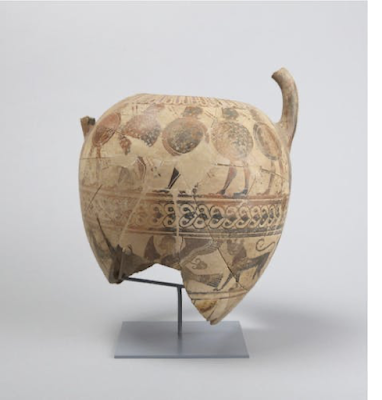
Finds from Afrati, Crete

Source of image: Michael C. Carlos Museum
Creative Commons
The repatriation of Norbert Schimmel's helmets and mitrai from New York's Metropolitan Museum of Art has implications for other museum collections. One is the Michael C. Carlos Museum at Emory University that purchased the breast- and back-plate of a bronze cuirass when it was sold at Christie's (London) in 2002 after it had formed part of the Axel Guttmann collection. It had been sold as part of the Schimmel collection at Sotheby's (New York) in 1992.

The cuirass was on loan to the Met from 1979 (inv. L.1979.49.7) as part of the exhibition Greek Art of the Aegean Islands (cat. no. 94). The catalogue stated - like the other pieces in the same exhibition - "said to be from Afrati on Crete".

The looting of Afrati in the 1960s was well documented and would have been known to the curatorial team at the MCCM. 

The Carlos has a public commitment to so-called "Provenance Research". The museum's position is stated as:
The Carlos is proactive in our approach to ownership resolution. Through the course of our research, if we find reason to believe that an object was looted from its original context or changed hands illegally or unethically, the Carlos takes immediate steps to rectify the situation and determine rightful ownership.
Can we assume that the Carlos will be contacting the Hellenic authorities to arrange for the cuirass to be returned to Greece so that it can be displayed with other material from Afrati in the Heraklion Museum?

| |
Bookmark and Share so Your Real Friends Know that You Know

Monday, 5 October 2026

A volute-krater with a "tremendous provenance"

A volute-krater attributed to the Syriskos painter by J.R. Guy (see BAPD 44988) is said by Michael Padgett to have been found with a psykter-column-krater attributed to the Troilos painter recently repatriated to Italy from New York's Metropolitan Museum of Art (BAPD 15922). Fragments of both kraters were held, so Padgett informs us, by Rolf Blatter. (Blatter donated the Troilos painter fragments to the Met.)

Is it time for the present owner of the volute-krater to return it to Italy so that it can be displayed alongside its companion piece?

| |
Bookmark and Share so Your Real Friends Know that You Know

Thursday, 5 February 2026

Drawing attention to "provenance" at the Met

Courtesy of Christos Tsirogiannis

One of largest group of repatriated material from New York's Metropolitan Museum of Art was dervied from Palladion Antike Kunst and from Mr & Mrs Gianfranco Becchina.

The items include:
  1. Attic bf lekythos, attributed to the manner of Elbows Out. Inv. 1985.11.3 [Until 1985, with Galerie Antike Kunst Palladion, Basel, Switzerland]; acquired in 1985, purchased from the Galerie Palladion. Deaccessioned for return to Italy in September 2022. Bibl. BAPD 16461.  
  2. Attic bf mastos, attributed to Psiax. Inv. 1975.11.6 [Until 1975, with Galerie Antike Kunst Palladion, Basel, Switzerland]; acquired in 1975, purchased from the Galerie Palladion. Deaccessioned for return to Italy in September 2022. Bibl. BAPD 4525; Mertens 1979, 23 n. 13, pl. 9.1–4; Mertens 2010, 28–29, fig. 14. 
  3. Attic bf amphora fragment, attributed to Lydos. Inv. 1985.11.1. [Until 1985, with Galerie Antike Kunst Palladion, Basel, Switzerland]; acquired in 1985, purchased from the Galerie Palladion. Deaccessioned for return to Italy in September 2022. Bibl. BAPD 14695; Bothmer 1985, 40–41, 56, fig. 25, n. 48.  
  4. Attic bf amphora fragment, attributed to the Amasis painter. Inv. 1985.11.2. [Until 1985, with Galerie Antike Kunst Palladion, Basel, Switzerland]; acquired in 1985, purchased from the Galerie Palladion. Deaccessioned for return to Italy in September 2022. Bibl. BAPD 14683; Bothmer 1985, 34, 108, no. 17.  
  5. Attic bf amphora fragment, attributed to the Amasis painter. Inv. 1985.53. [Until 1985, with Galerie Antike Kunst Palladion, Basel, Switzerland]; 1985, acquired by Dietrich von Bothmer, purchased from Galerie Antike Kunst Palladion; acquired in 1985, gift of Dietrich von Bothmer. This artwork was restituted in September 2022. Bibl. BAPD 14680; Bothmer 1985, 76, no. 2bis.  
  6. Attic wg cup, attributed to the Villa Giulia painter. Inv. 1979.11.15. [Until 1979, with Galerie Antike Kunst Palladion, Basel, Switzerland]; acquired in 1979, purchased from the Galerie Palladion. Deaccessioned for return to Italy in September 2022. Bibl. BAPD 5330; Bothmer and Mertens 1979/80, 14–15; Mertens 1987, 59, no. 41; Picón, C.A. et al. 2007, 118, 430, no. 129; Connelly 2007, 111–12, fig. 4.19, pl. 8. 
  7. Pair of gold Apulian cylinders. Inv. 1981.134.1, .2 [Until 1981, with Gianfranco Becchina]; acquired in 1981, gift of Mr. and Mrs. Gianfranco Becchina. Deaccessioned for return to Italy in September 2022. 
You would think that it would make the curatorial staff at the MMA sensitive to any other material with this association. Thus, it came as a bit of a surprise that the example used in the Cycladic symposium today to show how "provenance" is displayed on the MMA website used the Cycladic figure that Christos Tsirogiannis identified from the Becchina archive. And the slide used quoted the "public" statement of previous history:
[By 1981, collection of Noroyoshi Horiuchi, Tokyo]; [until 1983, with Ariadne Galleries, New York]; 1983, acquired by Leonard Stern, purchased from Ariadne Galleries, New York; 1983-2022, collection of Mr. and Mrs. Leonard Stern, New York; 2022, transferred to Greece; 2024-2034, on loan to the Metropolitan Museum of Art from the Hellenic Republic.
The mention of the Becchina association was left unmentioned in the presentation even though that particular individual has been associated with objects handled by Horiuchi.

This does not feel like a rigorous engagement with the origins of the Stern collection. 

| |
Bookmark and Share so Your Real Friends Know that You Know

Monday, 15 December 2025

Further returns to Italy from the San Antonio Museum of Art

Source: San Antonio Museum of Art
In addition to the objects deaccessioned by the San Antonio Museum of Art in September 2025, the museum  had done the same for another group in January 2022. These were mentioned (without significant detail) in a press release from the Manhattan DA in 2023. These items included material that surfaced through various sources:

Christie's (Geneva)
Attic red-figured lekythos. Inv. 86.134.75. Surfaced through Christie’s (Geneva) May 1979; Sotheby’s (London) May 1982. 

Christie's (London)
Attic white ground lekythos. Inv. 86.134.170. Surfaced through Christie’s (London) July 1983; July 1985. 

Frederick Schultz
Attic red-figured head kantharos. Inv. 91.24. Surfaced through Frederick Schultz, 1989. 

Galerie Günter Puhze
Attic black-figured lekythos. Inv. 91.80.1. Galerie Günter Puhze, 1989. 

Palladion Antike Kunst
Attic black-figured amphora. Inv. 86.134.31. Surfaced through Palladion Antike Kunst; Sotheby’s (London) December 1981. 
Attic red-figured oinochoe. Inv. 86.134.58. Surfaced through Palladion Antike Kunst; Robert Hecht. 

Robin Symes
Portrait of Hadrian. Inv. 2005.1.81. Robin Symes; Royal-Athena Galleries; Sotheby’s (New York) June 1992. [Image identified in the Medici Dossier.]
"Dating to 200 C.E., the marble head of the Emperor Hadrian was first documented uncleaned and covered in marine encrustations in a polaroid photograph. The polaroid was recovered by Italian law-enforcement authorities during a raid of the office and warehouse of well-known antiquities trafficker Giacomo Medici in 1995. After being smuggled out of Italy by Medici and his co-conspirators, the piece was then laundered with false provenance by dealer-trafficker Robin Symes before being sold in New York County in 1992." (Manhattan DA)
Sotheby's (London)
Corinthian olpe. Inv. 93.17. Surfaced in Sotheby’s (London) July 1990; Charles Ede. 
Attic black-figured amphora. Inv. 86.134.173. Surfaced in Sotheby’s (London) July 1985. 
Attic red-figured lekythos. Inv. 86.134.79. Surfaced through Sotheby’s (London) May 1982. 

Alfredo Turchi
Head of Hermes. Inv. 86.134.145. Sold by Alfredo Turchi.

The head of Hermes was excavated in Rome in the 19th century. 

| |
Bookmark and Share so Your Real Friends Know that You Know

Friday, 12 December 2025

Another statue associated with Bubon returns to Türkiye

The Manhattan DA has announced that a statue that has resided in the collection of Aaron Mendelsohn has been returned to Türkiye (Press Release).

The nature of the return is described:
The D.A.’s Office has been investigating looted Bubon antiquities trafficked into and through New York County since 2022. The ongoing investigation into Bubon has led to the seizure of 16 antiquities from Bubon, 15 of which have already been repatriated, collectively valued at almost $80 million. 
In this ceremony we will be returning an over-life-sized bronze statue of a “Nude Emperor” that was looted from Bubon, trafficked through Manhattan, and purchased by collector Aaron Mendelsohn. Pursuant to a deferred prosecution agreement, Mendelsohn has agreed to surrender the statue of the Nude Emperor so that the D.A.’s Office can repatriate it to the people of Türkiye. Mendelsohn’s federal lawsuit challenging the Office’s investigation of the statue was also dismissed. 
“The looting into ancient sites like Bubon were extensive, and I am pleased that our investigation has yielded such significant results. I thank the work of our prosecutors and analysts for their dedication to uncovering these trafficking networks that target ancient sites rich with cultural heritage,” said District Attorney Bragg. 
“It takes real courage to challenge what is unjust. Today, the dedicated Antiquities Trafficking Unit of the DA’s Office is repatriating artifacts stolen from the Turkish people decades ago. The strong partnership we have built and sustained with determination has carried our national efforts onto the international stage. These restitutions not only reunite the heroes of these cases, but also send a clear message to the world: do not buy cultural property removed illegally from its country of origin. This is how a single return becomes a powerful tool against illicit excavations—and why this work matters more than ever,” said Gökhan Yazgı, Deputy Minister, Ministry of Culture and Tourism of the Republic of Türkiye. 
In the 1960s, individuals from a village near Bubon began plundering a Sebasteion, an ancient shrine with monumental bronze statues of Roman emperors and selling those looted antiquities to smugglers based in the coastal Turkish city of Izmir. Working with Switzerland-based trafficker George Zakos and New York-and-Paris-based trafficker Robert Hecht, they unlawfully removed the looted antiquities from Türkiye, transporting them to Switzerland or the United Kingdom, and then onward to the United States or other European destinations. Once the statues were in the United States, New York-based dealers such as Jerome Eisenberg’s Royal-Athena Galleries and the Merrin Gallery funneled the stolen Bubon bronzes into museum exhibitions and academic publications thereby laundering the pieces with newly crafted provenance. As the Bubon pieces graced the halls of the Metropolitan Museum of Art (Met), the Cleveland Museum of Art, the Getty Museum, Boston’s Museum of Fine Arts, the Santa Barbara Museum of Art, the Worcester Museum of Art, and the Fordham Museum of Art, the reputational value of the institutions that displayed the Bubon pieces increased and the financial value of the statues grew.
Other bronzes associated with Bubon are mentioned here. We look forward to his major group of bronze sculptures being displayed in the same space.

| |
Bookmark and Share so Your Real Friends Know that You Know

Head of Demosthenes returns to Türkiye

Head of Demosthenes
Source: New York MMA
Back in November I noted that New York's Metropolitan Museum of Art had returned a marble portrait of Demosthenes to Türkiye. The head was acquired in 2012 (inv. 2012.479.9). The stated collecting history (sometimes known as "provenance") is as follows:
Mussienko Family Collection, Maryland, 1973. Sold by Fortuna Fine Arts, New York, to Ariadne Gallery, New York, in 1987. Sold by the Ariadne Gallery to Morris Pinto, New York, before December, 1992. Consigned by Morris Pinto to Christie’s New York, December 15, 1992, lot 14, passed in. Consigned by Morris Pinto to the Acanthus Gallery, New York. Acquired by Renée E. and Robert A. Belfer from the Acanthus Gallery, New York, before 1998. Given by Renée E. and Robert A. Belfer to The Metropolitan Museum of Art in 2012.
The head was published in:
Zanker, P. 2016. Roman Portraits: Sculptures in Stone and Bronze in the Collection of The Metropolitan Museum of Art. New York: Metropolitan Museum of Art. Pp. 36-38, no. 9.
The portrait now features in a press release from the Manhattan DA:
This sculpture originated in Türkiye near the modern city of Izmir and first appeared on the art market in the possession of the New York-based Ariadne Galleries, before passing through the hands of several private collectors until it was donated to the Met in 2012. Ariadne Galleries allegedly falsely claimed that it had bought the Marble Head from Fortuna Fine Arts—claiming to have done so two years before Fortuna Fine Arts even existed. Ariadne and Fortuna, which is currently under indictment in federal court for fraud, also allegedly falsely claimed that the Marble Head had previously been in the collection of Boris Mussienko—a name Fortuna and other galleries allegedly frequently used to create false provenance. Law enforcement seized the Marble Head from the Met in 2025.
For clarification the head was seized in September 2025. For other material associated with "Mussienko" see here.

Again this is a reminder of the need to authenticate the collecting histories before making acquisitions.

| |
Bookmark and Share so Your Real Friends Know that You Know

Thursday, 27 November 2025

Two lots withdrawn from Bonham's sale

Becchina Archive
Source: Christos Tsirogiannis.

Dr Christos Tsirogiannis has identified two lots that were due to be auctioned at next week's sale of antiquities at Bonham's (4 December 2025). Both feature in the Becchina archive. They have now been withdrawn (along with lot 126).


Lot 15 is a South Italian terracotta figure. It was said to have been in a private collection in France in 1979 before entering the Nina Borowski collection in the 1990s. It is reported to be part of unnamed private collection in Switzerland. The entry in the Palladion Antike Kunst records suggest that it was part of an unnamed Swiss private collection.

Lot 123 is an Attic red-figured pelike showing an Eros on horseback currently in the Lloyd and Jeanne Raport collection. Tsirogiannis informs me that the pelike was consigned by Becchina to Sotheby's in London on 17 May 1983 (lot 264).

Did the staff at Bonham's attempt to authenticate the information relating to the collecting histories (so-called "provenance") prior to the sale? 


| |
Bookmark and Share so Your Real Friends Know that You Know

Monday, 10 November 2025

Further returns to Greece from the Met

Source: Hellenic Consulate General in New York

In September 2025 a number of antiquities were seized from New York’s Metropolitan Museum of Art and at least six formed part of the return to Greece announced at the beginning of October. All have been acquired from Andrés A. Mata in 2001 and 2004, and all had been purchased from Fortuna Fine Arts. They include two stone axe heads (2004.342.3–4), a Cretan or Cycladic terracotta jug (2004.342.2), a Cycladic collared jar (2004.342.1), and two iron swords (2001.346, 2001.543). One of the swords was given to the museum in honour of Carlos A. Picón. 

A further piece was mentioned in the press release, an archaic bronze gorgon applique. It had apparently surfaced through Robert Hecht, who sold it to Fortuna Fine Arts. It then added: 
Fortuna then falsely claimed that the Gorgon came from William Froelich, a name frequently used by Fortuna and other galleries in its false provenance. Thereafter, the Gorgon was sold to a private collector who placed the antiquity on loan at the Met. The Antiquities Trafficking Unit seized the Gorgon from the Met in 2025. 

This appears to be the figure that formed part of the exhibition, ‘Dangerous Beauty’, and was identified as coming from the collection of Andrés A. Mata. (The figure can be seen in press photograph of the October 2025 handover.)

Another gorgon applique that passed through Fortuna Fine Arts was acquired by the Carlos Museum at Emory University in 2017: it was a gift of Mata, Sybil and Ed Ralston, and Judy and Michael Steinhardt (2017.025.001). Mata also gave an inscribed bronze hydria rim to the museum in 2014 in honour of Jasper Gaunt (2014.023.001). 

The mention of Froelich is important as it appears, in connection with Fortuna Fine Arts, in the history of a Tarentine limestone funerary relief acquired by the Met in 2013. Froelich and Fortuna came together in the history of a Canosan terracotta figure of Zeus that was withdrawn from a sale at Christie’s. The history also mentions Boris Mussienko. This name appears against a bronze Aphrodite on loan to the Met from a private collector and returned to Italy.

Fortuna then falsely claimed that the Statuette came from Boris Mussienko, a name frequently used by Fortuna and other galleries in its false provenance. Thereafter, the Statuette was sold to a private collector who placed the antiquity on loan at the Met. The Antiquities Trafficking Unit seized the Statuette from the Met in 2025.

The Met seizures may well have serious implications for other collections.

| |
Bookmark and Share so Your Real Friends Know that You Know

Thursday, 6 November 2025

Byzantine Capital Returned to Türkiye


A marble Byzantine capital showing the archangel Michael has been returned to Türkiye from New York's Metropolitan Museum of Art (inv. 1983.167) [JSTOR]: it has been placed on loan at the museum (L.2025.28). The history (so-called "provenance") of the piece is as follows:
Possibly from the monastery of the Virgin Peribleptos, or All-Seeing (now the Sulumanastir, Istanbul); [Robin Symes Limited, London (sold 1983)]; Deaccessioned for transfer of title to Türkiye in September 2025
This adds to the growing list of objects linked to Robin Symes that have been repatriated to Greece, Italy and Türkiye. 

The capital is said (by whom?) to have been found near to the Sulu Manastir. If so, did the Met explore when the capital had left Türkiye? And should such an association be treated with caution?

Evans, H. C., M. Holcomb, and R. Hallman. 2001. "The Arts of Byzantium." The Metropolitan Museum of Art Bulletin 58.

Evans, H. C. Editor. 2004. Byzantium: Faith and Power (1261-1557). New York: The Metropolitan Museum of Art. No. 50. [Online]


| |
Bookmark and Share so Your Real Friends Know that You Know

Wednesday, 5 November 2025

Returns to Greece from New York's Metropolitan Museum of Art

Source: MMA


The Metropolitan Museum of Art has announced that it returned 12 antiquities to the Hellenic Republic of Greece in October. 
The Metropolitan Museum of Art announced today that it is returning 12 objects to the Hellenic Republic of Greece, including: four pieces of jewelry, two iron machaira (swords), two bronze belt clasps, two terracotta jugs, and two stone axe heads, and one group of silver spirals. The archaeological works range in date from 2700 BCE to 400 BCE. The works range in date from 2700 BCE to 400 BCE. Through the Museum’s cooperation with the Manhattan DA’s office, and as a result of its investigation into Fortuna Fine Arts, the Museum recently received new information that made it clear that the works should be repatriated, resulting in a constructive resolution.
The return is presumably part of this oblique press release from the Manhattan DA that acknowledges help from Fortune Fine Arts. Some of the items can be recognised here.

Although the press release does not give further details (and the press release list is not entirely accurate), these items can be identified as:
  • gold pendant, [1999.12] 
    • [Until 1999, with Fortuna Fine Arts, Inc., New York]; acquired in 1999, purchased from Fortuna Fine Arts, Inc. Deaccessioned for return to the Hellenic Republic in September 2025.
  • two silver bracelets [1991.170.1] [1991.170.2]
    • [Until 1991, with Selim Dere, New York]; acquired in 1991, gift of Selim Dere. Deaccessioned for return to the Hellenic Republic in September 2025.
  • Gold and silver bracelet, [1993.314]
    • [Until 1993, with Selim Dere, New York]; acquired in 1993, anonymous gift. Deaccessioned for return to the Hellenic Republic in September 2025.
  • two iron machaira (swords), [2001.346] [2001.543]
    • [Until 2001, with Fortuna Fine Arts, Inc.]; acquired in 2001, purchased from Fortuna Fine Arts, Inc. Deaccessioned for return to the Hellenic Republic in September 2025.
    • [Until 2001, with Fortuna Fine Arts, Inc., New York]; 2001, purchsed by Andres A. Mata from Fortuna Fine Arts, Inc.; acquired in 2001, gift of Andres A. Mata, in honor of Carlos A. Picon, 2001. Deaccessioned for return to the Hellenic Republic in September 2025.
  • two Macedonian bronze belt clasps, [2001.578] [2001.579]
    • [Until 2001, with Fortuna Fine Arts, Inc.]; acquired in 2001, purchased from Fortuna Fine Arts, Inc. Deaccessioned for return to the Hellenic Republic in September 2025.
      • 2001.579: Purchase, Mrs. Constance Goulandris Gift, in memory of Christos G. Bastis, 2001
  • Cycladic or Cretan terracotta jug,  [2004.342.2]
    • [Until 2004, with Fortuna Fine Arts, Inc., New York]; June 2004, purchased by Andres A. Mata from Fortuna Fine Arts, Inc.; acquired in 2004, gift of Andres A. Mata. Deaccessioned for return to the Hellenic Republic in September 2025.
  • Cycladic collared jar, [2004.342.1]
    • [Until 2004, with Fortuna Fine Arts, Inc., New York]; June 2004, purchased by Andrés Mata from Fortuna Fine Arts, Inc., New York; acquired in August 2004, gift of A. Mata. Deaccessioned for return to the Hellenic Republic in September 2025.
  • two stone axe heads, [2004.342.3]] [2004.342.4]
    • [Until 2004, with Fortuna Fine Arts, Inc., New York]; June 2004, purchsed by Andres A. Mata from Fortuna Fine Arts, Inc.; acquired in August 2004, gift of Andres A. Mata. Deaccessioned for return to the Hellenic Republic in September 2025.
  • one group of silver spirals. [1992.367.1–.6a, b]
    • [Until 1992, with Selim Dere, New York]; acquired in 1992, anonymous gift. Deaccessioned for return to the Hellenic Republic in September 2025.
Other pieces of interest (not apparently discussed in the press release) include:
  • a terracotta figure returned to Italy [2000.39]
    • Private collection, England; [until 2000, with Fortuna Fine Arts, Inc.]; acquired in 2000, purchased from Fortuna Fine Arts, Inc. Deaccessioned for return to the Republic of Italy in September 2025.
  • a marble head of Demosthenes returned to Türkiye [2012.479.9]
    • Mussienko Family Collection, Maryland, 1973. Sold by Fortuna Fine Arts, New York, to Ariadne Gallery, New York, in 1987. Sold by the Ariadne Gallery to Morris Pinto, New York, before December, 1992. Consigned by Morris Pinto to Christie’s New York, December 15, 1992, lot 14, passed in. Consigned by Morris Pinto to the Acanthus Gallery, New York. Acquired by Renée E. and Robert A. Belfer from the Acanthus Gallery, New York, before 1998. Given by Renée E. and Robert A. Belfer to The Metropolitan Museum of Art in 2012. Deaccessioned for return to the Republic of Türkiye in September 2025.
The press release remarks:
As part of a commitment to transparency, The Met has launched object webpages for all restituted works of art, specifying that the object has been returned and to what country.
It would be helpful, in the spirit of transparency, if the so-called provenance team provided more precise information about their returns. A concerted effort to tidy up the "repatriated objects" page would be a start.

| |
Bookmark and Share so Your Real Friends Know that You Know

Thursday, 22 May 2025

The Met returns three antiquities to Iraq

Source: Manhattan DA


New York's Metropolitan Museum of Art has returned three antiquities to Iraq (Manhattan DA Press Release). The three pieces are:
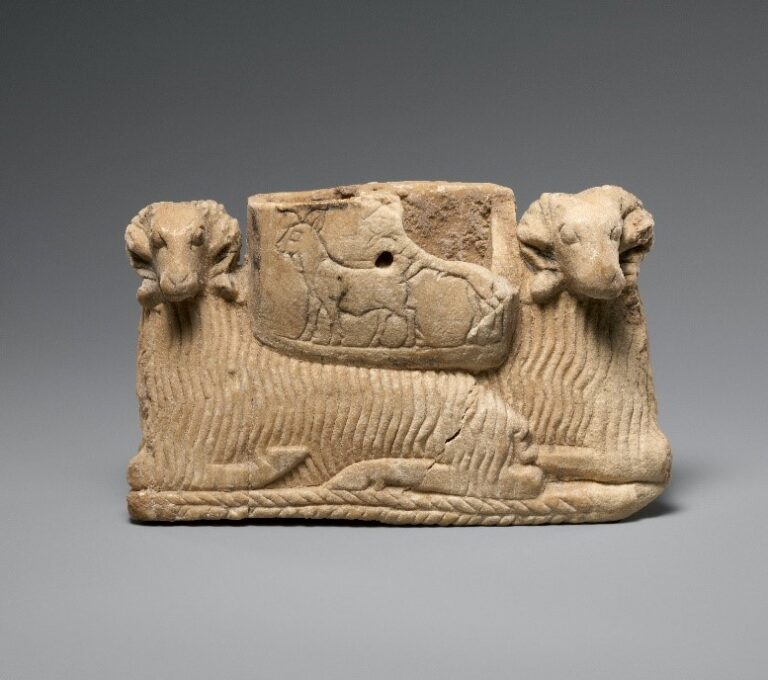
a. a Sumerian gypsum alabaster vessel supported by two rams, acquired from the Norbert Schimmel Trust in 1989. The history of the piece is provided:
By 1956, with N. Koutoulakis who bought it in Baghdad; from 1966, collection of Cecile de Rothschild; [by 1979, Robin Symes, London]; 1984, purchased by Norbert Schimmel from Robin Symes/ Xoilan Trader Inc., Geneva; from 1984, on loan to the Museum by Norbert Schimmel (L.1984.15.1); acquired by the Museum in 1989, gift of Norbert Schimmel Trust. 

b. a Mesopotamian terracotta female head, acquired from the Norbert Schimmel Trust in 1989. The  history of the piece is provided:
Before 1972, collection of Elie Borowski; by 1972, collection of Norbert Schimmel, New York; from 1983, on loan to the Museum by Norbert Schimmel (L.1983.119.12); acquired by the Museum in 1989, gift of Norbert Schimmel Trust. Deaccessioned for return to Iraq in May 2025.

c. a Mesopotamian terracotta male head, purchased from Robin Symes in 1972. It is reported to have been removed from the site of Isin. The history of the piece is provided:
By 1971, Robin Symes, London; acquired by the Museum in 1972, purchased from Robin Symes, London.

These returns renew the focus on antiquities handled by Robin Symes. The Met's "provenance" team could usefully look at the other Symes material currently on display in the museum. 

| |
Bookmark and Share so Your Real Friends Know that You Know

Friday, 14 February 2025

Cleveland Museum of Art returns statue linked to Bubon

Source:
Cleveland Museum of Art

The Cleveland Museum of Art has agreed that the bronze figure acquired in 1986 will be returned to Türkiye. Scientific tests on soil samples appear to confirm that the figure was in fact found at Bubon and thus formed part of a series of imperial statues. For many years the headless statue was presented as a representation of the emperor Marcus Aurelius.

The Manhattan DA presented this account of the looting:
In the 1960s, individuals from a village near Bubon began plundering a Sebasteion, an ancient shrine with monumental bronze statues of Roman emperors and selling those looted antiquities to smugglers based in the coastal Turkish city of Izmir. Working with Switzerland-based trafficker George Zakos and New York-and-Paris-based trafficker Robert Hecht, they unlawfully removed the looted antiquities from Türkiye, transporting them to Switzerland or the United Kingdom, and then onward to the United States or other European destinations. Once the statues were in the United States, New York-based dealers such as Jerome Eisenberg’s Royal-Athena Galleries and the Merrin Gallery funneled the stolen Bubon bronzes into museum exhibitions and academic publications thereby laundering the pieces with newly crafted provenance. As the Bubon pieces graced the pages of exhibition catalogues and academic publications, the reputational value of the institutions who displayed the Bubon pieces increased and the financial value of the statues grew.
George Zakos was linked to the Lydian silver treasure that was returned to Türkiye by New York's Metropolitan Museum of Art. Zakos also handled the Sion Treasure that was acquired by Dumbarton Oaks, and three terracotta antefixes in the Metropolitan Museum of Art that appear to come from the Panionion on Mykale in Türkiye (1992.36.1; 1992.36.2; 1992.36.3).

The research of Dr Elizabeth Marlowe on the Bubon material is acknowledged by the Manhattan DA. 

Press release:

| |
Bookmark and Share so Your Real Friends Know that You Know

Wednesday, 27 November 2024

Further Returns to Türkiye

Septimius Severus. Source: Ny Carlsberg Glyptotek

It has been announced that the Ny Carlsberg Glyptotek in Copenhagen will be returning the bronze head of Septimius Severus to Türkiye ("The Glyptotek returns Roman bronze portrait to Türkiye", press release, November 26, 2024). It forms part of a series of imperial bronze statues from the sebasteion at Bubon: the press release notes Bubon returns from New York's Metropolitan Museum of Art, Fordham Museum of Art, Worcester Art Museum, Boston Museum of Fine Arts, The J. Paul Getty Museum, and the Shelby White Collection. The head was acquired from Robert Hecht.

This will put increased pressure on the Cleveland Museum of Art over the claims relating to the bronze "Marcus Aurelius" that has been linked in The Bulletin of the Cleveland Museum of Art to Bubon (A. P. Kozloff, "Bubon: a re-assessment of the provenance," Bulletin of the Cleveland Museum of Art 74 [1987] 130-43).

The announcement from the Ny Carlsberg Glyptotek includes 48 architectural terracottas linked to Düver, and also acquired from Hecht. This will put pressure on other museums in Europe, North America and beyond to return the Düver terracottas that they acquired.

Details of previous returns from the Ny Carlsberg Glyptotek can be found in David W. J. Gill, "The Returns from the Ny Carlsberg Glyptotek, Copenhagen," in Artwashing the Past: Context Matters (Lanham: Rowman & Littlefield, 2024), 27–31.

| |

Monday, 22 January 2024

Returns to Greece from Michael C. Carlos Museum


Some things take time. Back in 2007 Nikolas Zirganos wrote a story about three antiquities in the Michael C. Carlos Museum [see here]. The identifications had been made by Christos Tsirogiannis. 

Over the years the museum has released further snippets of information: e.g. the revised history for the larnax. 

It was announced today that as part of a cultural agreement between Emory University and the Hellenic Ministry of Culture, three items would be returning to Greece:
a. Minoan larnax (inv. 2002.034.001). "The Carlos purchased the larnax from Robert Haber, New York in 2002. At the time of purchase, the museum believed the larnax to have been in the collection of Nicholas Koutoulakis (1910-1996) since the late 1960s."
b. Statue from funerary naiskos (inv. 2003.005.001). "The Carlos purchased the figure in 2003 from Michael Ward, New York. No provenance information was given by the dealer. "
c. Statue of a muse (formerly inv. 2002.031.001A/B). "Carlos purchased the sculpture in 2002 from New York-based dealer Robert Hecht (1919-2012), who stated he and partner George Zakos (1911-1983) had owned it since 1974."


It is puzzling that the pithos was not included in the return even though it appears in the Becchina archive (see here). It was said to have resided in the Goumaz collection and was sold to the Carlos by Phoenix Ancient Art. The pithos featured in the original Zirganos article.

Nor is there mention of the fragmentary Cycladic figures from the Keros haul. The Greek Government sought to stop their sale when they passed through an auction in London in 1990 for the benefit of Save the Elephants.

For more on the agreement: press release.

| |
Bookmark and Share so Your Real Friends Know that You Know

Friday, 8 December 2023

Silver Pyxis Lid Returned from VMFA


Silver pyxis lid formerly VMFA inv.  82.181.

Among the returning antiquities from the Virginia Museum of Fine Arts is a silver pyxis lid. My colleague Christos Tsirogiannis has confirmed that an image is in the Becchina archive with the annotation indicating a link with Robert Hecht. Another colleague has confirmed that the the lid was a gift of Jonathan Rosen, an associate of Hecht in Atlantis Antiquities.

VMFA has yet to release a list of the returns that contains the inventory numbers as well as the previous histories (so-called 'provenance'). The museum also appears to have scrubbed the digital record of these accessions unlike some other institutions that have recorded their deaccessions. 

| |
Bookmark and Share so Your Real Friends Know that You Know

Tuesday, 31 October 2023

The Michael C. Carlos Museum and an Apulian Fishplate

Source: Michael C. Carlos Museum

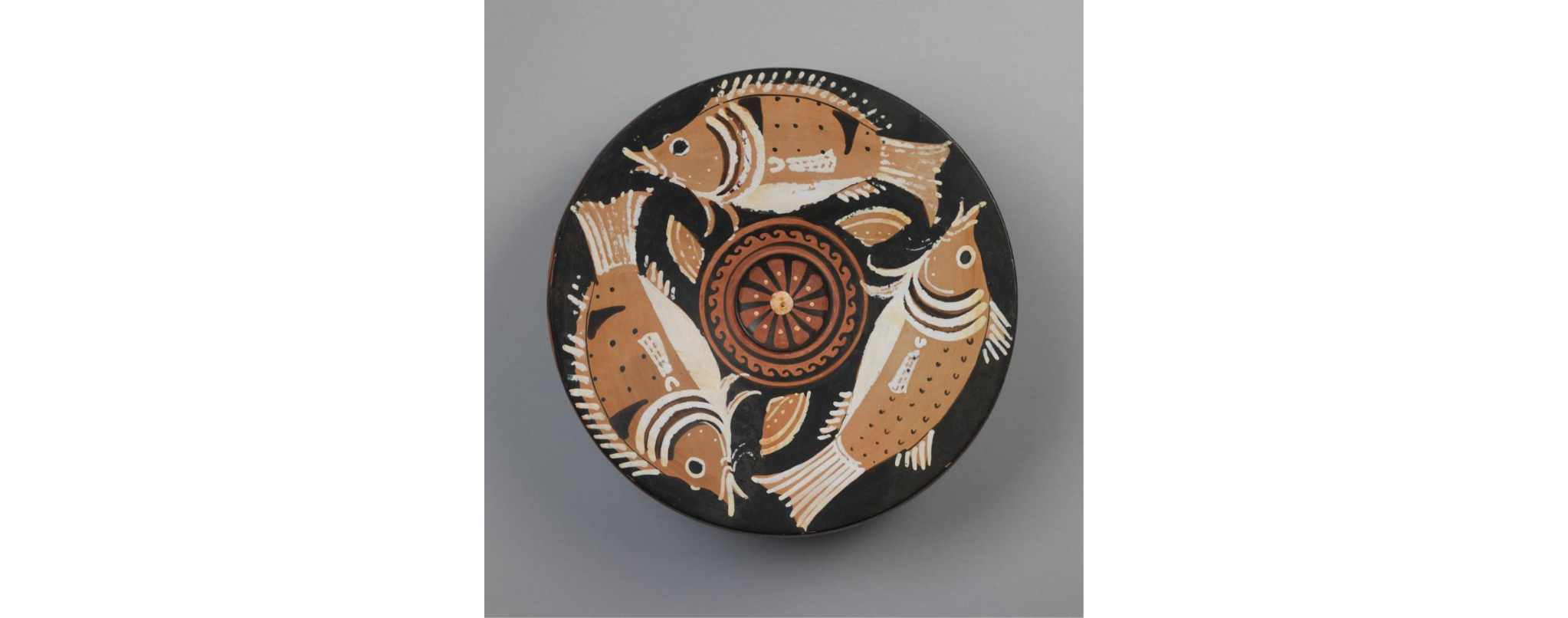
The Michael C. Carlos Museum at Emory University has noted that it will be returning an Apulian fishplate attributed to the group of Karlsruhe 66/140 (inv. 1986.015). The website provides the so-called 'provenance':
Probably with Gianfranco Becchina, Zurich, Switzerland. Ex coll. William Knight Zewadski, United States, purchased from Sotheby's London, 17 May 1983, lot 261. Deaccessioned by MCCM for repatriation to the Italian Republic, August 29, 2023.
What does 'probably with' mean? What is the basis for returning the fishplate? Who consigned the piece to Sotheby's in London in 1983? 

What other ex-Becchina pieces in the Carlos Museum need explaining?

I am grateful to Dr Cynthia Patterson for drawing my attention to this piece of information.

| |
Bookmark and Share so Your Real Friends Know that You Know

Tuesday, 11 April 2023

Developments at Princeton

Etruscan amphora inv. y1984-19.
Source: Daily Princetonian
It seems that five objects relating to Edoardo Almagià are to remain in Princeton University Art Museum (Sandeep Mangat and Miriam Waldvogel, "Five artifacts linked to alum under investigation for art smuggling will remain at University Art Museum", Daily Princetonian April 11, 2023). I am a little confused as the earlier report included pictures and some of the pieces mentioned in the most recent article, for example the Roman doll (inv. y1993-13), the Campanian stamnoid pyxis (inv. 87-3a–b) and fragments of a Roman Arretine bowl (inv. y1992-67), do not feature among the images. 

However, among the pieces staying in Princeton is the Etruscan amphora attributed to the Paris painter (inv. y1984-19). This is stated as: "Gift of Peter Glidewell through Edoardo Almagia, Class of 1973".

It should be remembered that Princeton has already returned a series of Etruscan architectural terracottas that were given by Almagià. These are discussed in: D.W.J. Gill, "Context matters: Princeton and recently surfaced antiquities," Journal of Art Crime 7 (2012): 59-66; id., Context matters: Collating the past, Amelia: ARCA, 2020, pp. 106–14; id., "Returning archaeological objects to Italy," International Journal of Cultural Property 25 (2018): 283–321 [DOI].

The latest article in the Daily Princetonian seems to confuse items that had been loaned by Almagià and those that had been given by him.

The article does include an interesting statement attributed to Almagià: 
"He added that he gave these fragments to Dietrich von Bothmer, a prominent German-American art historian."
We are aware that Almagià appears to have been the source for fragments in Bothmer's collection that had been acquired in 1984, 1986 and 1987. Does this imply that the fragments appearing in the original article were derived from Almagià? And was the Psiax fragment from the Centre Island private collection also from this source?

The Daily Princetonian mentions the seizure of fragments from Bothmer's collection although as far as I am aware no connection with Almagià had been made. These are discussed in: D.W.J. Gill, "Context matters: Fragmented pots, attributions and the role of the academic," Journal of Art Crime 8 (2012): 79-84. However other Bothmer fragments were included in the recent seizure from New York's Metropolitan Museum of Art.

Other figure-decorated fragments derived from Almagià have been returned from the San Antonio Museum of Art that had acquired them in 1985. Material derived from Almagià has featured in the Steinhardt return. 

I am aware of other Almagià material in a north American university collection that appears to have been derived from Crustumerium in Lazio. (A discussion of the piece along with other items from the same place features in a forthcoming article.)

Is it time for Princeton to provide additional so-called "provenance" information on its website?

| |
Bookmark and Share so Your Real Friends Know that You Know

Wednesday, 22 March 2023

Bronze Hydria Returns to Greece

Source: Homeland Security

Further photographs of the latest return to Greece have been released. The bronze hydria from the Shelby White collection is of particular interest (Greek Bronze Vessels no. 8). Jasper Gaunt drew a parallel with a bronze hydria in the Michael C. Carlos Museum at Emory University (inv. 2002.012.001). The 'provenance' for this second hydria is given as:
Ex coll. Doris Seebacher, Munich, Germany. Purchased by MCCM from Robert Hecht (1919-2012) [Robert Hecht Gallery], New York, New York.
Is this the Doris Seebacher linked to Nino Savoca? Should the Michael C. Carlos Museum be contacting the Hellenic Ministry of Culture?

| |
Bookmark and Share so Your Real Friends Know that You Know

Saturday, 4 February 2023

Further returns to Italy from San Antonio Museum of Art and Shelby White

Oinochoe fragment
attributed to the Harrow painter
returned from
the San Antonio Museum of Art.
Source: San Antonio Museum of Art

The Manhattan DA has reportedly returned 14 more antiquities to Italy: though the objects and images presented at the press announcement counted 16 ("D.A. Bragg Returns 14 Stolen Antiquities to Italy", Manhattan DA February 2, 2023). Two sources were acknowledged: Shelby White and the San Antonio Museum of Art. The third, the source of a silver coin, was left anonymous in the press release.

At least three of the objects appear in the Glories of the Past catalogue of the Shelby White and Leon Levy collection. The release gives further information about the Attic black-figured hydria attributed to the Priam painter.
The piece first surfaced in Italy after being looted by Giovanni Franco Becchina, a well-known antiquities trafficker. From Italy, the piece was then smuggled and laundered by Paris-based Robert Hecht. Hecht ultimately sold the piece with false provenance to Shelby White in New York County in 1989.
These add to the 14 pieces featured in the catalogue that have been returned to Greece, Italy and Turkey.

The nine pieces featured in the images at the press statement are derived from the San Antonio Museum of Art. The objects are derived from several sources: Sotheby's in London; Christie's in London and Geneva; Galerie Palladion Antike Kunst; Galerie Günter Puhze; Royal Athena Galleries; Robin Symes. For example, the oinochoe fragment attributed to the Harrow painter surfaced through Galerie Palladion Antike Kunst, and was sold to Gilbert M. Denman, Jr. by Robert Hecht.  The nine objects may be added to other pieces that were handed over in 2022. We are also expecting further details about three other objects derived from Frederick Schultz that have been handed over by the museum. 

Three other objects featuring in the press statement have yet to be linked in a formal way to a specific collection though Christos Tsirogiannis has identified two of them in the Becchina archive and one in the Schinousa archive. 

The final piece is a silver coin.
The Sicily Naxos Coin. Minted circa 430 B.C.E in the Greek colony of Naxos, on Sicily, this silver coin features the bearded Dionysus on one side and his squatting drinking partner, Silenus, on the reverse. The Sicily Naxos Coin first surfaced on the international art market in 2013, when a known trafficker offered the coin for sale with no provenance whatsoever. Prior to its appearance at a London-based auction house, a co-conspirator of the trafficker supplied false provenance for the coin. The Sicily Naxos Coin is currently valued at $500,000 and was among a group of coins seized at JFK airport as it was being smuggled into New York pursuant to an ongoing joint investigation between this Office, HSI, and Italy. At least one individual has been arrested in the course of this investigation with more to follow.
Three Shelby White pieces, nine objects from San Antonio, one silver coin, and three other pieces equal 16 objects (not 14).

Objects from the San Antonio Museum of Art and in the Shelby White and Leon Levy collection were the subject of an extended discussion by Chippindale and Gill in the American Journal of Archaeology back in 2000. 
Chippindale, C., and D. W. J. Gill. 2000. "Material consequences of contemporary classical collecting." AJA 104: 463-511. [DOI]
LM expects to add further detail to this summary in due course.

| |
Bookmark and Share so Your Real Friends Know that You Know

Saturday, 10 December 2022

The Forger's Tale


Our latest study on forgeries and the corpus of Cycladic figures is now available from the International Journal of Cultural Property.

Tsirogiannis, C., D. W. J. Gill, and C. Chippindale. 2022. "The Forger’s tale: An insider’s account of corrupting the corpus of Cycladic figures." International Journal of Cultural Property: 1-17 [Web].

Abstract

Many of the known Cycladic figures – the late prehistoric human-shaped sculptures from the Aegean archipelago – came from twentieth-century illicit excavations, especially in the 1960s and 1970s. It is also known that figures were being faked at the time and perhaps also earlier: a few fakes have been identified, whilst other figures are under suspicion. Interviews with a man who faked Cycladic figures in the 1980s and 1990s give us a first insider’s autobiographical account of the forging business. This article offers, step-by-step, the method that two forgers developed to create fake figures, to treat them so that they appeared ancient, and to sell them on. The forger has identified a few of these forgeries from photographs of figures; his story is consistent with other information and seems to ring true. By verifying various elements in the forger’s testimony – from names of well-known figures in the modern antiquities market to small details and dates – we have been able to evaluate the validity of the narrative; to use it in order to uncover the true paths that fake objects followed into various collections; and to highlight valuable provenance information that no one involved in trading these objects was ever willing to provide.

| |
Bookmark and Share so Your Real Friends Know that You Know

The Afrati Armour in Harvard

Source: Harvard Art Museums The repatriation of the Afrati armour from New York's Metropolitan Museum of Art has implications for other ...