Showing posts sorted by date for query becchina. Sort by relevance Show all posts

Monday, 27 April 2026

Further returns to Italy from the MMA

Formerly New York MMA 1991.11.6.1–2.
Source: MMA
New York's Metropolitan Museum of Art has returned another batch of Greek and Roman antiquities as a result of investigations by the Manhattan DA into objects handled by Frieda Tchacos, Gianfranco Becchina, and Fritz Bürki [see Manhattan DA press release].

Only one piece is highlighted in the press release, a fragmentary Sicilian terracotta relief:
Two additional adjoining fragments of the votive relief were found in the archaeological excavations of the temple of Demeter Malophoros at Selinunte, Sicily, less than ten miles from Becchina’s hometown. Those fragments remain in the Palermo Museum.
This is linked to the Becchina investigation. The relief had formed part of the Norbert Schimmel collection. One other Schimmel piece is among the repatriated objects, a bronze handle attachment in the form of a mask. Other Schimmel items appeared in earlier returns.

The two Bürki linked pieces were objects presented by Dietrich von Bothmer, an Attic bilingual cup attributed to near Psiax, and a fragmentary cup attributed to Epiktetos.

The Tchacos pieces include a pair of spherical Greek gold earrings, a pair of Roman silver cups —one carries a weight inscription for the pair — and an inscribed lid of a Roman cinerarium (Sextus Flavius Pencarpus). There is also a forged Roman funerary inscription.

These latest returns have implications for other material. A batch of material from Selinunte is discussed in my Artwashing the Past (2025) [chapter 11]. The Tchacos investigation will lead to the numerous fragments acquired by other museums (as well as the nearly 300 fragments in the Bothmer collection: and these are just the ones identified in the sample).

I am grateful to Jason Felch for drawing my attention to one of the Schimmel pieces.

Bookmark and Share so Your Real Friends Know that You Know

Thursday, 5 February 2026

Drawing attention to "provenance" at the Met

Courtesy of Christos Tsirogiannis

One of largest group of repatriated material from New York's Metropolitan Museum of Art was dervied from Palladion Antike Kunst and from Mr & Mrs Gianfranco Becchina.

The items include:
  1. Attic bf lekythos, attributed to the manner of Elbows Out. Inv. 1985.11.3 [Until 1985, with Galerie Antike Kunst Palladion, Basel, Switzerland]; acquired in 1985, purchased from the Galerie Palladion. Deaccessioned for return to Italy in September 2022. Bibl. BAPD 16461.  
  2. Attic bf mastos, attributed to Psiax. Inv. 1975.11.6 [Until 1975, with Galerie Antike Kunst Palladion, Basel, Switzerland]; acquired in 1975, purchased from the Galerie Palladion. Deaccessioned for return to Italy in September 2022. Bibl. BAPD 4525; Mertens 1979, 23 n. 13, pl. 9.1–4; Mertens 2010, 28–29, fig. 14. 
  3. Attic bf amphora fragment, attributed to Lydos. Inv. 1985.11.1. [Until 1985, with Galerie Antike Kunst Palladion, Basel, Switzerland]; acquired in 1985, purchased from the Galerie Palladion. Deaccessioned for return to Italy in September 2022. Bibl. BAPD 14695; Bothmer 1985, 40–41, 56, fig. 25, n. 48.  
  4. Attic bf amphora fragment, attributed to the Amasis painter. Inv. 1985.11.2. [Until 1985, with Galerie Antike Kunst Palladion, Basel, Switzerland]; acquired in 1985, purchased from the Galerie Palladion. Deaccessioned for return to Italy in September 2022. Bibl. BAPD 14683; Bothmer 1985, 34, 108, no. 17.  
  5. Attic bf amphora fragment, attributed to the Amasis painter. Inv. 1985.53. [Until 1985, with Galerie Antike Kunst Palladion, Basel, Switzerland]; 1985, acquired by Dietrich von Bothmer, purchased from Galerie Antike Kunst Palladion; acquired in 1985, gift of Dietrich von Bothmer. This artwork was restituted in September 2022. Bibl. BAPD 14680; Bothmer 1985, 76, no. 2bis.  
  6. Attic wg cup, attributed to the Villa Giulia painter. Inv. 1979.11.15. [Until 1979, with Galerie Antike Kunst Palladion, Basel, Switzerland]; acquired in 1979, purchased from the Galerie Palladion. Deaccessioned for return to Italy in September 2022. Bibl. BAPD 5330; Bothmer and Mertens 1979/80, 14–15; Mertens 1987, 59, no. 41; Picón, C.A. et al. 2007, 118, 430, no. 129; Connelly 2007, 111–12, fig. 4.19, pl. 8. 
  7. Pair of gold Apulian cylinders. Inv. 1981.134.1, .2 [Until 1981, with Gianfranco Becchina]; acquired in 1981, gift of Mr. and Mrs. Gianfranco Becchina. Deaccessioned for return to Italy in September 2022. 
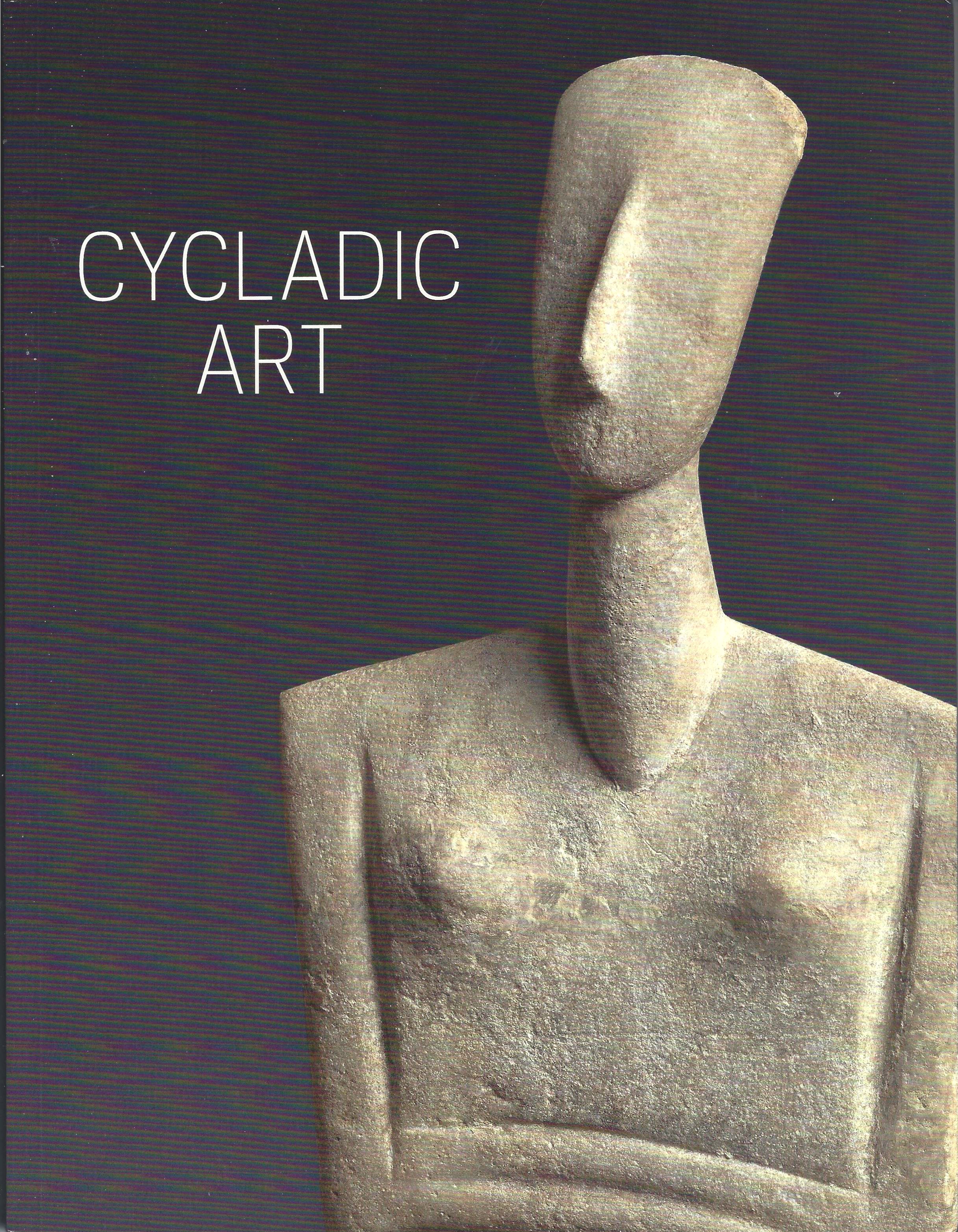
You would think that it would make the curatorial staff at the MMA sensitive to any other material with this association. Thus, it came as a bit of a surprise that the example used in the Cycladic symposium today to show how "provenance" is displayed on the MMA website used the Cycladic figure that Christos Tsirogiannis identified from the Becchina archive. And the slide used quoted the "public" statement of previous history:
[By 1981, collection of Noroyoshi Horiuchi, Tokyo]; [until 1983, with Ariadne Galleries, New York]; 1983, acquired by Leonard Stern, purchased from Ariadne Galleries, New York; 1983-2022, collection of Mr. and Mrs. Leonard Stern, New York; 2022, transferred to Greece; 2024-2034, on loan to the Metropolitan Museum of Art from the Hellenic Republic.
The mention of the Becchina association was left unmentioned in the presentation even though that particular individual has been associated with objects handled by Horiuchi.

This does not feel like a rigorous engagement with the origins of the Stern collection. 

| |
Bookmark and Share so Your Real Friends Know that You Know

A Cycladic(ising) Journey

In September 2025 New York's Metropolitan Museum of Art returned a number of items, including Cycladic, to Greece. The EC collared jar (inv. 2004.342.1) was significant enough to include in S. Hemingway, "Art of the Aegean Bronze Age." The Metropolitan Museum of Art Bulletin 69 (2012), 21, fig. 34, and it is a reminder that as recently as 2004 the museum had been receiving suspect Cycladic material.

The controversial long-term loan of the Stern collection of Cycladicising material will be celebrated today by a symposium, "Journey to the Cyclades: Exploring the Early Cycladic Culture of Greece". Hemingway is due to be speaking about cultural patrimony. One hopes that the Director, Max Hollein, will talk about the reason why the Met has had to return so many hundreds of Etruscan, Greek and Roman antiquities to the countries where they were found. 

It is disappointing to see that issues relating to context and authenticity are not addressed as explicit topics by specific speakers. Will the issue of the figure that appears in the Becchina photographic archive be rehearsed? And will the Greek position on figure fragments derived from the Keros Haul [not a "Hoard"] be made clear?

For further discussion of the Stern collection see:
—. 2025. "Leonard Stern Collection of Cycladic Antiquities". Museum of Looted Art. 
—. and C. Tsirogiannis. 2025. "The Stern Collection of Cycladic Figures and the Metropolitan Museum of Art." MeditArch 38: 1–24.

| |
Bookmark and Share so Your Real Friends Know that You Know

Thursday, 1 January 2026

Looking Ahead: 2026

Welcome to 2026. What lies ahead in terms of cultural property?

I note that over 2,000 objects from North American museums, private collections, and galleries have been returned to Italy. Yet I am aware of a number of single and group items that can be identified from the Becchina, Medici and Symes archives that have yet to be returned. This includes objects in museums that have so far not returned anything. 

It would be helpful if museums were to be more transparent over their repatriated material. Should there be consistency in providing information about previous owners? How do they flag up what has been returned? Are digital records amended when items have been returned? Some museums have been extremely co-operative and have responded to queries, while others ignore requests for information. (And I know from colleagues that I am not alone in not receiving a response.)

Those who have been following my recent publications will know that I have looking at examples of "The Fragment Scheme" relating to Attic and South Italian pottery. These fragments include single items among the returns, the giving and selling of joining fragments, and batches of material. In December I came across yet another large batch of material derived from Italian contexts and split between two nominal "collectors" (but probably those who paid for the acquisition). 

2025 was a year in which I returned to the theme of Cycladic figures with a review article on the Stern collection as well as an analysis (with Christos Tsirogiannis) of the material that forms the loan at New York's Metropolitan Museum of Art. In addition three of us published an extended essay on the corrupt corpus of Cycladic figures. We await with interest the outcomes from the Cycladic conference at the MMA that will no doubt seek to address issues relating to authenticity, context, and attributions. The conference organisers will no doubt have put together a balanced panel of speakers who will be able to highlight the intellectual value of the Stern collection of Cycladicising objects.

| |
Bookmark and Share so Your Real Friends Know that You Know

Thursday, 27 November 2025

Two lots withdrawn from Bonham's sale

Becchina Archive
Source: Christos Tsirogiannis.

Dr Christos Tsirogiannis has identified two lots that were due to be auctioned at next week's sale of antiquities at Bonham's (4 December 2025). Both feature in the Becchina archive. They have now been withdrawn (along with lot 126).


Lot 15 is a South Italian terracotta figure. It was said to have been in a private collection in France in 1979 before entering the Nina Borowski collection in the 1990s. It is reported to be part of unnamed private collection in Switzerland. The entry in the Palladion Antike Kunst records suggest that it was part of an unnamed Swiss private collection.

Lot 123 is an Attic red-figured pelike showing an Eros on horseback currently in the Lloyd and Jeanne Raport collection. Tsirogiannis informs me that the pelike was consigned by Becchina to Sotheby's in London on 17 May 1983 (lot 264).

Did the staff at Bonham's attempt to authenticate the information relating to the collecting histories (so-called "provenance") prior to the sale? 


| |
Bookmark and Share so Your Real Friends Know that You Know

Tuesday, 25 February 2025

Metropolitan Museum of Art Returns Griffin to Greece


In 1972 the Metropolitan Museum of Art acquired a bronze griffin head that was "said to have been found in Olympia" (Bothmer), specifically in the river bed of the Kladeos near to the Gymnasium (inv. 1971.118.54). The find was recorded in Deltion for 1915. 

In 2019 Elizabeth Marlowe reminded us of the history of the head:
A bronze griffin head displayed at the museum just beyond the ticket counter was found in a riverbed at Olympia in Greece in 1914, only to disappear from the archaeological museum there years later. It resurfaced on the art market in 1948, when it was bought by a Met trustee who eventually donated it to the museum.

The museum responded:
The Bronze Head of a Griffin was a gift in 1972 from Walter Baker and has never been the subject of a dispute.

Yet now the Met has decided to return the griffin head to Greece and present the full collecting history:
Chance find by Th. Karachalios, supervisor of the Olympia Museum, in the bed of the Kladeos river at Olympia, near the gymnasium, in December 1914; in 1937/38 published as no longer to be found at the Olympia Museum; [by 1936, with Theodore Zoumpoulakis, Athens and Paris]; [Summer 1936, purchased by Joseph Brummer from Th. Zoumpoulakis]; [1936-1948, with Joseph Brummer, New York (P13197)]; January 15, 1948, purchased by Walter C. Baker from J. Brummer; 1948-1971, collection of Walter C. Baker, New York; acquired in 1972, bequest of Walter C. Baker.
Zoumpoulakis is known to have handled several objects that ended up in major European and North American collections, some perhaps of modern creation. The Met adds to the decision to return the head:
The Met and the Greek Ministry agreed to the return of the Griffin after careful review of records and letters determining that it could not have legitimately left the Archaeological Museum of Olympia.
What other suspicious pieces lurk among the collection housed in the Met? 

This return coincides with the "Cultural Property Now" event held at the Met. It is linked to the controversial display of the "Cycladicising" collection formed by Leonard N. Stern that contains material linked to the notorious Keros Haul, as well as items identified from the Becchina archive. 

| |
Bookmark and Share so Your Real Friends Know that You Know

Saturday, 26 October 2024

Part of the Cycladic Corpus of Figures?

(2024)
When you go to a museum to see an exhibition of ancient artifacts you expect them to be … ancient. You have been enticed into the show to see a carefully selected group of objects that are supposed to inform you about the past … and you are left wondering if they are indeed just modern interpretations.

Individuals working on the reconstruction of the Minoan Palace at Knossos on Crete are known to have worked on making elaborate forgeries. One of the most fascinating accounts of a death-bed confession is provided by Sir Leonard Woolley in his wonderfully named autobiography, As I Seem To Remember. These workmen understood what Sir Arthur Evans, the excavator, thought was ‘minoanizing’ and therefore could include details that made museum curators think that they were buying genuine objects from Crete that could then be presented in their public galleries to inform visitors about prehistoric Crete. One of these, the marble “Fitzwilliam Goddess” was acquired by the Fitzwilliam Museum, Cambridge in 1926 and inspired generations of Cambridge students to study the prehistoric cultures of the Aegean. The statue even graced the frontispiece of the first volume of the Cambridge Ancient History

New York’s Metropolitan Museum of Art has just opened a new long-term—25 years—exhibition of Cycladicizing marble figures and other objects derived from the collection formed by the North American collector Leonard Stern. Not a single piece comes from a recorded archaeological context, and there is no certainty that all the figures can in fact dated to the third millennium BCE. The presence of forgeries among Cycladic figures is well known, and there is growing evidence that this can be traced back to at least the 1930s — and even before the First World War. This makes due diligence doubly important, not only to root out pieces that have been removed illicitly from archaeological contexts in recent decades—one figure in the collection has been identified in the photographic archive of a well-known Swiss-based handler of recently-surfaced material—but also to ensure that the figure did not pass through routes to the market that are now recognised as suspicious. 

Source: Becchina archive
Courtesy: Christos Tsirogiannis
Figures from the Stern collection feature in the standard works on Cycladic figures such as Pat Getz-Gentle’s Personal Styles in Early Cycladic Sculpture, but this does not necessarily mean that they are ancient. Indeed, her earlier work, Sculptors of the Cyclades, included, by her own later admission, a number of figures that she considered to be of modern creation. 

This is not a problem confined to the Stern collection. Figures in the Goulandris collection displayed in the Museum of Cycladic Art in Athens equally lacks recorded and secure findspots. 

Archaeologists would seek to understand Cycladic figures that are derived from secure archaeological contexts, whether it be from graves on the island of Naxos, or in stratified deposits from Phylakopi on Melos. Can we allow these insecure pieces to enter the corpus of knowledge, thereby potentially corrupting it?

| |
Bookmark and Share so Your Real Friends Know that You Know

Wednesday, 18 September 2024

Attic Funerary Relief Returns to Greece

Sources: Hellas et Roma; Hellenic Ministry of Culture


The Hellenic Ministry of Culture has announced that part of a fourth century BCE Attic marble stele has been returned from an anonymous US private collection [Press Release]. The relief featured in an advertisement for the gallery Palladion Antike Kunst that appeared in the back of a 1982 exhibition catalogue produced by the Swiss-based organisation Hellas et Roma.  (The Ministry of Culture press release misleadingly suggests that the relief appeared in an exhibition catalogue implying that the stele was displayed.) A parallel for the stele was found at Kallithea in 1896; it marked the burial of Agnostrate daughter of Theodotos (Athens NM inv. 1863: cat. no. 417).

Christos Tsirogiannis has verified that images of the returning stele feature in the Becchina archive, and specifically to Nino Savoca, a dealer based in Munich. It appears that the stele first surfaced in the late 1970s. 

This stele forms part of a growing list of objects returned to Greece and Italy that had featured in the Becchina archive. Yet the Hellenic Ministry of Culture seems to be reluctant to seek the return of other objects that feature in this source, notably the Cycladic figure in the Leonard Stern collection (and currently on loan to New York's Metropolitan Museum of Art) and the pithos, probably from Rhodes, in the Michael C. Carlos Museum at Emory University. (The Italian authorities, likewise, do not seem to have requested the return of fragmentary wall-paintings in the J. Paul Getty Museum.) 

Source: Hellenic Ministry of Culture
The stele fragment was returned with two other items: a fragmentary 4th century BCE funerary stele, perhaps from Thessaly, showing a woman (next to a child; note the raised hand) who holds a box; and an hellenistic bronze male figure, perhaps of an athlete. 

| |
Bookmark and Share so Your Real Friends Know that You Know

Friday, 26 January 2024

The Stern Collection in New York: Cycladic or Cycladicising?

Courtesy of Christos Tsirogiannis
There appears to be excitement about the display of 161 Cycladicising objects at New York's Metropolitan Museum of Art (Nikolas Zois, "The Cyclades in New York City", ekathimerini.com January 26, 2024).

Doubts have already been raised by eminent archaeologist Christos Doumas that the collection contains modern creations. Have these concerns been addressed by those who have organised this display of ungrounded material?

Earlier this week a delegation from the Hellenic Ministry of Culture accepted the return of three items from the Michael C. Carlos Museum. Two of the pieces, a Minoan larnax and a funerary sculpture, were returned on the basis of their identification (by Christos Tsirogiannis) in the Becchina photographic archive. Yet Tsirogiannis has been able to identify at least one of the Stern figures in the same archive

At the same time five of the Stern figures are catalogued as part of the Keros haul. (The Hellenic authorities overlooked the Keros haul material at the Michael C. Carlos Museum even though they had taken action when the fragments were auctioned in London.)

It seems that some have not taken steps to learn about the material and intellectual consequences of collecting Cycladic figures. 

| |
Bookmark and Share so Your Real Friends Know that You Know

Monday, 22 January 2024

Returns to Greece from Michael C. Carlos Museum


Some things take time. Back in 2007 Nikolas Zirganos wrote a story about three antiquities in the Michael C. Carlos Museum [see here]. The identifications had been made by Christos Tsirogiannis. 

Over the years the museum has released further snippets of information: e.g. the revised history for the larnax

It was announced today that as part of a cultural agreement between Emory University and the Hellenic Ministry of Culture, three items would be returning to Greece:
a. Minoan larnax (inv. 2002.034.001). "The Carlos purchased the larnax from Robert Haber, New York in 2002. At the time of purchase, the museum believed the larnax to have been in the collection of Nicholas Koutoulakis (1910-1996) since the late 1960s."
b. Statue from funerary naiskos (inv. 2003.005.001). "The Carlos purchased the figure in 2003 from Michael Ward, New York. No provenance information was given by the dealer. "
c. Statue of a muse (formerly inv. 2002.031.001A/B). "Carlos purchased the sculpture in 2002 from New York-based dealer Robert Hecht (1919-2012), who stated he and partner George Zakos (1911-1983) had owned it since 1974."


It is puzzling that the pithos was not included in the return even though it appears in the Becchina archive (see here). It was said to have resided in the Goumaz collection and was sold to the Carlos by Phoenix Ancient Art. The pithos featured in the original Zirganos article.

Nor is there mention of the fragmentary Cycladic figures from the Keros haul. The Greek Government sought to stop their sale when they passed through an auction in London in 1990 for the benefit of Save the Elephants.

For more on the agreement: press release.

| |
Bookmark and Share so Your Real Friends Know that You Know

Friday, 8 December 2023

Silver Pyxis Lid Returned from VMFA


Silver pyxis lid formerly VMFA inv.  82.181.

Among the returning antiquities from the Virginia Museum of Fine Arts is a silver pyxis lid. My colleague Christos Tsirogiannis has confirmed that an image is in the Becchina archive with the annotation indicating a link with Robert Hecht. Another colleague has confirmed that the the lid was a gift of Jonathan Rosen, an associate of Hecht in Atlantis Antiquities.

VMFA has yet to release a list of the returns that contains the inventory numbers as well as the previous histories (so-called 'provenance'). The museum also appears to have scrubbed the digital record of these accessions unlike some other institutions that have recorded their deaccessions. 

| |
Bookmark and Share so Your Real Friends Know that You Know

Thursday, 7 December 2023

Virginia MFA Returns Antiquities

Apulian lekythos. Formerly Virginia MFA 80.162

It has been announced that the Virginia Museum of Fine Arts in Richmond will be returning 44 antiquities to their countries of origin, namely Egypt, Italy and Türkiye (see press release). The press release gives limited information and omits inventory numbers. One of the pieces is a bronze Etruscan warrior that was stolen from the Museo Civico Archeologico in Bologna in 1963 (apparently inv. 2014.217).

Other pieces that can be identified included an Attic marble funerary stele apparently handled by Gianfranco Becchina (inv. 79.148), and a pair of Apulian lekythoi attributed to the Underworld painter that were acquired from Fritz Bürki (inv. 80.162, 81.55; the one acquired in 1980 was a gift of the Council of the Virginia Museum of Fine Arts on the Occasion of its 25th Anniversary) [see earlier post]. A group of funerary terracottas from South Italy, and acquired in 1985, forms a large batch within the return.

Another piece is the marble statue of a boy (inv. 89.24) that was identified ten years ago by Christos Tsirogiannis:
Tsirogiannis, C. 2013. "A marble statue of a boy at the Virginia Museum of Fine Arts." Journal of Art Crime 9: 55-60.
The statue was purchased from Galerie Nefer (Freida Tchacos) though it can be traced back to Becchina. 

We look forward the VMFA releasing more details about  the returns. 

| |
Bookmark and Share so Your Real Friends Know that You Know

Friday, 10 November 2023

The Michael C. Carlos Museum and the Becchina Archive


Image from the Becchina photographic archive courtesy of Christos Tsirogiannis;
objects in the Michael C. Carlos Museum

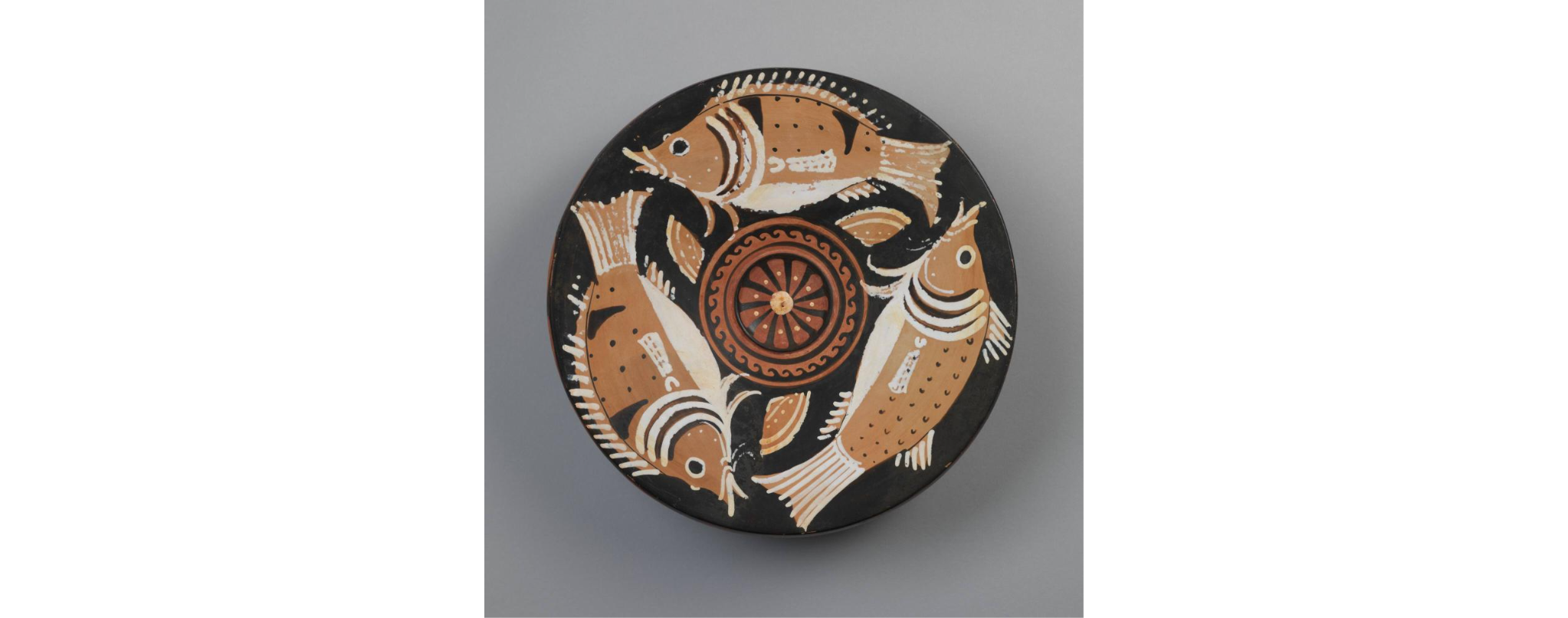
The Michael C. Carlos Museum has issued details of the five items that will be handed over to Italy (and three of them will remain on loan). Three of the pieces—the Laconian cup, the Attic Band Cup, and the Apulian fishplate—feature in images from the Becchina archive. The implications of the images are clear: "the fact that the Carlos could not determine where the [cup] was before it was with Palladion, there is a high probability the cup was looted".

This makes us turn to two other pieces in the Carlos Museum that feature in the Becchina archive: the Minoan larnax and the Rhodian pithos. The larnax is now only said to have been with Nikolas Koutoulakis, whereas in 2022 it was said to be 'with' Koutoulakis. What is the basis of the evidence? Does the Becchina image and paperwork suggest that it passed to other collections? Note that the larnax later passed to Noriyoshi Horiuchi in Japan.

The history for the pithos that is placed on the Carlos Museum website makes no mention of it passing through the hands of Becchina or Palladion Antike Kunst. Has the history as it has been presented been fabricated? What is the authenticated documentation for the Carlos Museum version of events? Was it supplied by the vendor, Phoenix Ancient Art? 

The curatorial staff at the Carlos Museum are clearly wanting to do, and be seen to do, the professional thing by returning objects to their countries of origin when new information comes to light. (Incidentally the pithos and larnax were discussed in the Greek press in June 2007 after they had been identified in the Becchina archive by Christos Tsirogiannis.)

Where does this leave other Becchina material in the Carlos Museum?

I am grateful to Christos Tsirogiannis for sharing the images with me.

| |
Bookmark and Share so Your Real Friends Know that You Know

Tuesday, 31 October 2023

The Michael C. Carlos Museum and an Apulian Fishplate

Source: Michael C. Carlos Museum

The Michael C. Carlos Museum at Emory University has noted that it will be returning an Apulian fishplate attributed to the group of Karlsruhe 66/140 (inv. 1986.015). The website provides the so-called 'provenance':
Probably with Gianfranco Becchina, Zurich, Switzerland. Ex coll. William Knight Zewadski, United States, purchased from Sotheby's London, 17 May 1983, lot 261. Deaccessioned by MCCM for repatriation to the Italian Republic, August 29, 2023.
What does 'probably with' mean? What is the basis for returning the fishplate? Who consigned the piece to Sotheby's in London in 1983? 

What other ex-Becchina pieces in the Carlos Museum need explaining?

I am grateful to Dr Cynthia Patterson for drawing my attention to this piece of information.

| |
Bookmark and Share so Your Real Friends Know that You Know

Monday, 30 October 2023

Michael C. Carlos Museum and Italy

Source: Michael C. Carlos Museum


There have been unannounced developments at the Michael C. Carlos Museum at Emory University (no mention in the press releases). At least three items have had their title transferred to Italy on 29 August 2023 and now appear as loans. I am grateful to Dr Cynthia Patterson who spotted the changes to the records.

The objects include:
  • a Laconian cup attributed to the Rider painter (L2023.004.003). Surfaced via Palladion Antike Kunst, Basel (from at least 1988; first published by Conrad Stibbe in 1990); purchased from Palladion.
  • an Attic black-figured Band Cup (L2023.004.001). Surfaced via Palladion Antike Kunst, Basel (from at least 1975 when it appeared in an advertisement in Apollo); Brian T. Aitken, Acanthus Gallery, New York.
  • an Apulian volute-krater attributed to the Underworld painter (L2023.004.002). Surfaced in Galerie Hydra (Christian Boursaud), Geneva (by 1986); Pierre Sciclounoff (1926-1997), Geneva; purchased through Christoph Leon. 
Galerie Hydra is discussed in Peter Watson's, Sotheby's: Inside Story (1997). The Apulian krater appeared in: C. Aellen, A. Cambitoglou, and J. Chamay, Le Peintre de Darius et son Milieu: Vases grecs d'Italie méridionale (Hellas et Roma, vol. 4. Geneva: Association Hellas et Roma, 1986), 190–99 (Sciclounoff collection); A. D. Trendall, Red Figure Vases of South Italy and Sicily; A Handbook (London: Thames and Hudson, 1989), 261, fig. 210.

Can we presume that the Minoan larnax, known from the Becchina dossier, will be transferred to Greece in the near future? And what about the other material handled by Palladion Antike Kunst? 

| |
Bookmark and Share so Your Real Friends Know that You Know

Monday, 16 October 2023

Becchina and the Michael C. Carlos Museum

Source: Michael C. Carlos Museum


An Attic marble funerary sculpture was acquired by the Michael C. Carlos Museum in 2023 from Michael Ward of New York (inv. 2003.005.001). The online catalogue entry indicates that the sculpture was derived from Gianfranco Becchina. 

We note that Ward is cited in the most recent set of returns (October 2023) by the Manhattan DA.

What is the documented history of the sculpture between 1970 and 2003? Has this 'gap' been explained by authenticated paperwork? What rigorous due diligence checks were conducted prior to acquisition? Will the Carlos release the documentation for this sculpture in the spirit of academic transparency?

Is it significant that this important sculpture is not on public display?

Becchina is one of the individuals who handled the Minoan larnax acquired by the Carlos in 2002.

| |
Bookmark and Share so Your Real Friends Know that You Know

Saturday, 15 July 2023

A pair of Nereids from an old Swiss collection

Two Nereids in the Louvre.
Source: Louvre


Two Apulian terracotta reliefs showing the Nereids were acquired by the Louvre in 1982 (CA 6823, CA 6824). They are alleged to have been derived from "une ancienne collection suisse" prior to 1939. However, the official museum website fails to mention this prior history.

What is key about these two Nereids is that they feature in the Becchina archive. Will the Louvre disclose the identity of the "old Swiss collection"? And what is the nature of the authenticated documentation that can demonstrate that the Nereids were known prior to 1939? 

Presumably this pair of terracottas form part of the Italian claims. Will the Louvre seek to be co-operative with the request?

What other items were acquired from Becchina or Palladion Antike Kunst?

I am grateful to Christos Tsirogiannis for advising me on the Becchina archive. The identifications were first made by Daniela Rizzo and Maurizio Pellegrini.

Besques, S. 1988. "Deux reliefs apuliens en terre cuite." Monuments et mémoires de la Fondation Eugène Piot 69: 1–28.

| |
Bookmark and Share so Your Real Friends Know that You Know

Friday, 14 July 2023

Italy Seeks Return of Antiquities from the Louvre

Amphora attributed to the Berlin painter.
Source: The Louvre

The Italian authorities are seeking the return of seven antiquities from the Louvre (Roxana Azimi, "Italy calls on the Louvre to return seven of its archaeological objects", Le Monde July 13, 2023). The report draws attention to the Attic red-figured amphora that once formed part of the Hunt Collection (Wealth of the Ancient World no. 10). A further fragment from the amphora was supplied by Dietrich von Bothmer, and Robert Guy identified another piece that was presented to the Louvre in 1995 in honour of François Villard (Berlin Painter cat. no. 13; no. BN5; BAPD 8798). It should be noted that pots (and fragments) attributed to the Berlin painter have featured frequently in the returns to Italy. The identification of the Berlin painter amphora was made by Christos Tsirogiannis in 2006.

What are the other pieces likely to be? We know that the items were acquired between 1982 and 1998.

Possible candidates include:
a. Sicilian bell-krater attributed to the Lentini-Manfria group (CA 7249). Acq. Fritz Bürki (1986).
b. Capuan bell-krater attributed to the Ixion painter (CA 7124). Purchase (1985).
c. Attic black-figured psykter-krater attributed to the manner of the Antimenes painter (MNE 938) (BAPD 26150). Purchase (1988).

The Attic and the Capuan kraters (b–c) have been identified from the Becchina archive. The identifications were  made by Daniela Rizzo and Maurizio Pellegrini.
  • Rizzo, D., and M. Pellegrini. 2021. "The Italian Archaeological Heritage Abroad: Between Agreements, Debates and Indifference." In Stolen Heritage: Multidisciplinary Perspectives on Illicit Trafficking of Cultural Heritage in the EU and the MENA Region, edited by A. Traviglia, L. Milano, C. Tonghini, and R. Giovanelli, Antichistica, vol. 29: 99–114. Venezia: Edizioni Ca’ Foscari.

| |
Bookmark and Share so Your Real Friends Know that You Know

Monday, 13 February 2023

The frescoes from a wealthy seaside villa

Three panels acquired by the J. Paul Getty Museum in 1983.
Inv. 83.AG.222.2, 4, 8.

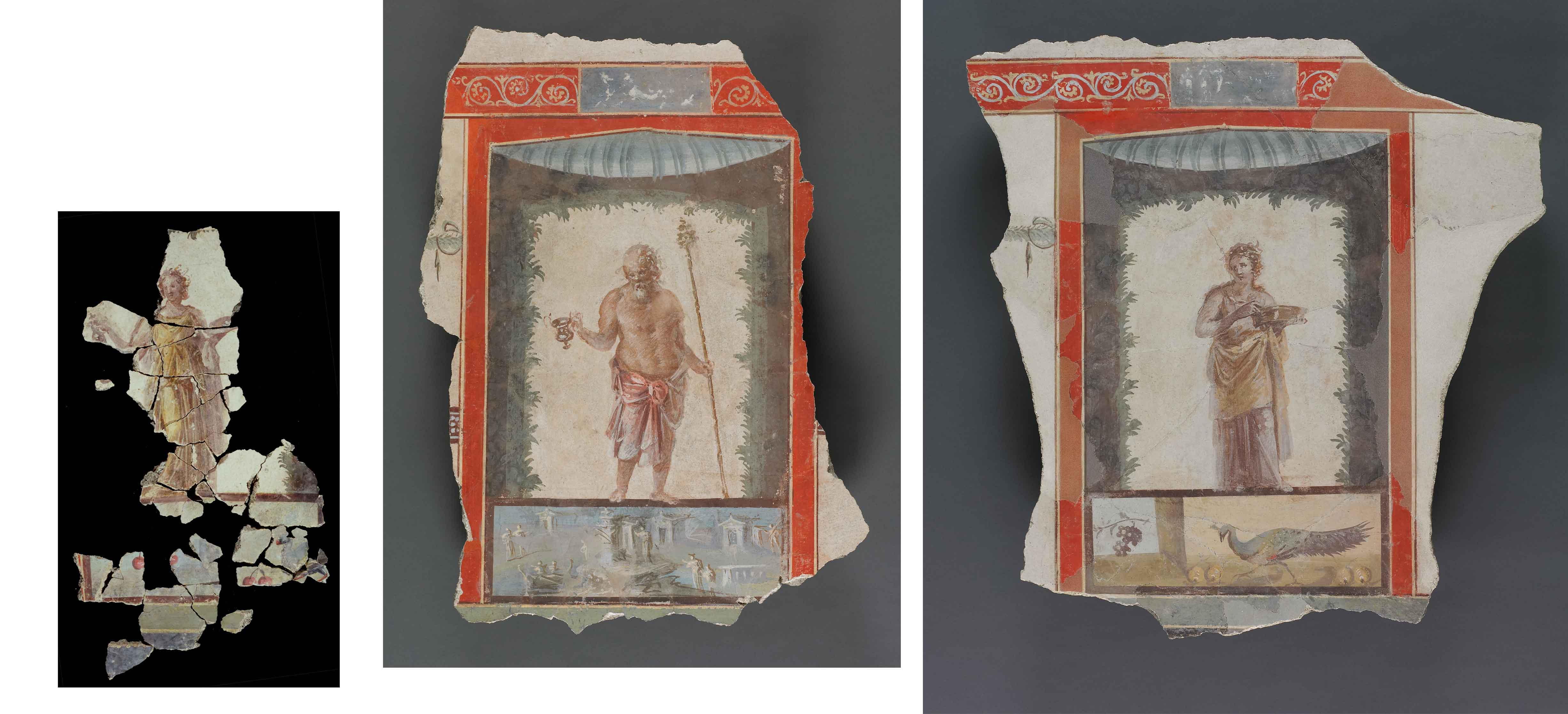
In 1983 the J. Paul Getty Museum acquired a series of Roman frescoes on the 'European market', in fact from Palladion Antike Kunst in Basel. The Getty's handbook suggests that they are derived from ‘a wealthy Roman’s seaside villa in the area of the Bay of Naples’. 

Elizabeth Marlowe has commented on the displayed fragments, suggesting that the panels had been removed from a single room somewhere in the vicinity of Vesuvius. Indeed, there are fragments that were acquired at the same time that clearly come from a third panel, presumably from the same room. Daniela Rizzo and Maurizio Pellegrini have recently drawn attention to the problematic nature of these frescoes and published an image of a further section of the decoration that appears in the Becchina photographic archive. 

How does the Getty interpret the history of the fragments? Is the museum actively seeking to return the sequence of fragments to Italy?


References
Lapatin, K. D. S., and K. Wright. Editors. 2010. The J. Paul Getty Museum: Handbook of the Antiquities Collection. Los Angeles: J. Paul Getty Museum.
Marlowe, E. 2020. "The reinstallation of the Getty Villa: plenty of beauty but only partial truth." AJA 124: 321–32. [Online]
Rizzo, D., and M. Pellegrini. 2021. "The Italian Archaeological Heritage Abroad: Between Agreements, Debates and Indifference." In Stolen Heritage: Multidisciplinary Perspectives on Illicit Trafficking of Cultural Heritage in the EU and the MENA Region, edited by A. Traviglia, L. Milano, C. Tonghini, and R. Giovanelli, Antichistica, vol. 29: 99–114. Venezia: Edizioni Ca’ Foscari. [Online]

| |
Bookmark and Share so Your Real Friends Know that You Know

Saturday, 4 February 2023

Further returns to Italy from San Antonio Museum of Art and Shelby White

Oinochoe fragment
attributed to the Harrow painter
returned from
the San Antonio Museum of Art.
Source: San Antonio Museum of Art

The Manhattan DA has reportedly returned 14 more antiquities to Italy: though the objects and images presented at the press announcement counted 16 ("D.A. Bragg Returns 14 Stolen Antiquities to Italy", Manhattan DA February 2, 2023). Two sources were acknowledged: Shelby White and the San Antonio Museum of Art. The third, the source of a silver coin, was left anonymous in the press release.

At least three of the objects appear in the Glories of the Past catalogue of the Shelby White and Leon Levy collection. The release gives further information about the Attic black-figured hydria attributed to the Priam painter.
The piece first surfaced in Italy after being looted by Giovanni Franco Becchina, a well-known antiquities trafficker. From Italy, the piece was then smuggled and laundered by Paris-based Robert Hecht. Hecht ultimately sold the piece with false provenance to Shelby White in New York County in 1989.
These add to the 14 pieces featured in the catalogue that have been returned to Greece, Italy and Turkey.

The nine pieces featured in the images at the press statement are derived from the San Antonio Museum of Art. The objects are derived from several sources: Sotheby's in London; Christie's in London and Geneva; Galerie Palladion Antike Kunst; Galerie Günter Puhze; Royal Athena Galleries; Robin Symes. For example, the oinochoe fragment attributed to the Harrow painter surfaced through Galerie Palladion Antike Kunst, and was sold to Gilbert M. Denman, Jr. by Robert Hecht.  The nine objects may be added to other pieces that were handed over in 2022. We are also expecting further details about three other objects derived from Frederick Schultz that have been handed over by the museum. 

Three other objects featuring in the press statement have yet to be linked in a formal way to a specific collection though Christos Tsirogiannis has identified two of them in the Becchina archive and one in the Schinousa archive. 

The final piece is a silver coin.
The Sicily Naxos Coin. Minted circa 430 B.C.E in the Greek colony of Naxos, on Sicily, this silver coin features the bearded Dionysus on one side and his squatting drinking partner, Silenus, on the reverse. The Sicily Naxos Coin first surfaced on the international art market in 2013, when a known trafficker offered the coin for sale with no provenance whatsoever. Prior to its appearance at a London-based auction house, a co-conspirator of the trafficker supplied false provenance for the coin. The Sicily Naxos Coin is currently valued at $500,000 and was among a group of coins seized at JFK airport as it was being smuggled into New York pursuant to an ongoing joint investigation between this Office, HSI, and Italy. At least one individual has been arrested in the course of this investigation with more to follow.
Three Shelby White pieces, nine objects from San Antonio, one silver coin, and three other pieces equal 16 objects (not 14).

Objects from the San Antonio Museum of Art and in the Shelby White and Leon Levy collection were the subject of an extended discussion by Chippindale and Gill in the American Journal of Archaeology back in 2000. 
Chippindale, C., and D. W. J. Gill. 2000. "Material consequences of contemporary classical collecting." AJA 104: 463-511. [DOI]
LM expects to add further detail to this summary in due course.

| |
Bookmark and Share so Your Real Friends Know that You Know

Another Bürki object returns to Italy

Source: MMA A psykter column-krater attributed to the Troilos painter was deaccessioned by New York's Metropolitan Museum of Art in June...